The Art of the Molcajete: A Guide to Curing and Culinary Excellence
Nothing quite compares to the vibrant flavors and rustic textures achieved when preparing fresh salsa or grinding spices in a traditional lava rock molcajete. This iconic tool, deeply embedded in Mexican culinary heritage, offers a unique grinding technique that extracts and blends flavors in a way no modern appliance can replicate. If you’re passionate about authentic Mexican cuisine, a molcajete isn’t just a kitchen utensil; it’s a testament to ancient traditions and a gateway to unparalleled taste experiences. Its distinct character comes from the porous volcanic stone, which, when properly prepared, becomes an indispensable asset in any serious cook’s arsenal for crafting everything from zesty salsas and rich moles to finely ground spices and aromatic pastes.
What is a Molcajete? Understanding This Ancient Culinary Tool
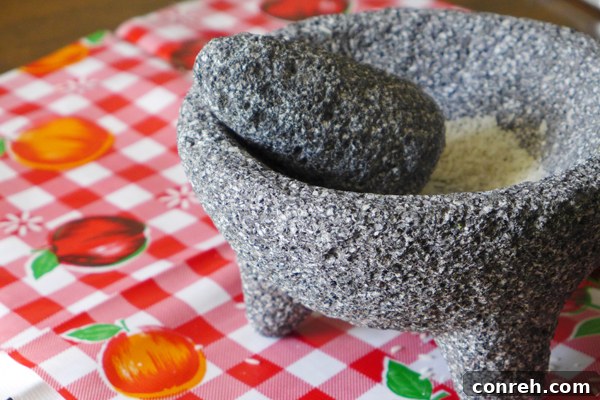
A molcajete (from the Nahuatl word molcaxitl) is a traditional Mexican mortar and pestle, typically crafted from a single piece of porous volcanic rock. Its rough, textured surface is ideal for crushing, grinding, and blending ingredients, releasing their essential oils and creating a superior depth of flavor that a smooth-bladed blender often misses. Paired with its companion, the tejolote (the pestle), the molcajete facilitates a grinding action that produces a coarser, more authentic texture, characteristic of traditional Mexican sauces and preparations.
These beautiful and functional tools have a rich history, dating back thousands of years to pre-Hispanic Mesoamerican cultures. Found in archaeological sites across Mexico, molcajetes were vital for processing grains, chiles, and other ingredients long before the advent of modern kitchen technology. Far more than just kitchenware, molcajetes are often heirlooms, passed down through generations, embodying family traditions and culinary secrets. Owning one connects you directly to this ancient lineage, allowing you to prepare dishes with the same methods used by countless ancestors, fostering a deep appreciation for the roots of Mexican gastronomy.
The Essential First Step: Why Curing Your New Molcajete is Crucial
If you’ve recently acquired a new molcajete – perhaps a treasured gift, a souvenir from a trip to Mexico, or a new addition to your kitchen – you’ll notice its surface is quite rough. This rough texture, while ultimately beneficial for grinding, contains loose grit and volcanic dust from its carving process. Before you can truly unlock its culinary potential and enjoy that authentic salsa, it’s absolutely essential to prepare and “cure” your molcajete. This process, known in Spanish as amansar, which literally means “to tame,” involves thoroughly polishing the inner surface of both the molcajete and its tejolote until all loose particles are removed.
Curing isn’t merely about cleanliness; it’s about conditioning the porous volcanic stone. The primary goal is to smooth the surface enough to prevent small, unappetizing pieces of rock from mixing with your food, yet retain enough texture to provide that distinctive grinding ability. A properly cured molcajete will not only be safe for food preparation but will also begin to develop a subtle seasoning over time, absorbing the oils and flavors of the ingredients you process, thereby enhancing the flavors of everything you create in it. Skipping this vital initial step can lead to gritty food, a less effective grinding surface, and ultimately diminish the overall authentic culinary experience you seek to achieve with this remarkable tool.
A Step-by-Step Guide to Curing Your Volcanic Rock Molcajete (Amansar)
The curing process is straightforward but requires patience and a bit of effort, often referred to as “elbow grease.” Plan to dedicate a couple of days to this ritual, especially if you intend to unveil your new kitchen centerpiece at a special gathering. Remember, this isn’t a race; it’s a gradual transformation that ensures your molcajete will serve you reliably and deliciously for years to come.
Phase 1: Initial Rinse and Preparation
- Rinse Thoroughly: Begin by rinsing your molcajete and tejolote under running water. Use a stiff, clean brush (such as a vegetable brush or a dedicated kitchen scrub brush) to scrub away any visible dust, loose particles, or debris that might be clinging to the volcanic rock. It’s crucial not to use soap at this stage, or at any stage, as the porous stone can absorb soap residues, which will then leach into your food.
- Dry Slightly: While it doesn’t need to be completely bone dry, allow some of the excess water to drain or gently pat it with a clean, lint-free cloth. This helps prepare the surface for the subsequent grinding steps.
Phase 2: The Grinding Cycles – Polishing with Grains and Spices
This phase is where the “taming” truly happens. You will use common kitchen ingredients to grind away the rough volcanic grit, gradually smoothing the molcajete’s interior. The goal is to continue until the ground ingredients show no more grey or black flecks of stone, indicating that all loose particles have been removed.
Cycle 1: Rice Grinding for Initial Polishing
Rice is excellent for this initial stage due to its abrasive yet relatively soft nature. As you grind, the rice grains effectively pick up and dislodge loose grit from the porous volcanic rock without causing damage to the molcajete’s structure.
- Add Dry Rice: Place a handful (approximately 1/4 to 1/2 cup) of uncooked white rice into the molcajete. Brown rice can also be used, but white rice makes it easier to visually track the color change.
- Grind Vigorously: Using the tejolote, begin grinding the rice in a firm, circular motion. Apply consistent, downward pressure, ensuring you cover the entire inner surface of the molcajete, including the sides and corners. Listen for the gritty sound and feel the resistance.
- Observe the Color: As you grind, the rice will gradually turn into a greyish powder. This grey color is evidence that it’s effectively picking up volcanic dust and grit.
- Discard and Repeat: Once the rice is finely ground and distinctly grey, carefully discard it (do not use it for consumption). Rinse the molcajete and tejolote thoroughly with cold water (remember, no soap), ensuring all traces of the ground rice and grit are removed. Repeat this process with fresh batches of rice at least 3-5 times, or until the ground rice remains mostly white with very few, if any, grey specks. This step can be the most time-consuming but is vital for a well-cured molcajete.
Cycle 2: Salt and Garlic for Deeper Cleaning and Initial Seasoning
Once the rice test consistently yields mostly white powder, it’s time to introduce a mixture of salt and garlic. Salt acts as a finer abrasive, helping to further polish the stone, while garlic begins to impregnate the porous surface with its essential oils, initiating the crucial seasoning process.
- Prepare Ingredients: Place about 1 tablespoon of coarse salt (kosher salt or sea salt works exceptionally well due to its texture) and 3-4 peeled garlic cloves into the molcajete.
- Grind to a Paste: Grind these ingredients together vigorously with the tejolote until they form a thick, relatively fine paste. Ensure you work the paste into every part of the molcajete’s interior, rubbing it against the sides and bottom.
- Let it Sit: Once ground, spread the paste evenly around the molcajete’s interior surface and allow it to sit for several hours, ideally overnight. This allows the abrasive salt and the aromatic garlic oils to deeply penetrate the stone’s pores.
- Rinse Clean: After soaking, discard the paste (again, do not consume). Rinse the molcajete and tejolote thoroughly with cold running water. Use your stiff brush to remove any lingering garlic or salt residue. The goal is for the water to run clear and for no visible particles to remain.
Cycle 3: Spices for Final Polish and Flavor Infusion
This final grinding cycle serves to further polish the surface and, perhaps most importantly, to begin infusing the molcajete with the aromatic essence of spices. This final step prepares it for its first culinary endeavor, ensuring a delicious foundation for future dishes.
- Select Spices: Choose a small amount (1-2 teaspoons) of whole, dried spices. Excellent choices include cumin seeds, black peppercorns, coriander seeds, or a combination of these. Avoid overly strong or pungent spices for the very first seasoning if you plan to make a mild salsa next.
- Grind to Powder: Grind the chosen spices vigorously with the tejolote until they form a fine powder. As before, observe the color of the powder; at this stage, it should be free of any grey flecks, indicating the molcajete is properly cured.
- Discard and Rinse: Discard the ground spices. Give the molcajete and tejolote one final, thorough rinse under running water. At this point, the water should consistently run clear, and the inner surface should feel noticeably smoother to the touch compared to when you started, though still retaining its characteristic texture for efficient grinding.
Congratulations! Your molcajete is now fully cured and ready for use. The process might seem laborious, but the reward is a tool that will enrich your cooking for decades, becoming a cherished part of your kitchen and culinary tradition.
Using Your Cured Molcajete: Tips for Maximizing Flavor and Longevity
With your molcajete perfectly cured, you’re ready to explore a world of authentic flavors. Here are some essential tips to get the most out of your new kitchen companion and ensure its lasting performance:
- Start with Salsas: A fresh salsa is often the first and most rewarding dish prepared in a newly cured molcajete. The coarse texture of the volcanic rock helps break down ingredients like chilies, tomatoes, and onions, releasing their aromatic compounds and creating a complex flavor profile unmatched by blenders.
- Master the Technique: Effective molcajete use involves a specific grinding motion. Use a circular motion with the tejolote, applying firm, even pressure. Start with larger, harder ingredients first, breaking them down into smaller pieces before adding softer ones. For example, mash garlic and chilies first, then add coarse salt to help with the abrasive action, and finally introduce softer ingredients like tomatoes or avocados.
- Versatility Beyond Salsa: Don’t limit your molcajete to just salsa. It’s an incredibly versatile tool, excellent for making creamy guacamole, vibrant pestos, authentic curry pastes, grinding whole spices for rubs and marinades, or even preparing medicinal herbal blends. Experiment with different ingredients to discover its full potential!
- Seasoning Over Time: The more you use your molcajete, the more seasoned and flavorful it will become. The pores of the volcanic rock absorb the oils and essences of the ingredients you grind, building a complex patina that subtly enhances the flavor of subsequent dishes, much like a well-cared-for cast-iron pan.
Caring for Your Molcajete: Ensuring a Lifetime of Use
Proper care is essential to maintain your molcajete and ensure it remains a prized kitchen tool, capable of delivering authentic flavors for generations.
- No Soap! This is the Golden Rule: Detergents and soaps can be absorbed into the porous stone, imparting an unwanted, soapy flavor to your food. This can be very difficult, if not impossible, to remove.
- Clean with Water and a Stiff Brush: After each use, rinse your molcajete and tejolote thoroughly under cold or lukewarm running water. Use a dedicated stiff-bristled brush (a clean scrub brush) to remove any food particles that may be clinging to the textured surface. For stubborn bits of food, a little coarse salt can be used as a natural abrasive scrub, followed by a very thorough rinse with water.
- Dry Completely: After washing, it is critically important to allow your molcajete and tejolote to air dry completely before storage. Storing a wet molcajete can lead to the growth of mold or mildew, especially in humid environments, which can be difficult to remove and potentially impart off-flavors. You can place it upside down or on its side to ensure proper airflow and complete drying.
- Storage: Store your molcajete in a dry, well-ventilated area. Many people choose to display their molcajete on a countertop or shelf as a beautiful and functional piece of kitchen art, readily accessible for its next culinary adventure.
The Molcajete Advantage: Why Traditional Grinding Trumps Modern Blending
In an age of high-speed blenders, food processors, and other automated kitchen gadgets, one might reasonably wonder why bother with the manual labor of a molcajete. The answer lies in the fundamental difference in how ingredients are processed and the profound impact that difference has on flavor and texture:
- Superior Flavor Extraction: Blenders operate by rapidly cutting and chopping ingredients with sharp blades. In contrast, the molcajete’s unique grinding action crushes and pulverizes them against the rough volcanic surface. This rupturing of cell walls in a molcajete releases a richer and more complete array of essential oils and aromatic compounds, resulting in a significantly more profound and complex flavor profile. Think of the difference between merely slicing garlic versus finely mincing it or crushing it into a paste – the latter releases far more intense flavor.
- Unmatched Texture: The molcajete excels at creating a rustic, nuanced texture that is highly prized in traditional cuisine. Salsas made in a molcajete often feature varying sizes of ingredients, providing a delightful and engaging mouthfeel that a uniformly smooth blender puree simply cannot achieve. This textural complexity adds incredible depth and authenticity to dishes, making each bite more interesting and satisfying.
- Aromatics and Oils: The porous volcanic stone itself plays an active role in flavor development. Over time, it absorbs and retains tiny amounts of the oils and flavors of the ingredients you grind. This seasoning effect means that with every use, your molcajete contributes subtly to the depth of flavor of subsequent dishes, building character and complexity much like a well-seasoned cast-iron pan or wooden cutting board.
- Mindful Cooking Experience: Beyond the tangible culinary benefits, using a molcajete is a truly hands-on, sensory experience. The rhythmic grinding, the immediate aroma of freshly crushed spices and chiles, and the tactile connection to your food foster a more mindful and deliberate approach to cooking. It’s an act of culinary craftsmanship that deepens your appreciation for the ingredients, the process, and the finished dish, turning meal preparation into an art form.
Embrace the Tradition
A molcajete is far more than just a kitchen tool; it’s a piece of history, a vessel for tradition, and a powerful catalyst for incredible flavor. From the moment you begin the meticulous curing process to the first batch of intensely flavored salsa or guacamole you create, you’ll appreciate the profound connection to ancient culinary arts. Investing the time to properly prepare and care for your volcanic rock molcajete will reward you with a lifetime of authentic, vibrant dishes that truly capture the nuanced essence of Mexican cuisine. So, embrace the tradition, wield your tejolote with pride, and savor the rich, rustic flavors only a molcajete can deliver to your table.