Pan de Muerto: A Culinary Heartbeat of Dia de Muertos
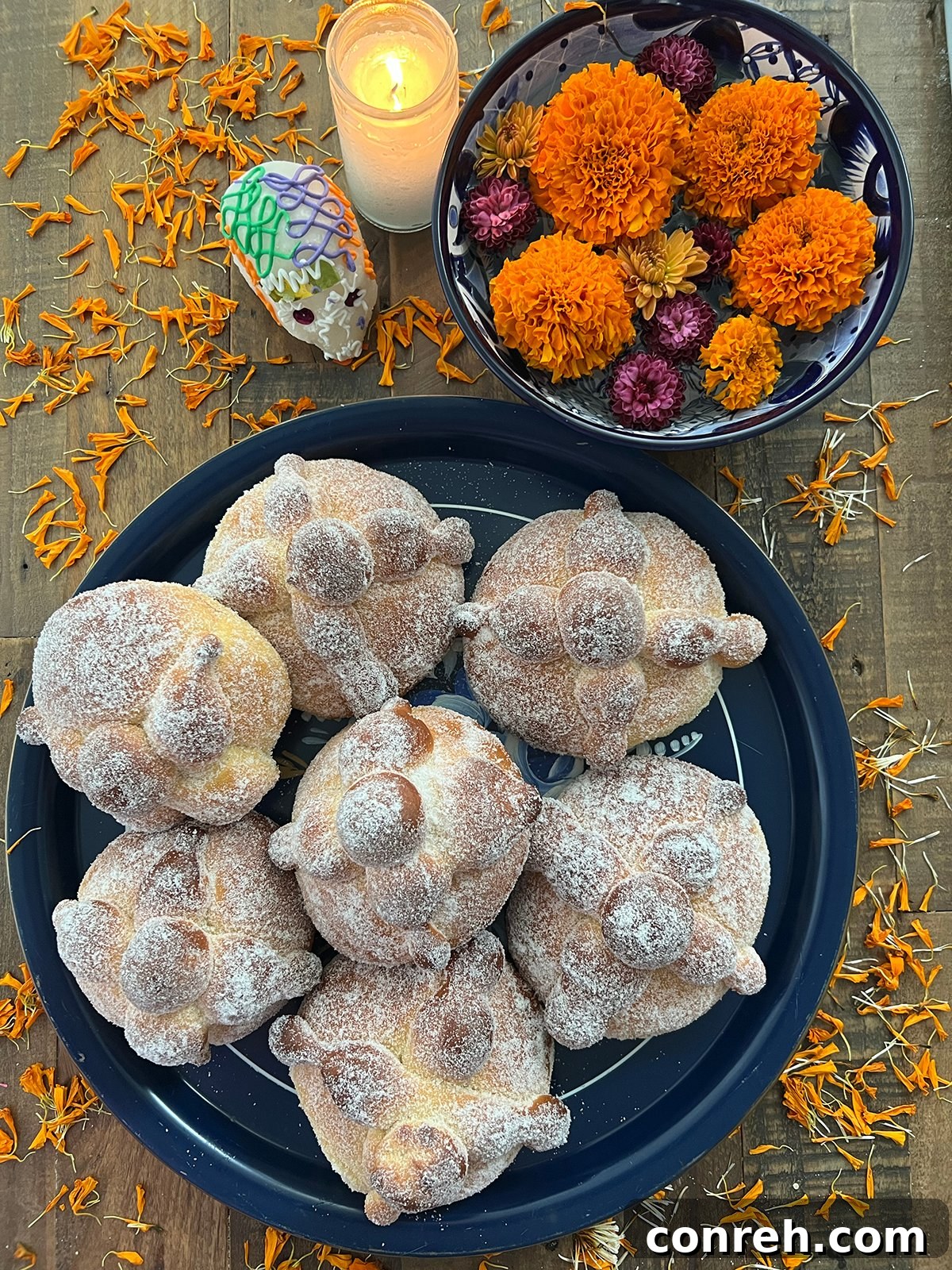
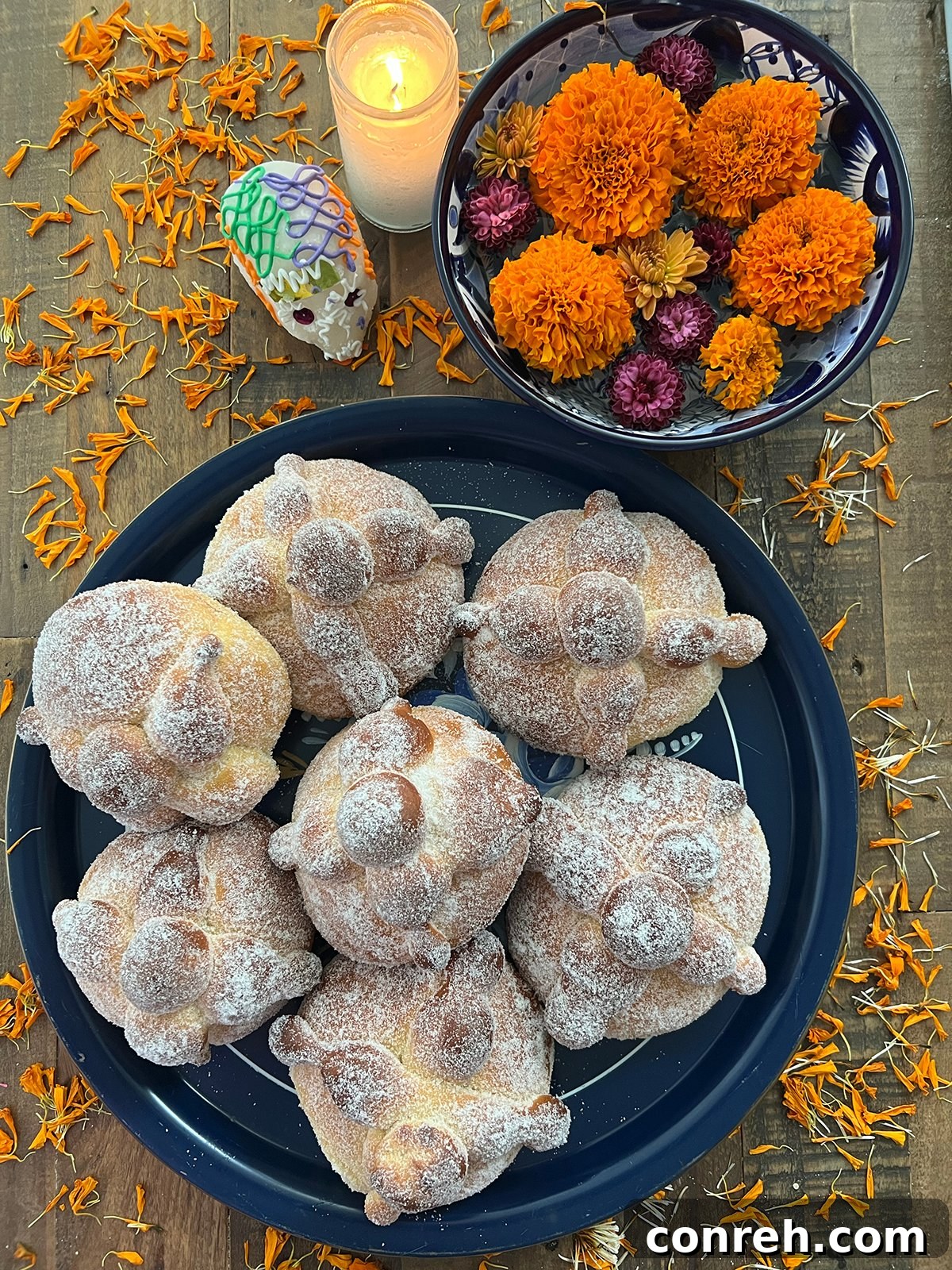
Soft, ethereal, and subtly sweet, Pan de Muerto is much more than just a bread; it’s a tender embrace of tradition, a celebration of life, and a heartfelt tribute to those who have passed. This pan de muerto recipe, cherished during the vibrant Dia de Muertos festivities, offers a delightful experience for both the palate and the soul. Imagine enjoying a warm slice with a comforting cup of coffee on a crisp autumn day, or reverently placing it upon your ofrenda, an altar thoughtfully arranged to honor and remember your beloved ancestors and family members. It’s a beautiful way to display affection and keep their memory alive.
While there are many wonderful versions of this traditional Mexican bread, this particular recipe stands out for its delicate lightness and exquisite citrus notes. Unlike denser varieties, it boasts a wonderfully airy texture, infused with the bright zest of orange and the fragrant whisper of orange blossom water. Each loaf is baked to a personal size, perfect for individual enjoyment, allowing every family member to savor this special treat as part of the cherished holiday celebration.
The essence of Pan de Muerto lies not just in its ingredients but in its symbolism. The round loaf represents the skull, while the strips of dough crossing the top symbolize bones or tears. A small knob in the center signifies the skull itself or the tears shed for the departed. This deeply meaningful bread is a cornerstone of the Dia de Muertos altar, an inviting offering for returning spirits, believed to bring them comfort and joy. Preparing Pan de Muerto is a cherished ritual, connecting us to our heritage and ensuring the traditions of Dia de Muertos endure for generations.
Print Recipe
Pan de Muerto
5 Stars
4 Stars
3 Stars
2 Stars
1 Star
No reviews
- Author: Ericka Sanchez
- Prep Time: 120 minutes
- Cook Time: 20 minutes
- Total Time: 2 hours 20 minutes
- Yield: Makes 8
Description
A soft and fluffy pastry with beautiful hints of citrus, this Pan de Muerto is a perfect offering for your Dia de Muertos ofrenda or a delightful treat to share with loved ones. Its light texture and aromatic flavor make it truly special.
Ingredients
Scale
- 3 ½ cups all-purpose flour, plus more for dusting
- 3 tablespoons rapid rise yeast
- 2 tablespoons warm water (90°F)
- ½ cup whole milk
- 3 eggs
- 1 ½ cups granulated sugar, divided
- 1 teaspoon orange blossom water
- 2 tablespoons orange zest
- 1 teaspoon vanilla extract
- 1 ½ teaspoons salt
- ½ cup butter, room temperature and cut into small pieces
- Vegetable shortening for greasing
- ½ cup salted butter, melted (for brushing)
Instructions
- In a large metal bowl, combine the all-purpose flour and rapid rise yeast. Whisk them together thoroughly until well combined. Set this mixture aside for later use.
- In the bowl of a stand mixer, combine the warm water, whole milk, eggs, ½ cup of granulated sugar, orange blossom water, fresh orange zest, and vanilla extract. Whisk these wet ingredients lightly with a handheld whisk until just blended. Then, attach the bowl to your stand mixer.
- Using the paddle attachment, begin mixing the ingredients in the stand mixer bowl on low speed. Gradually add the flour and yeast mixture, approximately ½ cup at a time, until a cohesive dough starts to form. This process should take about 90 seconds. Once the dough has come together, add the salt and increase the mixer speed to medium for an additional 30 seconds to incorporate it fully.
- Stop the mixer and switch from the paddle attachment to the dough hook. Use a spatula to scrape any dough clinging to the sides of the bowl. Mix on low speed for 1 minute to begin kneading the dough. Gradually add the softened butter pieces, one at a time, allowing them to fully incorporate into the dough as it mixes.
- Increase the mixer speed to medium and continue mixing for a full 25 minutes. During this extended kneading, remember to scrape the dough off the sides of the bowl with a spatula every 10 minutes to ensure even mixing. The dough is ready when it appears smooth, elastic, and easily slides off the dough hook.
- Prepare a large, clean metal bowl by lightly greasing its interior with butter. This will prevent the dough from sticking during its first rise.
- Lightly dust a clean working surface with a small amount of flour. Carefully scrape the dough out of the mixer bowl onto this floured surface. Gently knead the dough for a few seconds to form it into a large, smooth ball. Place the dough ball into the prepared metal bowl, ensuring it has enough space to expand. Cover the bowl tightly with plastic wrap and place it in a warm area of your kitchen. Allow the dough to rise undisturbed for 1 hour, or until it has significantly increased in size.
- Once risen, gently place the dough back onto a clean work surface. Deflate the dough by lightly kneading it for a few seconds to release any air bubbles. Now, divide the dough into specific portions: create 8 large balls, each weighing approximately 90 grams; 8 medium balls, each weighing about 30 grams; and 8 small balls, weighing around 10 grams each.
- Line two large baking sheets with parchment paper. Lightly grease the parchment paper with vegetable shortening to prevent the bread from sticking.
- Take each of the 90-gram dough pieces and gently round them into smooth balls. Place these main bread bases onto the greased baking sheets, leaving ample space between them. Lightly press around the edges of each large dough ball to form a slight disc. Set these aside.
- Next, take each of the 30-gram medium balls and cut them in half. Roll each half on your working surface between your fingers, applying gentle pressure, to form elongated “bones.” You should end up with 16 “bone” pieces. Set these aside. Round the small 10-gram balls to create the “tear drop” or “skull” toppers. Set these aside as well. Cover all the shaped dough pieces lightly with plastic wrap and let them rise for an additional 15 minutes.
- After the second short rise, carefully arrange the “bones” on top of the large dough pieces. Place one strip of “bones” across the center, stretching it slightly down the sides of the main dough ball. Add a second strip, crossing over the first, to form a cross shape. Gently place one of the small 10-gram dough balls in the very middle of each cross, pressing lightly to secure it. Repeat this process with all the remaining dough pieces. Once assembled, place the baking sheets in a warm area of your kitchen and let the Pan de Muerto rest for 30 minutes for a final proof.
- While the bread is undergoing its final proof, preheat your oven to 350°F (175°C).
- Bake the Pan de Muerto for 20 minutes on the middle oven rack. Halfway through the baking time (around 10 minutes), rotate the baking sheets to ensure even browning. Remove the bread from the oven once it’s beautifully golden brown and let it cool completely on the baking sheet.
- Once the Pan de Muerto has cooled, brush each piece generously with the melted salted butter. Prepare a shallow bowl or small tray with the remaining granulated sugar, spreading it out evenly.
- Allow the melted butter to be fully absorbed by the bread, which usually takes a few minutes. Then, gently place each buttered Pan de Muerto onto the tray with sugar. Scoop sugar onto the bread, ensuring it’s covered evenly, and gently pat off any excess sugar. Repeat this process for all the bread pieces. Serve this exquisite Pan de Muerto and enjoy the flavors of Dia de Muertos.
Tips for a Perfect Pan de Muerto
- Yeast Activation: Ensure your warm water is truly around 90°F (32°C). Water that’s too hot will kill the yeast, and water that’s too cold won’t activate it properly, leading to a dense bread.
- Room Temperature Ingredients: Butter and eggs at room temperature emulsify better and create a smoother, more uniform dough. Plan ahead!
- Kneading is Key: The extended kneading time (25 minutes with a stand mixer) is crucial for developing the gluten, which gives Pan de Muerto its characteristic soft and fluffy texture. Don’t rush this step!
- Warm Proofing Environment: A warm, draft-free spot is ideal for rising dough. If your kitchen is cool, you can preheat your oven to its lowest setting for a few minutes, then turn it off and let the dough rise inside (with the door slightly ajar).
- Gentle Handling: After the first rise, deflate the dough gently. Overworking it can toughen the final product.
- Shaping Details: When forming the “bones,” roll them with consistent pressure to ensure they bake evenly. The small central ball should be pressed lightly but firmly enough to adhere.
- Even Browning: Rotating the baking sheets halfway through baking ensures that all sides of your Pan de Muerto achieve that beautiful golden-brown color.
- Generous Sugaring: Don’t skimp on the final butter and sugar coating! This creates the iconic sweet crust that is so delightful.
The Rich History and Symbolism of Pan de Muerto
Pan de Muerto has roots stretching back to pre-Hispanic Mexico. Ancient Mesoamerican cultures had rituals involving human sacrifice, where hearts were offered to the gods. When the Spanish arrived, they sought to replace these practices with more European traditions, leading to the creation of a bread that symbolized the heart and bones of the deceased. Over centuries, this evolved into the Pan de Muerto we know today.
Each element of Pan de Muerto carries profound symbolism:
- The Round Shape: Represents the cycle of life and death, and often the skull or the mound of a grave.
- The “Bones” (Canillas): These strips of dough laid across the top symbolize the bones of the deceased, arranged in a cross to represent the four cardinal directions or a skeleton.
- The Small Ball (Lágrima or Huesito): Placed at the center, this often represents a skull, the tears of sorrow, or the heart offered to the gods.
- Orange Blossom Water/Orange Zest: The fragrant citrus notes are said to guide the spirits back to their loved ones’ homes and ofrendas, serving as an aromatic beacon.
This bread is a testament to the Mexican philosophy of death – not as an end, but as a continuation, a journey, and a reason for remembrance and celebration. It bridges the gap between the living and the dead, a sweet offering that invites communion and reflection.
Serving Suggestions and Storage
Pan de Muerto is traditionally enjoyed with a warm beverage. Pair it with a classic Mexican hot chocolate (chocolate de mesa), a spiced coffee, or even a simple cup of tea. It’s delightful on its own, but can also be dipped into hot drinks for an extra comforting treat.
To keep your Pan de Muerto fresh, store it in an airtight container at room temperature. It will remain soft and delicious for 2-3 days. For longer storage, you can freeze individual loaves, tightly wrapped, for up to a month. Thaw at room temperature and refresh with a quick warm-up in a low oven if desired.
Why This Recipe Shines
Many Pan de Muerto recipes result in a dense, almost cake-like bread. While delicious in its own right, this recipe prioritizes a lighter, more delicate crumb. The careful balance of rapid rise yeast with the precise measurements of liquid and fat ensures a fluffy interior that melts in your mouth. The generous addition of fresh orange zest and fragrant orange blossom water infuses the bread with a bright, uplifting citrus aroma and flavor that perfectly complements its sweetness, making it truly irresistible. The individual portion sizes also make it ideal for sharing, or for creating a visually appealing and personal offering on your Dia de Muertos altar.
Conclusion
Baking Pan de Muerto is a joyful act of remembrance and a way to immerse yourself in the rich tapestry of Mexican culture. This recipe provides a path to create a beautifully soft, aromatic, and symbolically rich bread that will bring warmth and tradition to your Dia de Muertos celebrations. We encourage you to try this recipe, share it with your family, and create new memories while honoring old ones. May each bite remind you of the enduring connection between past and present, life and remembrance.