As the vibrant hues of autumn begin to paint the landscape, a very special signal catches my eye in the supermarket aisles: the cheerful sight of marigolds. For me, these golden-orange blooms are more than just flowers; they are the joyous harbinger of Dia de Muertos, one of the most profoundly beautiful and meaningful holidays in Mexican culture. With November just around the corner, my heart fills with a warmth that only the anticipation of this deeply rooted tradition can bring, connecting me to memories of family, heritage, and the enduring power of love.
Embracing the Spirit of Dia de Muertos: A Journey Through Tradition and Taste
My upbringing in Mexico indelibly shaped my understanding and appreciation for Dia de Muertos, or the Day of the Dead. It was never a somber occasion, but rather a vibrant celebration of life and remembrance. The day would customarily begin at dawn, not with sorrow, but with the excitement of selecting the freshest cempasúchil (marigolds) and gladiolas. These magnificent flowers, bursting with color and fragrance, were destined to adorn the graves of my beloved grandparents, transforming the cemetery into a breathtaking garden of memory.
Childhood Memories: A Day of Remembrance and Renewal in Mexico
The preparations were a cherished family affair, a communal act of love and respect. Before a single petal was placed, every member of the family, from the youngest to the oldest, would take part in the meticulous task of sweeping and cleaning the tombstones. We’d rake away dried leaves and stray twigs, carefully clearing the area around the graves. This act of tending to their resting place was more than just cleaning; it was a ritual of reconnection, a way to prepare a welcoming space for our ancestors’ spirits to return. Once immaculate, the graves blossomed with an abundance of flowers, meticulously arranged in colorful mounds. Alongside them, votive candles were carefully placed, their potential flames hinting at the light they would soon cast, and offerings, or ofrendas, were laid out—items chosen to delight the returning spirits.
The cemetery on Dia de Muertos was a spectacle of life, teeming with visiting crowds, laughter, and an overwhelming symphony of color. Everywhere you looked, there were clusters of flowers of all varieties and shades, but it was that intense, unmistakable marigold hue that truly dominated the landscape. As the sun began its descent, casting long, golden shadows, the first chilly breeze of the season would sweep through, causing the flames of countless votive candles to flicker. These tiny beacons of light illuminated the beautiful ofrendas, creating an ethereal glow that transformed the entire space into a sacred sanctuary. The air became thick with the sweet, mystical scent of copal incense, believed to guide the spirits home, while the gentle strumming of acoustic guitars filled the space, weaving a comfortable feeling of family, community, and, above all, an profound sense of love and enduring connection.
For me, Dia de Muertos wasn’t just a single day; it marked the beautiful beginning of cold evenings, ushering in a season of warmth and culinary delights. The subsequent four months in our home would be nothing short of a gastronomic adventure, filled with steaming tamales, rich champurrados (a thick, warm chocolate beverage), and an array of comforting soups. The kitchen, the heart of our home, perpetually hummed with the fragrant symphony of spices and the unmistakable aroma of steamed masa. It’s a scent deeply etched in my memory, an aroma I could never forget, forever linked to the embrace of family and the cherished traditions of our heritage.
Continuing the Tradition: A Taste of Heritage and Shared Moments
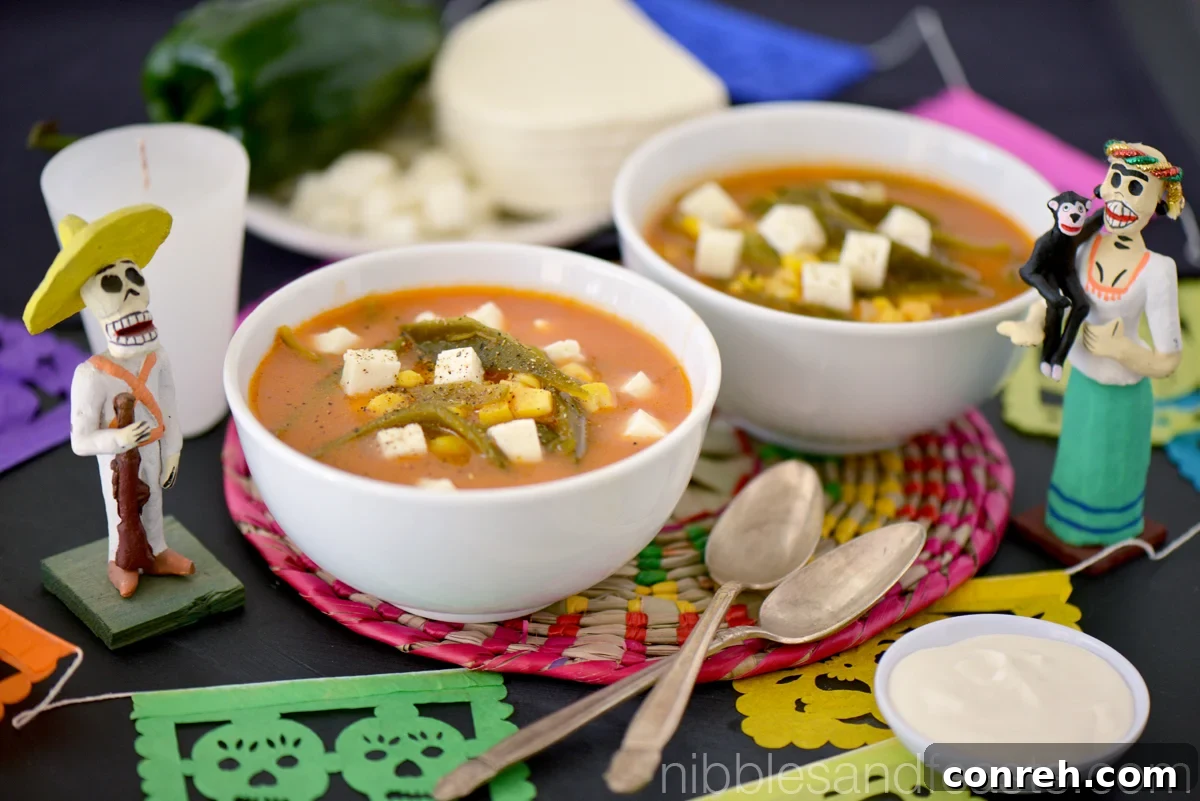
Today, as the evenings here have just begun to cool and I spotted those familiar marigolds, a deep sense of joy washes over me. There is nothing that makes me happier than to continue my family’s cherished Dia de Muertos traditions, especially when it involves gathering around a table with a warm, comforting bowl of Poblano and Corn Soup. This isn’t just a meal; it’s a centerpiece for an evening of shared memories, reminiscing about loved ones, and the sacred act of altar building at our house. Topped with the creamy delight of Cacique Panela cheese and a delicate swirl of Crema Agria, dinnertime transforms into a beautiful ritual, a tangible link to our past and a celebration of the present.
The Significance of Ofrendas and Shared Meals
The ofrenda, or altar, is perhaps the most iconic symbol of Dia de Muertos, a beautifully constructed homage meant to welcome and honor the spirits of departed loved ones. Far from being a morbid display, the ofrenda is a vibrant, personal, and loving invitation. Each element placed upon it holds deep symbolic meaning. Photographs of those we remember take pride of place, ensuring their presence is felt. Candles light the way for spirits returning from the afterlife. Water is offered to quench their thirst after their long journey, while favorite foods and drinks—often including mole, tamales, and even a specific brand of soda or beer—are lovingly prepared, reflecting the individual tastes of the departed. Skulls made of sugar or clay, often playfully decorated, symbolize the cyclical nature of life and death, and the sweet bread known as pan de muerto represents the generosity of the host. And, of course, countless marigold petals are scattered, their vibrant color and potent aroma acting as a fragrant path, guiding the spirits home to their families.
Food plays an extraordinary role in Dia de Muertos, transcending mere sustenance to become a powerful expression of love, memory, and cultural continuity. Dishes like savory tamales, rich mole poblano, and the unique, slightly sweet pan de muerto are not just recipes; they are culinary heirlooms passed down through generations. These foods are lovingly prepared not only for the living family members gathered to celebrate but also for the returning spirits, a gesture of profound hospitality and remembrance. Sharing these meals becomes a communal act of storytelling, laughter, and reflection, solidifying bonds and ensuring that the legacies of those who have passed are never forgotten. It’s a powerful reminder that even in remembrance, there is immense joy and connection.
I invite you to experience this flavorful soup with your family, transforming a simple meal into a special evening, just as we do. At the first hint of a chilly autumn evening, let the warmth of this dish fill your home with comfort and connection. May your soup be delicious, your bellies warm, and your hearts full of cherished memories this November. ¡Provecho! (Enjoy your meal!)
Heartwarming Poblano and Corn Soup with Panela Cheese and Crema Agria
This soup perfectly captures the essence of a cozy autumn evening, blending the smoky notes of roasted poblano chiles with the sweetness of corn, all brought together in a rich, creamy broth. It’s a comforting dish that embodies the spirit of warmth and family often associated with Dia de Muertos.
Serves 6
Recipe Details
Ingredients
- 3 Roma tomatoes
- 1/4 cup water
- 2 tablespoons canola oil
- 1/2 cup yellow onion, chopped finely
- 1 cup canned yellow corn, drained
- 1/2 tablespoon chicken flavor bouillon (ensure it’s gluten-free if needed; use vegetable bouillon for a vegetarian option)
- 4 Poblano chiles, carefully roasted, deveined, seeded, and chopped into strips
- 6 cups chicken stock (for a vegetarian option, substitute with high-quality vegetable stock)
- 1/2 cup Cacique Crema Agria Mexicana (or another good quality Mexican sour cream)
- 1 (10-ounce) package Cacique Queso Panela, cubed for garnish
- Freshly cracked black pepper, to taste
Method
- Prepare the Tomato Base: In a blender, combine the Roma tomatoes with the 1/4 cup of water. Blend until the mixture is perfectly smooth and no large chunks remain. For an even silkier soup, press the pureed tomato mixture through a fine-mesh strainer to remove any skins or seeds, then set aside.
- Sauté Aromatics: Heat the canola oil in a large stock pot or Dutch oven over a low-medium heat. Add the chopped yellow onion and sauté gently for about 1 minute until it becomes translucent and fragrant, but not browned.
- Build Flavor: Stir in the drained canned corn and continue to cook for another minute, allowing it to slightly soften. Next, pour in the strained tomato puree and bring to a gentle simmer. Allow this mixture to simmer for 5 minutes, letting the flavors meld and deepen.
- Combine & Simmer: Add the chicken flavor bouillon, the prepared poblano chile strips, and the chicken stock (or vegetable stock). Stir everything together well. Bring the soup to a boil, then reduce the heat to low, cover the pot, and let it simmer for at least 20 minutes. This simmering time allows the flavors to fully develop and the poblano chiles to become tender.
- Finish with Cream: Once the soup has simmered for 20 minutes, remove the pot from the heat. Stir in the Cacique Crema Agria Mexicana until it is fully incorporated, adding a luxurious creaminess and a tangy note to the soup. Do not boil the soup after adding the cream, as it may curdle.
- Serve & Garnish: Ladle the warm soup into individual bowls. Generously garnish each serving with cubes of Cacique Queso Panela and a sprinkle of freshly cracked black pepper. Serve immediately and enjoy!
For more authentic recipes to celebrate your Dia de Muertos with, be sure to visit: http://diadelosmuertosrecipes.com/
This is a compensated post in collaboration with Cacique Inc. and Latina Bloggers Connect. All opinions expressed are 100% my own.