Embracing the Spirit of Dia de Muertos: A Culinary Journey Through Tradition
The gentle chill in the air, the golden glow of fading sunlight, and the first sighting of vibrant marigolds at the local market—these are the unmistakable harbingers of one of my most cherished holidays: Dia de Muertos, or Day of the Dead. For me, it’s not just a date on the calendar; it’s a profound annual pilgrimage into the heart of my heritage, a time when the veil between worlds thins, and loved ones who have passed are welcomed back with open arms and warm hearts.
This beautiful Mexican tradition, steeped in ancient customs and heartfelt remembrance, is a celebration of life and memory. It’s a testament to the enduring bonds of family and a poignant reminder that love transcends even death. As the season turns, bringing with it cooler temperatures, my thoughts invariably drift back to my upbringing in Mexico, where Dia de Muertos was not merely observed but lived, breathed, and savored with every fiber of our being.
Honoring Ancestors: The Heart of Dia de Muertos Traditions
In the vibrant tapestry of my childhood memories, Dia de Muertos mornings unfurled with a specific, beloved ritual. Before the sun had fully chased away the morning mist, our family would embark on our annual pilgrimage to the cemetery. Our mission was clear: to adorn the graves of my grandparents with a kaleidoscope of cempasúchil (marigolds) and gladiolas. But before the delicate petals could grace the earth, a communal effort was required.
Every member of the family, from the youngest hands eager to help to the eldest with their stories and guidance, participated in the meticulous cleaning of the tombstones. We’d sweep away fallen leaves and twigs, brush off dust accumulated over the year, and carefully wipe down the stone, preparing a pristine canvas for our offerings. This act of cleaning was more than just tidiness; it was a symbolic act of preparing a welcoming space, a gesture of respect and love for those we were about to invite home.
Once the graves were immaculate, the true artistry began. Mounds upon mounds of freshly picked flowers, their petals bursting with every imaginable shade of orange, yellow, and purple, were arranged with care. The intense, almost fiery hue of the marigolds dominated, their distinctive scent perfuming the cool morning air. Candles, small votives flickering with hope and remembrance, were meticulously placed, alongside an array of offerings – perhaps a favorite snack, a beloved drink, or even a small toy – all carefully chosen to delight the returning spirits.
The cemetery, usually a quiet place, transformed into a bustling, joyous hub. It teemed with families, laughter, soft conversations, and the continuous flow of visitors carrying bundles of flowers, each adding to the vibrant mosaic of remembrance. The air resonated with an extraordinary energy, a unique blend of solemnity and celebration, a beautiful contradiction that perfectly encapsulates the spirit of Dia de Muertos.
The Mystical Ambiance of Ofrendas and Autumn Evenings
As the sun dipped below the horizon, casting long shadows and ushering in the season’s first truly chilly breeze, the cemetery took on an ethereal glow. Thousands of votive candles, twinkling like fallen stars, illuminated the intricate ofrendas (altars) meticulously crafted on gravesites. Each flame danced to the rhythm of the wind, casting mesmerizing shadows and breathing life into the solemn landscape. The rich, earthy scent of copal incense permeated the air, its fragrant smoke believed to guide the spirits back to their earthly homes.
Amidst this breathtaking tableau, the gentle strains of acoustic guitar music often drifted through the night. The melodies, sometimes melancholic, often uplifting, filled us with a comforting sense of family unity and, most prominently, an overwhelming feeling of love. These evenings were not about sadness, but about connection, about bridging the gap between life and what lies beyond, reinforcing the beautiful truth that those we love are never truly gone.
From my earliest recollections, Dia de Muertos heralded the unofficial beginning of the cold season in Mexico. The four months that followed were synonymous with warmth, comfort, and the intoxicating aromas that perpetually wafted from my grandmother’s kitchen. It was a period defined by the comforting simplicity of tamales, the rich, frothy indulgence of champurrados, and the endless variety of warm, hearty soups. The kitchen, the very heart of our home, always smelled of earthy spices, sweet corn, and steamed masa – an aroma so deeply ingrained in my memory, it’s impossible to forget.
A Modern Tradition: Poblano and Corn Soup for a Chilly Night
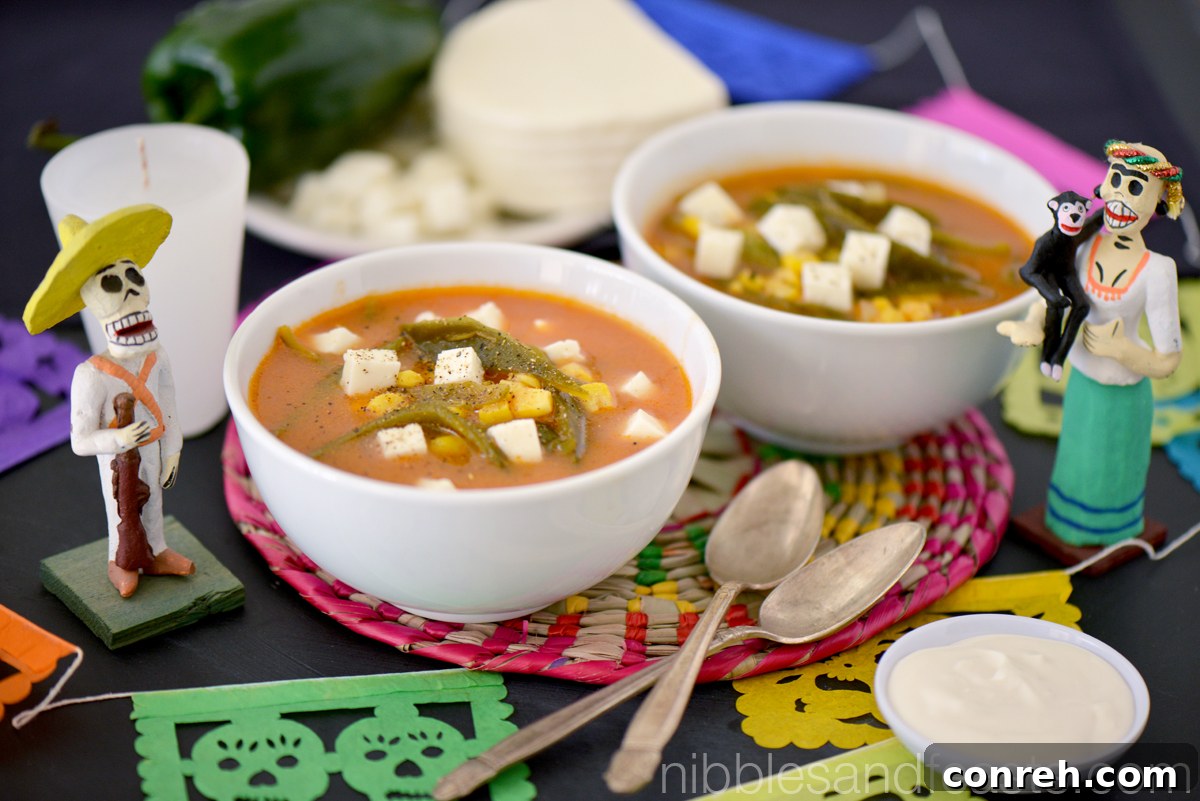
Just as those first chilly evenings began to settle in, and the marigolds made their joyful appearance today, I felt an undeniable pull to continue my family’s treasured Dia de Muertos tradition. There’s nothing that brings me more happiness than to gather my loved ones around a steaming bowl of homemade soup, especially one that evokes the warmth and flavors of Mexico. This year, it’s a creamy, flavorful Poblano and Corn Soup, a dish that perfectly captures the essence of comfort and hearth.
Topped generously with delicious, crumbly Cacique Panela cheese and a luscious swirl of Cacique Crema Agria, dinnertime transforms into more than just a meal. It becomes an evening of shared memories, of reminiscing about loved ones, and for many, a beautiful opportunity to begin or continue the tradition of building an altar, or ofrenda, in our own homes. This soup, with its rich, smoky notes and comforting creaminess, is an edible embodiment of the love and remembrance that define Dia de Muertos.
I invite you to savor this flavorful soup with your family. Make it a special evening, a moment of connection and comfort, especially at the first hint of a chilly autumn night, just as we do. May your soup be delicious, your bellies warm, and your hearts full of love this November. ¡Provecho!
Recipe: Poblano and Corn Soup with Panela Cheese and Crema Agria
This recipe brings together the smoky notes of roasted poblano peppers with the sweetness of corn, all enveloped in a rich, creamy broth. It’s a comforting and flavorful dish that’s perfect for a cool evening and embodies the spirit of Mexican home cooking.
Serves 6
Ingredients
- 3 medium Roma tomatoes, ripe and firm
- 1/4 cup water, for blending
- 2 tablespoons canola oil (or other neutral cooking oil)
- 1/2 cup yellow onion, finely chopped
- 1 cup canned yellow corn, drained (or fresh/frozen corn, thawed)
- 1/2 tablespoon chicken flavor bouillon (powder or paste)
- 4 large Poblano chiles, roasted, peeled, deveined, seeded, and chopped into strips
- 6 cups chicken stock (use high-quality vegetable stock for a vegetarian option)
- 1/2 cup Cacique Crema Agria Mexicana (Mexican sour cream)
- 1 (10-ounce) package Cacique Queso Panela, cut into small cubes for garnish
- Fresh cracked black pepper, to taste
Method
- Prepare the Tomato Base: In a blender container, combine the Roma tomatoes with 1/4 cup of water. Blend until the mixture is perfectly smooth and uniform. For an extra smooth soup base, run the pureed tomato mixture through a fine-mesh strainer to remove any remaining skins or seeds. Set aside.
- Sauté Aromatics: In a large, heavy-bottomed stock pot or Dutch oven, heat the canola oil over low-medium heat. Add the chopped yellow onion and sauté gently for about 1 minute until it starts to soften and become translucent, releasing its fragrant aroma.
- Combine and Simmer: Stir in the drained yellow corn and cook for another minute, allowing the flavors to meld. Pour in the strained pureed tomatoes and bring the mixture to a gentle simmer. Continue to cook for approximately 5 minutes, letting the tomato base reduce slightly and deepen in flavor.
- Add Stock and Chiles: Incorporate the chicken flavor bouillon, the prepared poblano chile strips, and the 6 cups of chicken stock (or vegetable stock if preferred). Stir everything together thoroughly. Bring the soup to a boil, then reduce the heat to low, cover the pot, and let it simmer gently for 20 minutes. This allows the flavors to fully develop and the poblano chiles to tenderize further.
- Finish with Cream: After 20 minutes, remove the pot from the heat. Stir in the 1/2 cup of Cacique Crema Agria Mexicana until it is fully incorporated and the soup takes on a creamy consistency. Avoid boiling the soup after adding the cream to prevent curdling.
- Serve and Garnish: Ladle the hot soup into individual bowls. Garnish each serving generously with small cubes of Cacique Queso Panela. Finish with a sprinkle of fresh cracked black pepper for a touch of spice and aroma. Serve immediately and enjoy!
Pro Tip for Roasting Poblanos:
To roast poblano chiles, you can place them directly over an open flame on a gas stove, under a broiler, or on a hot grill until the skins are charred and blistered. Immediately transfer them to a bowl and cover tightly with plastic wrap for 10-15 minutes. This steaming process helps loosen the skin, making them easier to peel. Once cooled, peel away the skin, slice them open, remove the seeds and veins, then chop into strips as directed.
For more authentic Mexican recipes to celebrate your Dia de Muertos with, be sure to visit: http://diadelosmuertosrecipes.com/
This is a compensated post in collaboration with Cacique Inc. and Latina Bloggers Connect. All opinions expressed in this article are 100% my own.