Unlocking the Flavors of Mexico: Your Essential Guide to Authentic Mexican Cheeses
Have you ever found yourself gazing at an impressive cheese display, feeling a delightful mix of anticipation and bewilderment? The sheer variety can be overwhelming – “Should I eat the rind? Is stinkier truly better? Why is this one green, and why the hefty price tag? French? Dutch?” I certainly have those moments, and when an adventurous mood strikes, I often take a leap of faith, choosing a cheese and making the best of my selection.
However, when it comes to the vibrant and diverse world of Mexican cheeses, I’m in my element. Years of dedicated taste-testing, recipe development, and countless hours cooking with these incredible dairy creations have made me intimately familiar with their unique characteristics and culinary potential.
That’s precisely why I am absolutely thrilled to be collaborating with the California Milk Advisory Board as a Latina Dairy Diva. Together, we’re bringing you this easy-to-follow guide to navigate the wonderful landscape of Mexican cheeses. Not only will you learn to differentiate between popular varieties, but I’ll also be sharing one of my favorite authentic Mexican cheese recipes to inspire your next culinary adventure!
At first glance, the array of Mexican cheeses might seem a little complex. But fear not! Once you familiarize yourself with some of the most popular varieties—like Queso Fresco, Queso Cotija, Queso Oaxaca, Queso Panela, and Requeson—it truly becomes a walk in the park. You’ll soon be able to confidently differentiate these delicious cheeses and effortlessly incorporate them into your everyday cooking, elevating your favorite dishes with authentic Mexican flavors.
Your Comprehensive Mexican Cheese Guide: Exploring Essential Varieties
Let’s dive into the fascinating world of Mexican cheeses. Understanding their distinct textures, flavors, and uses is key to unlocking their full potential in your kitchen.
1. Queso Fresco (keh-so fres-ko) – The Fresh & Crumbly Classic
As its name suggests, Queso Fresco translates to “fresh cheese,” and it’s often considered a farmer’s cheese due to its simple, traditional preparation. This popular Mexican cheese boasts a slightly salty and milky, creamy flavor profile with a delightful tang. While it feels moist, it’s easily crumbled, making it a versatile finishing touch for many dishes.
- Flavor & Texture: Mild, milky, slightly tangy, with a moist but crumbly texture. It’s lightly salted, offering a pleasant balance.
- Cooking Properties: When heated, Queso Fresco softens beautifully but importantly, it does not melt into a gooey consistency. This makes it perfect for dishes where you want the cheese to hold its shape while warming through.
- Best Uses: It’s exceptional when crumbled over hearty bean dishes, used as a fresh garnish for vibrant salads, crispy tostadas, savory enchiladas, and traditional sopes. It adds a fresh, creamy burst of flavor and texture without overwhelming other ingredients.
- Origin & Fun Fact: One of the most ubiquitous cheeses in Mexico, often made daily in small batches, similar to ricotta or cottage cheese in its freshness.
2. Queso Panela (keh-so pan-il-ah) – The Grilling & Slicing Marvel
Also known affectionately as queso de canasta, or “basket cheese,” due to the characteristic basket weave pattern often left on its surface from the molds it’s pressed in, Queso Panela also falls into the fresh cheese category. It stands apart from Queso Fresco with its firmer, yet surprisingly spongy and soft texture.
- Flavor & Texture: Mild, fresh, and subtly salty, Panela has a distinct, firm, and elastic texture that allows it to retain its shape even when heated. It does not crumble easily.
- Cooking Properties: Like Queso Fresco, Panela softens but does not melt when exposed to heat, making it an excellent choice for grilling or pan-frying. It develops a pleasant golden crust while remaining tender inside.
- Best Uses: Its ability to hold shape makes it a fantastic addition to healthy omelets, where it adds substance without dissolving. It can be enjoyed as a refreshing appetizer on its own, perhaps drizzled with olive oil and herbs, or sliced into strips to elevate fresh salads. Grilled Panela is a delicacy, often served with a squeeze of lime.
- Origin & Fun Fact: Its mildness makes it a popular choice for those seeking a lighter, fresher cheese option.
3. Queso Cotija (keh-so ko-tee-hah) – The Mexican Parmesan
If you’re looking for a cheese that packs a punch of flavor and adds a salty, savory kick, Queso Cotija is your go-to. Often compared to Parmesan cheese, this aged Mexican cheese is characterized by its dry, firm, and crumbly texture. Its robust flavor is intensely salty, making it a powerful seasoning ingredient.
- Flavor & Texture: Pungent, very salty, and intensely savory. Its texture is dry, hard, and crumbles effortlessly, similar to aged Parmesan.
- Cooking Properties: Due to its dryness and high salt content, Cotija doesn’t melt in the traditional sense. Instead, it maintains its crumbly texture, adding bursts of flavor wherever it’s sprinkled.
- Best Uses: It’s an indispensable finishing cheese. Sprinkle it generously over rich pasta dishes, vibrant salads, comforting soups, and roasted vegetables to enhance their savory notes. I particularly love dusting it over freshly baked beans or street corn (elotes) for an authentic touch. It also adds incredible depth to tacos and enchiladas.
- Origin & Fun Fact: Named after Cotija, Michoacán, where it originated, this cheese comes in two main types: “de la sierra” (mountain style), which is harder and saltier, and “de rancho” (ranch style), which is slightly softer.
4. Queso Oaxaca (keh-so wuah-hah-kah) – The Melting & Stringing Star
For lovers of perfectly melted cheese, Queso Oaxaca is an absolute must-try. This semi-soft, stretched-curd cheese is famously known as “quesillo” in some regions and is the undisputed king for making authentic quesadillas. It’s traditionally sold in the shape of a large knot or ball, a result of its unique preparation process where cheese curds are stretched and wound.
- Flavor & Texture: Mild, buttery, and exceptionally milky, with a distinctive elastic, stringy texture that makes it pull apart beautifully.
- Cooking Properties: This is where Queso Oaxaca truly shines! It has superb melting capabilities, becoming incredibly gooey and stringy without becoming oily. This makes it ideal for dishes where you want a rich, flowing cheese.
- Best Uses: Essential for traditional quesadillas, where its melt delivers that perfect cheese pull. It’s also fantastic for stuffing into chiles rellenos, gracing pizzas with a unique texture, creating delicious enchiladas, or folded into empanadas. Anywhere you need a reliable, flavorful melting cheese, Oaxaca is your answer.
- Origin & Fun Fact: Its production process is similar to mozzarella, involving heating the curds and stretching them into long ribbons before winding them into a ball, hence its “string cheese” nickname.
5. Requeson (reh-key-sown) – The Mexican Ricotta
If you’re familiar with Italian ricotta cheese, you’ll find a close cousin in Requeson. This delicate Mexican cheese is made from whey, resulting in soft, creamy curds that are incredibly versatile in both sweet and savory applications.
- Flavor & Texture: Mildly sweet, milky, and very creamy, with a light, soft, granular curd texture. It’s often unsalted or very lightly salted, allowing its natural sweetness to shine.
- Cooking Properties: Requeson maintains its soft, creamy consistency when cooked, making it excellent for binding ingredients or adding a rich, moist element to fillings.
- Best Uses: Its delicate flavor and texture make it ideal for stuffing pasta shells, layering in lasagna, or filling cannoli for a Mexican twist. It’s also a fantastic addition to cheesecakes, adding a unique creaminess, and can be blended into savory dips or used as a spread on toast or crackers.
- Origin & Fun Fact: Like ricotta, Requeson is often a byproduct of making other cheeses, utilizing the whey that separates from the curds, making it a sustainable and delicious product.
Why Embrace Mexican Cheeses in Your Kitchen?
Beyond their individual characteristics, Mexican cheeses offer a world of culinary possibilities that can transform your cooking. Their versatility, distinct flavor profiles, and rich cultural heritage make them an invaluable addition to any pantry.
- Unmatched Versatility: From crumbling over soups to melting into glorious quesadillas, Mexican cheeses cover a vast spectrum of culinary uses, allowing for incredible creativity.
- Flavor Depth: They introduce unique layers of flavor—from the fresh tang of Queso Fresco to the salty punch of Cotija—that can elevate even the simplest dishes.
- Cultural Connection: Incorporating these cheeses into your cooking is a delicious way to explore and celebrate the rich culinary traditions of Mexico, bringing authentic tastes right to your home.
- Real California Milk: Many fantastic Mexican cheeses are produced right here in California, using fresh, high-quality milk from local dairy farms. When you see the Real California Milk seal, you know you’re getting a product that supports local agriculture and adheres to stringent quality standards.
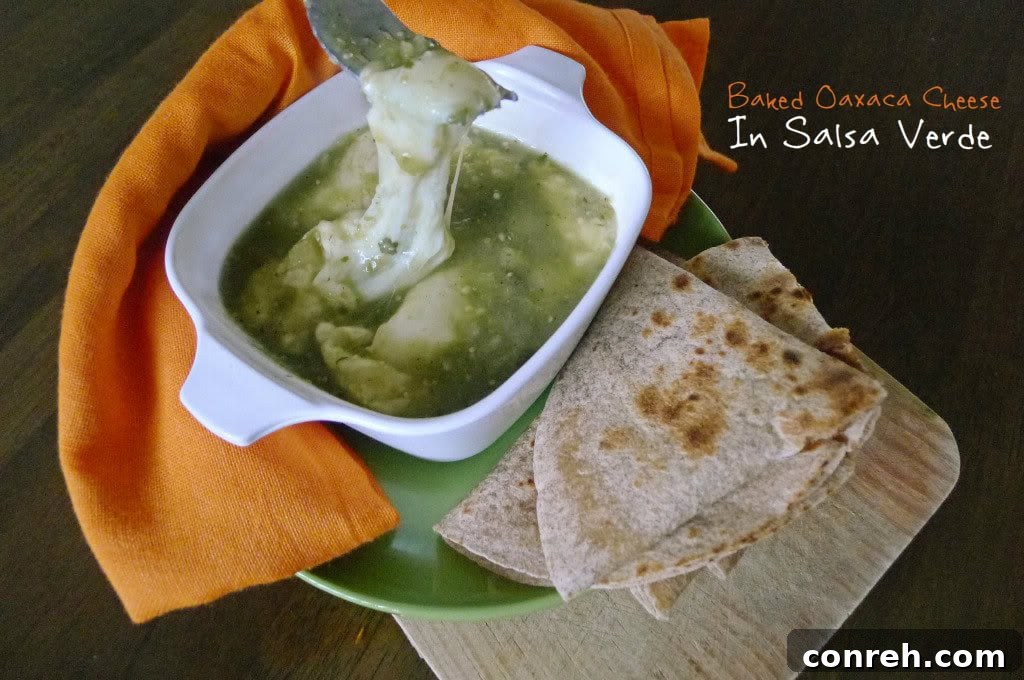
Savoring Mexican Flavors: Cheesy Baked Oaxaca with Zesty Salsa Verde
To put your newfound Mexican cheese knowledge to good use, I’m excited to share one of my absolute favorite ways to use Queso Oaxaca. This simple, quick appetizer is ready in under 20 minutes and is a guaranteed crowd-pleaser. Serve it at your next gathering and let your guests experience the irresistible flavor of one of the most popular Mexican cheeses out there!
Queso Fundido en Salsa Verde (Cheesy Baked Oaxaca with Zesty Green Salsa)
Ingredients for Salsa Verde:
- 1 medium white onion, roughly chopped
- 1 lb fresh tomatillos, husked and rinsed
- 2 cups chicken broth (or vegetable broth)
- ½ bunch fresh cilantro, roughly chopped
- 1 serrano chile, stem removed (seeds optional, for heat)
- 1 poblano chile, roasted, peeled, and seeded
- ½ teaspoon dried Mexican oregano, crumbled
- ¼ teaspoon sugar
- Salt to taste
Ingredients for Queso Fundido:
- 1 (12 oz) block of Queso Oaxaca, at room temperature
- 8 warm corn tortillas, for serving
Instructions for Salsa Verde:
- In a large pot of water, boil the husked tomatillos until they are tender and their color changes from bright green to a duller green, about 5-6 minutes. Drain the tomatillos and transfer them to a blender.
- Add ½ cup of the chicken broth, the chopped onion, serrano chile, roasted poblano chile, cilantro, crumbled Mexican oregano, salt, and sugar to the blender.
- Blend until the mixture is nearly liquid and smooth. Taste and adjust seasoning if needed. If too thick, add a little more chicken broth until desired consistency is reached.
Instructions for Queso Fundido:
- Preheat your oven to 350°F (175°C).
- Spread about one cup of the prepared salsa verde evenly at the bottom of a small, deep baking dish or an oven-safe skillet.
- Place the block of Queso Oaxaca directly over the salsa in the center of the dish.
- Pour an additional ¾ cup of salsa verde over the cheese.
- Immediately place the dish in the preheated oven. Bake for approximately 10-12 minutes, or until the cheese is almost entirely melted and softened, but still largely holds its shape and is bubbling around the edges. It should be hot and gooey, but not completely dissolved.
- Carefully remove the dish from the oven.
- Serve immediately, scooping generous portions of the warm, cheesy salsa onto hot corn tortillas to create delicious, melty tacos or simply enjoy it with chips as a dip!
Your Culinary Adventure Awaits!
Exploring Mexican cheeses is a rewarding culinary journey that opens up a world of authentic flavors and textures. Whether you’re crumbling Queso Fresco over a fresh salad, grilling Queso Panela for a light meal, sprinkling Cotija on your favorite pasta, or diving into the melty goodness of Queso Oaxaca, these cheeses are sure to delight your palate. And with delicious Real California Milk, you’re guaranteed quality and taste.
I encourage you to experiment with these fantastic cheeses and discover your own favorite ways to enjoy them. Don’t forget to try the Queso Fundido recipe – it’s a perfect starting point for showcasing the incredible versatility of Mexican dairy!
Disclaimer:
This is a sponsored post as part of a campaign with the California Milk Advisory Board. All opinions and recipes shared are my own.