Unlock Your Green Thumb: An Easy Guide to Seed Starting with The Home Depot
This is a sponsored post written by me on behalf of The Home Depot.
Embarking on Your Seed Starting Journey: Overcoming Initial Hurdles
The allure of homegrown plants, vibrant flowers, and fresh herbs straight from your garden is undeniable. However, for many aspiring gardeners, the thought of starting seeds indoors can seem daunting. My primary concern, much like many others, revolved around the practicalities: “Do I have enough space?” and “Will I be able to manage the setup and ongoing maintenance?” These questions often deter enthusiasts before they even begin. Yet, with a little research and the right tools, these concerns can quickly transform into excitement for a new green adventure.
My own journey began with a visit to The Home Depot’s Garden Club website. This online resource proved to be a treasure trove of information, offering practical advice and inspiring ideas for gardeners of all levels. Armed with newfound knowledge and a clearer vision, I then consulted with a knowledgeable Home Depot sales associate. Their expert recommendation pointed me towards an innovative solution: the Jiffy Self-Watering Greenhouse. This choice immediately addressed my space constraints and maintenance worries, as I quickly discovered the vast array of greenhouse variations available at The Home Depot. There truly was a perfect seed starter designed just for me, and I felt ready to dive in!
Why Start Seeds Indoors? The Rewarding Benefits of Early Planting
Venturing into indoor seed starting offers a multitude of benefits that extend far beyond simply having more plants. It’s an enriching experience that connects you more deeply with the natural world and empowers you to cultivate a truly unique garden.
Cost Savings and Greater Variety
One of the most compelling reasons to start seeds indoors is the significant cost savings. Packets of seeds are considerably less expensive than purchasing established plants from a nursery. This allows you to grow a much larger quantity of plants for a fraction of the price. Furthermore, seed starting opens up a world of plant varieties that you might never find at your local garden center. From heirloom tomatoes to exotic flowers, you can select specific cultivars that thrive in your region, offer unique flavors, or boast rare beauty, truly customizing your garden to your preferences.
Extended Growing Season and Healthier Plants
Starting seeds indoors allows you to get a head start on the growing season, especially in climates with shorter summers. By germinating seeds several weeks before the last frost date, you give your plants a crucial developmental advantage. This results in stronger, more robust seedlings that are better equipped to withstand the elements once transplanted outdoors. Indoor control over growing conditions – light, temperature, and moisture – means your plants begin their lives in an optimal environment, leading to healthier growth and potentially higher yields.
A Fulfilling and Educational Family Activity
Beyond the practical benefits, seed starting is an incredibly fulfilling hobby. There’s immense satisfaction in watching tiny seeds sprout and transform into vibrant plants under your care. It’s a meditative process that fosters patience and attention to detail. Moreover, it’s an excellent educational opportunity for children. My four-year-old son was captivated by the process, turning it into a memorable family activity. It teaches kids about life cycles, responsibility, and the wonders of nature, all while creating lasting memories together.
Unboxing the Magic: The Jiffy Self-Watering Greenhouse Experience
Upon bringing the Jiffy Self-Watering Greenhouse home, I was pleasantly surprised by how straightforward the setup process was. My initial apprehension about complexity quickly dissolved. In fact, it was so incredibly easy that I enlisted the help of my four-year-old son, and together we assembled our new greenhouse right on the kitchen table. This hands-on experience, free from fuss and mess, made it enjoyable for both of us.
A major advantage of this particular seed starter/greenhouse system is its innovative design, which virtually eliminates the mess typically associated with potting soil. The kit includes dried soil pellets, ingeniously compacted within mesh pockets. This means no loose soil spills to clean up, and no muddy water trailing across the kitchen floor. It’s a clean, contained system perfect for indoor use, even with little helpers!
A Step-by-Step Guide to Your Jiffy Self-Watering Greenhouse
Getting your Jiffy Self-Watering Greenhouse up and running is an incredibly simple process. Let’s walk through the steps that will have you on your way to a flourishing garden in no time.
Step 1: Familiarize Yourself with the Components
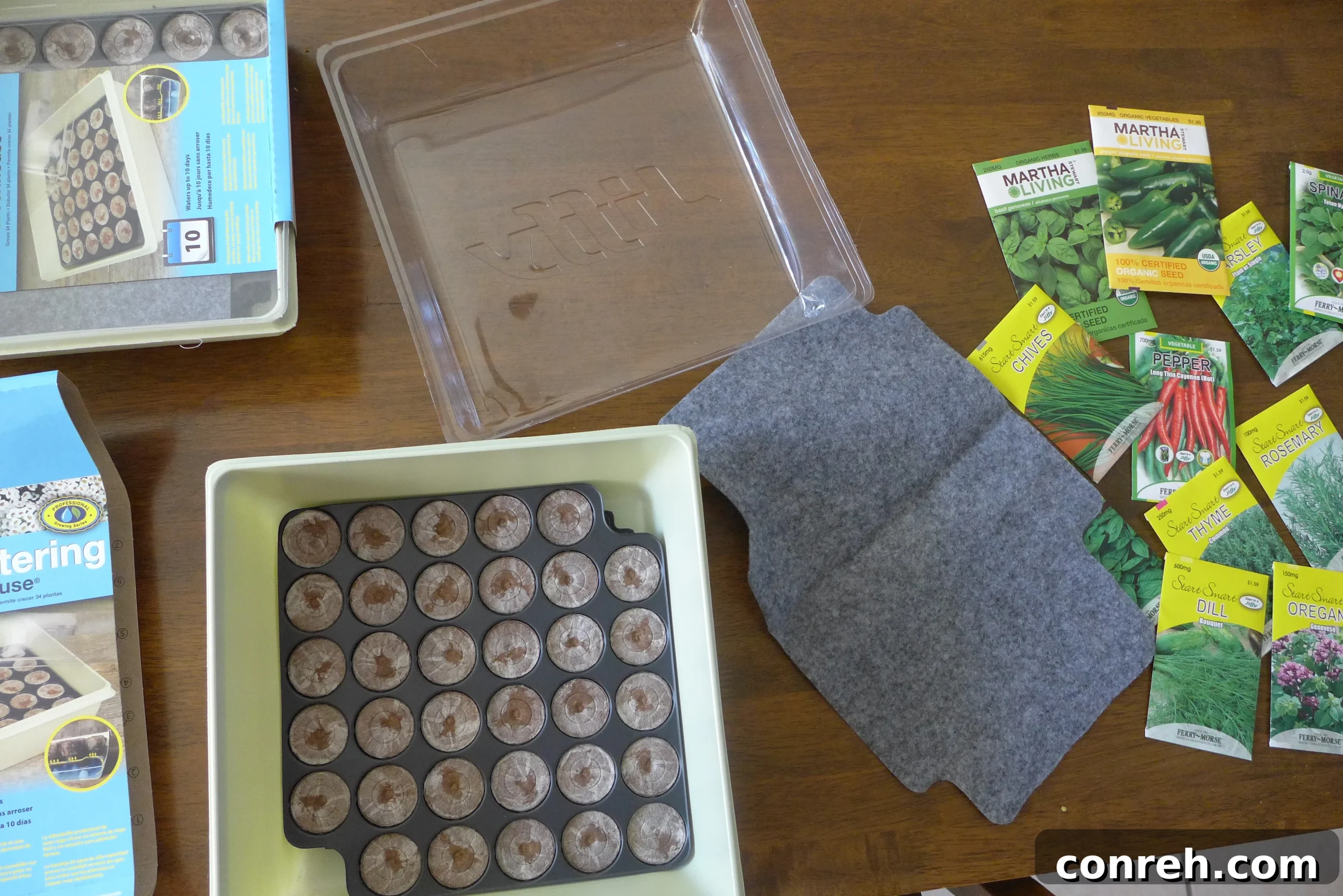
Before you begin, carefully unpack all the components of your Jiffy Self-Watering Greenhouse. Take a moment to understand each part: the base tray, the self-watering mat, the pellet tray (which holds the soil pellets), and the clear humidity dome. Reading through the simple instructions provided will give you a clear overview of how everything fits together and functions. This quick orientation ensures a smooth and enjoyable assembly.
Step 2: Assemble the Self-Watering Mat and Base
The heart of this convenient system is the self-watering mat. First, place the base tray on a flat, stable surface. Then, carefully lay the self-watering mat into the base of the greenhouse, ensuring it lies flat and covers the entire bottom surface. Next, position the pellet tray directly on top of the self-watering mat, making sure it aligns perfectly with the base tray. Once everything is in place, it’s time to add water. I poured approximately 12 cups of water directly into the base tray, allowing the self-watering mat to become thoroughly saturated.
Step 3: Witness the Soil Pellet Transformation
This is where the real magic begins, and it’s particularly captivating for children! As the self-watering mat soaked up the water, the compacted soil pellets within their mesh pockets began to absorb moisture from below. Slowly but surely, they started to puff up and expand, transforming from flat discs into ready-to-use soil pods. My son’s face lit up with amusement and wonder as he watched this incredible process unfold. It felt like a miniature science experiment right on our kitchen table. Within a short time, all the pellets expanded to their full size, typically reaching 1 to 1 1/2 inches tall, perfectly moist and ready for planting.
Step 4: Prepare the Soil for Planting
Once the soil pellets have fully expanded, it’s time to create the perfect home for your seeds. Using a clean chopstick or a small pencil, gently pull back the mesh surrounding the top of each pellet. Then, lightly fluff the soil within each pocket to create an aerated, welcoming environment for germination. Finally, make a small, shallow indentation in the center of the soil in each pocket. This indentation will be where your precious seeds will rest.
Step 5: Plant Your Seeds with Care
With the soil prepared, it’s time for the most exciting part: planting the seeds! This is where little hands can be especially helpful. My son carefully placed the tiny seeds into each prepared indentation. Following his lead, I used the chopstick to gently push a small amount of soil over each seed, just enough to cover it lightly. Be sure to follow the specific planting depth recommendations on your seed packets, as some seeds require light to germinate, while others need to be buried deeper.
Step 6: Label Your Plantings for Easy Identification
An often-overlooked but crucial step is labeling your rows. It’s easy to forget what you planted where, especially when starting multiple varieties. While I was out of my usual frozen pop flat sticks, I found a perfect alternative in small wooden spoons, which worked flawlessly as plant markers. You can also use craft sticks, plastic labels, or even cut-up plastic containers. Clearly label each row with the name of the plant and the date it was sown. This will be invaluable when your seedlings begin to emerge, ensuring you can identify each one accurately.
Nurturing Your Tiny Sprouts: Tips for Successful Germination and Growth
Now that your seeds are planted, the real nurturing begins. While the self-watering greenhouse simplifies moisture management, a few additional tips can help ensure your seedlings thrive.
Optimal Light and Temperature
Most seeds require warmth to germinate. Place your greenhouse in a spot where the temperature is consistently warm, typically between 65-75°F (18-24°C). Once seedlings emerge, they will need ample light to grow strong and not become leggy. A sunny windowsill might suffice, but for best results, consider using grow lights positioned just a few inches above the top of the seedlings. Adjust the light height as they grow, aiming for 14-16 hours of light per day.
Monitoring Moisture (Even with Self-Watering)
While the self-watering mat is a fantastic feature, it’s still wise to periodically check the moisture level of the mat and the soil pellets. The goal is consistently moist, but not waterlogged, conditions. Replenish the water in the base tray as needed, ensuring the mat remains damp. The clear humidity dome helps maintain a moist environment for germination, but once seedlings appear, you might start ventilating by lifting it for a few hours each day to prevent damping-off disease.
Thinning and Hardening Off
If multiple seeds germinate in one pellet, it’s important to thin them to the strongest seedling. Carefully snip off weaker seedlings at the soil line with small scissors to allow the strongest one to flourish. Before transplanting your thriving seedlings outdoors, they need a period of “hardening off.” This gradual acclimatization process involves exposing them to outdoor conditions for increasing periods over a week or two, preparing them for the harsher environment of your garden bed. Start with a few hours in a shady, protected spot and gradually increase exposure to sunlight and wind.
Beyond Germination: What Comes Next for Your Flourishing Seedlings?
Watching your tiny seeds transform into robust seedlings is incredibly rewarding. But the journey doesn’t end there! Once your seedlings have developed a few sets of true leaves and are sturdy enough, it’s time to consider their next steps.
Transplanting to Larger Pots
Many seedlings will outgrow their initial pellets before it’s safe to plant them outdoors. At this stage, they’ll need to be transplanted into larger individual pots. Choose pots that are a few inches wider than the original pellet, ensuring they have drainage holes. Use a high-quality potting mix and carefully transfer the seedling, trying not to disturb the roots too much. Continue to provide adequate light, water, and nutrients as they continue to grow stronger.
Preparing for the Outdoor World
After the hardening off process, and once all danger of frost has passed in your region, your healthy seedlings will be ready for their final home in your outdoor garden. Prepare your garden beds by enriching the soil with compost and ensuring good drainage. Dig holes large enough to accommodate the seedling’s root ball, gently place the plant, and backfill with soil. Water thoroughly after transplanting. With a strong start from your Jiffy Self-Watering Greenhouse, your plants are well-prepared to flourish and provide you with a bountiful harvest or a stunning display of blooms.
Your Gardening Partner: The Home Depot Difference
The Home Depot is truly your one-stop shop for all your gardening and home improvement needs. My experience with the Jiffy Self-Watering Greenhouse is just one example of the quality products and supportive resources they offer. Whether you’re a seasoned gardener or just starting out, you’ll find everything you need to make your projects successful and enjoyable.
A World of Seed Starter Kits and Expert Advice
Beyond the Jiffy system, The Home Depot boasts an extensive selection of seed starter kits, growing mediums, tools, and accessories. There’s a perfect solution for every type of plant and every gardener’s preference. Their knowledgeable staff are always on hand to answer questions, offer personalized recommendations, and provide expert advice, helping you navigate the options and choose the best products for your specific projects. You don’t have to be an expert to start gardening; The Home Depot makes it accessible to everyone.
Join The Home Depot’s Garden Club Today!
For even more support and inspiration, I highly recommend joining The Home Depot’s Garden Club. It’s an invaluable resource for anyone passionate about gardening. Membership offers a plethora of benefits designed to enhance your gardening journey and save you money:
- Exclusive Savings: Get over $300 in email-exclusive savings each year, helping you stretch your gardening budget further.
- Product Sneak Peeks: Be among the first to learn about new products and innovations hitting the shelves.
- Regional Gardening Ideas: Receive monthly lawn and garden ideas tailored to your specific region, ensuring you’re working with the best advice for your local climate and conditions.
- Access to Experts: Gain direct access to The Home Depot’s gardening experts who can answer your toughest questions and provide personalized solutions.
It’s incredibly easy to join the world’s largest garden community. Click here today to sign up, or visit http://gardenclub.homedepot.com/ to explore all the fantastic benefits of membership firsthand. You’ll be amazed at the wealth of information and support waiting for you!
Ready to #DigIn for Spring? Your Next Home Project Awaits!
Spring is undoubtedly home improvement time, and The Home Depot has absolutely everything you need to truly #DigIn and transform your spaces. No matter what projects are on your agenda, from a small indoor herb garden to a complete backyard overhaul, they offer great values on all the essentials. Beyond products, they are ready to assist you with inspiring renovation ideas and invaluable expert advice, ensuring your vision comes to life seamlessly. I guarantee you will find your next fun and rewarding home project with just a click or a visit.
This is a sponsored post written by me on behalf of The Home Depot.