Chicken Pozole Blanco: The Ultimate Comforting Mexican Classic
Imagine waking up to the rich, savory aroma of a simmering pot on a leisurely Sunday morning. For countless families across Mexico, this isn’t just a dream – it’s the comforting reality of pozole. More than merely a dish, pozole is a culinary institution, a central element in family gatherings and cherished traditions. While its more vibrant cousins, pozole rojo (red) and pozole verde (green), often take center stage at festive celebrations, Pozole Blanco de Pollo (white chicken pozole) offers a beautifully understated, lighter, and profoundly soul-satisfying experience. This exquisite version is particularly ideal for breakfast or brunch, providing a gentle warmth that kickstarts the day.
This beloved Mexican stew harmoniously blends tender, succulent chicken with plump, chewy hominy kernels, all steeped in a fragrant, clear broth. Each bowl serves as a pristine canvas, mild enough to delight even the youngest palates, yet poised to burst with flavor when adorned with crisp vegetables, a generous squeeze of bright lime, and a drizzle of fiery salsa for those who crave a piquant kick. Chicken Pozole Blanco is a testament to how the most humble ingredients – chicken, hominy, and a carefully selected blend of seasonings – can be transformed into a meal that feels both deeply comforting and genuinely celebratory. It’s a timeless dish that effortlessly bridges generations, inviting everyone to customize their own perfect bowl of steaming goodness, fostering conversation and connection as the morning gracefully transitions into afternoon.
Related Recipe: Pozole Rojo
At the heart of this dish lies nixtamalized hominy – large, robust corn kernels that have undergone an ancient Mesoamerican process involving cooking and steeping in an alkaline solution, typically with lime (calcium hydroxide). This transformative process gives the hominy its distinctive tender yet pleasantly firm texture, while also boosting its nutritional value and making it easier to digest. Hominy isn’t just an ingredient; it’s the very soul of pozole, imparting a unique heartiness and depth that elevates this creation beyond a simple soup into a truly fulfilling meal in a bowl.
What truly distinguishes Pozole Blanco from its red and green counterparts is its reliance on the pure, unadulterated savory richness of its broth, rather than the vibrant colors and bold flavors derived from chile sauces. The flavor profile is meticulously built upon a subtle aromatic base created by blending onion, garlic, and dried oregano. This trio of ingredients contributes a clean yet profoundly satisfying taste that perfectly complements the rich chicken, allowing the natural essence of each component to shine through. This elegant simplicity makes pozole blanco the ideal foundation for an array of colorful, fresh toppings and your chosen salsa, allowing for endless personal customization.
The Rich Cultural and Historical Tapestry of Pozole
- Pozole is far more than a delicious meal; it holds profound cultural significance within Mexico, with its origins tracing back to pre-Columbian civilizations. Ancient Aztecs prepared this ceremonial dish to honor their gods, making it a sacred offering. The very term “pozolli” originates from Nahuatl, meaning “boiled” or “foamy,” a vivid description of how the hominy kernels beautifully bloom and expand as they cook, creating a wonderfully textured broth.
- Over centuries, pozole has evolved, adapting gracefully to the diverse local ingredients and distinct regional preferences found across Mexico. Today, its variations are a source of regional pride: pozole rojo, characterized by its deep red chile base, is a staple in states like Guerrero and Jalisco; pozole verde, bursting with the fresh flavors of tomatillos and green chiles, is highly cherished in Guerrero and Morelos. Meanwhile, pozole blanco holds a special place in the hearts of those throughout central Mexico, particularly beloved in states such as Sinaloa and Nayarit, celebrated for its pure, clean taste.
- While often prominently featured at significant national celebrations like Independence Day or Christmas, pozole blanco de pollo has also blossomed into a comforting weekend ritual. It embodies a meal that possesses an incredible power to unite families, bringing them together around a large, steaming pot to share stories, laughter, and, of course, a delightful meal. Its adaptability and universal appeal make it a cherished part of everyday life as much as it is a highlight of grand festivities.
Crafting Your Perfect Bowl: Traditional Serving Suggestions and Toppings
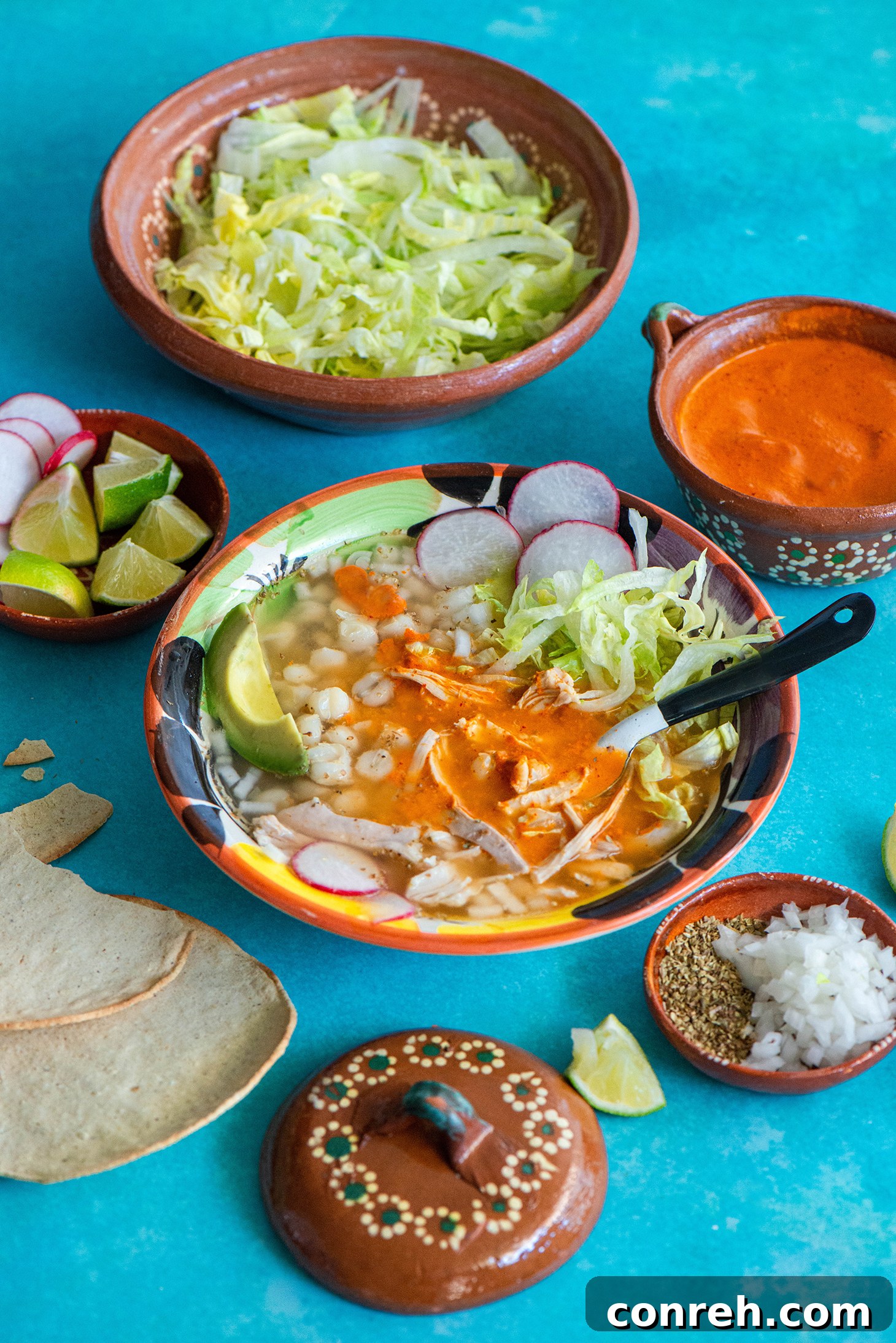
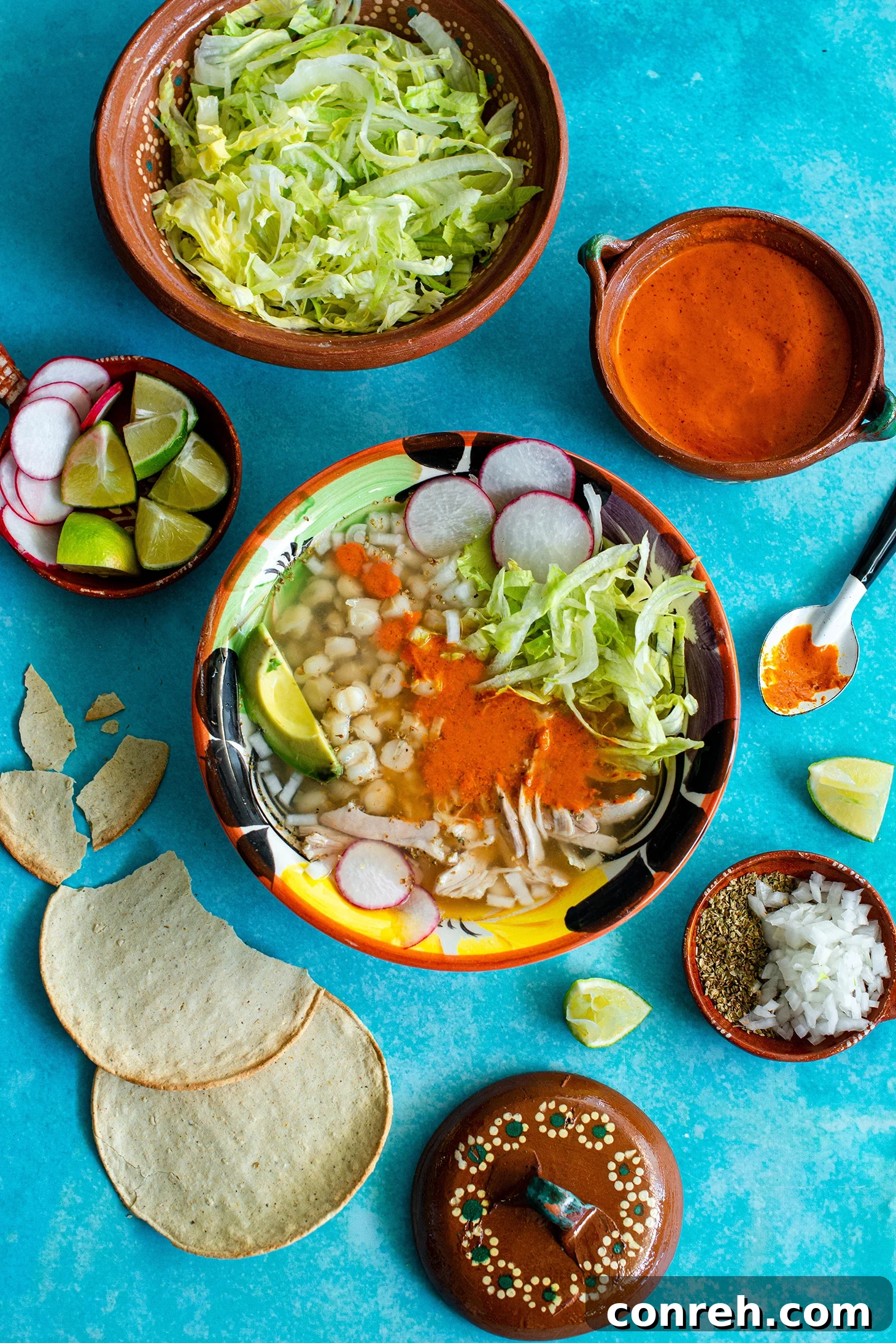
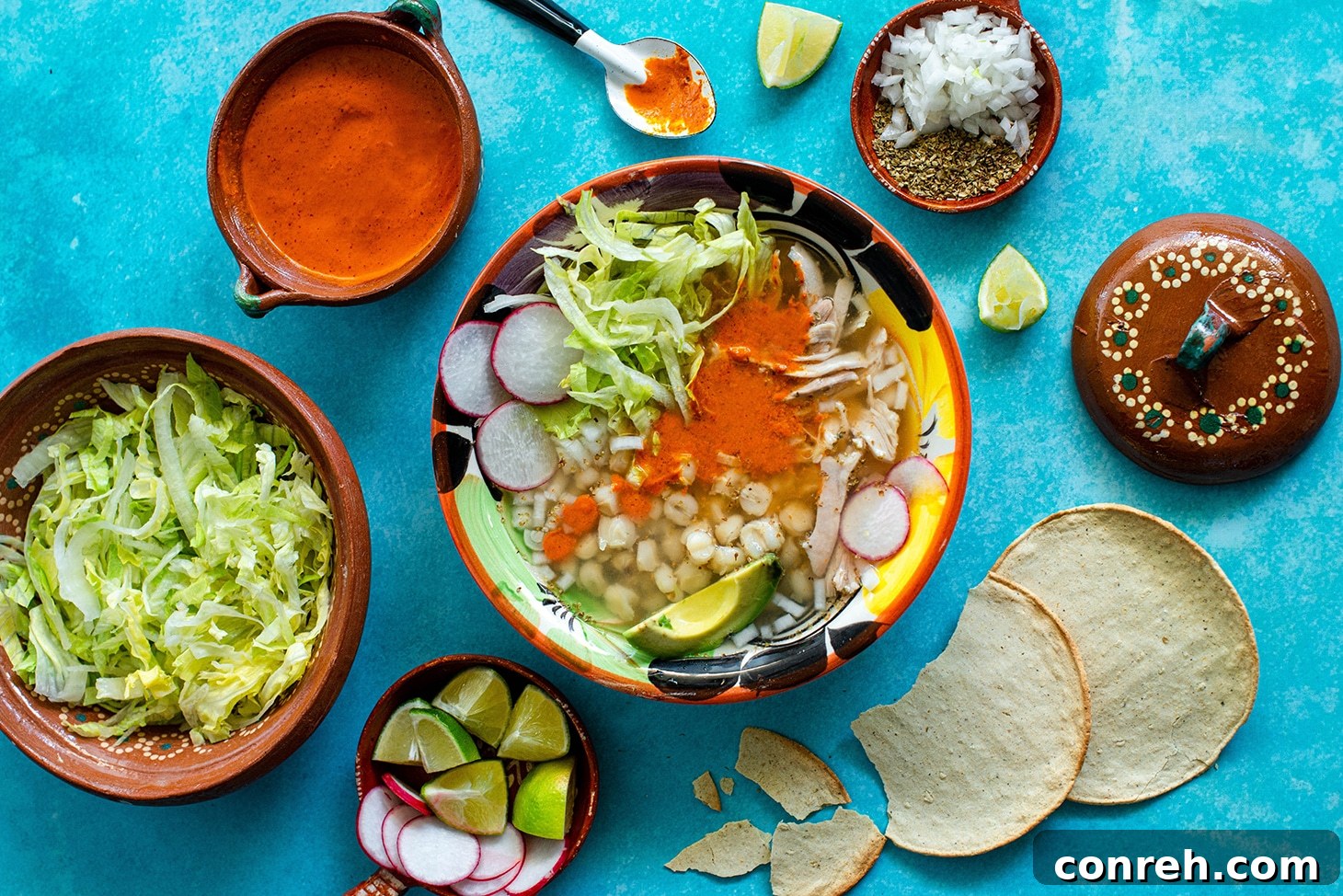
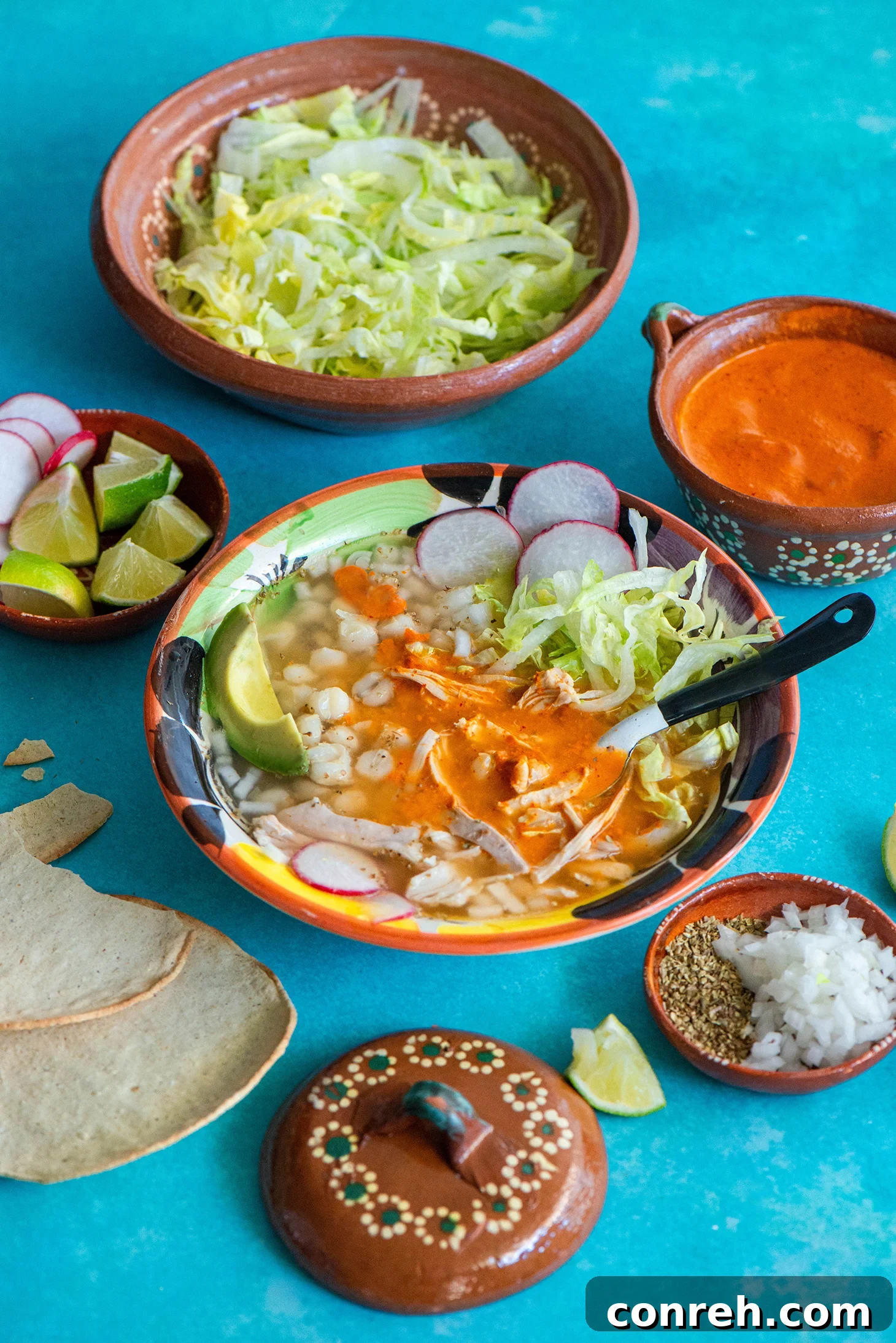
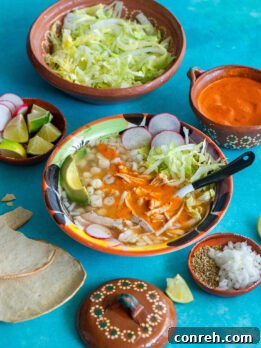
One of the most enjoyable and interactive aspects of indulging in pozole is the delightful array of toppings. This is where everyone gets to express their individuality, transforming a simple bowl into a personalized culinary masterpiece. The contrast of textures, temperatures, and flavors – from the hot, savory broth to the cool, crisp garnishes and the bright acidity of lime – makes every single bite a vibrant and memorable experience. Traditional garnishes, each adding its unique character, include:
- Shredded lettuce or cabbage: Essential for adding a refreshing crunch and a cool, verdant contrast to the warm, hearty stew. The slight bitterness of cabbage can also balance the richness of the chicken.
- Sliced radishes: These beautiful crimson slices contribute a delightful peppery bite and a crisp texture, along with a visually appealing pop of color.
- Creamy avocado: Diced or sliced, avocado introduces a luxurious, buttery richness that complements the lean chicken and nutty hominy, adding a satisfying mouthfeel.
- Finely chopped white onion: Offering a sharp, pungent kick, raw onion provides a crucial balance to the savory broth, cutting through the richness and adding a fresh zing.
- Dried oregano: Lightly crushed between your palms and sprinkled over the top, dried Mexican oregano infuses an earthy, aromatic note that enhances the stew’s authentic flavor profile.
- Fresh lime wedges: A squeeze of fresh lime juice is absolutely non-negotiable. Its bright, zesty acidity elevates all the flavors, cutting through the richness and adding an invigorating tang that truly brings the dish to life.
- Chile de Árbol salsa: For those who delight in a touch of heat, a fiery red chile de árbol salsa provides a potent, smoky kick, transforming the mild pozole blanco into an exhilarating culinary adventure. Alternatively, a fresh salsa verde or a classic table salsa can also be served.
The beauty of pozole toppings lies in their ability to transform the dish with each spoonful. Experiment and discover your favorite combinations!
Creative Ingredient Variations to Customize Your Pozole Blanco
This white chicken pozole recipe is remarkably versatile, making it easy to adapt to your preferences or what you have on hand, all while maintaining the comforting essence of this classic dish. Don’t be afraid to experiment and make it your own!
- Protein Swaps: While bone-in, skin-on chicken thighs are recommended for their ability to imbue the broth with maximum flavor and richness, you have several excellent alternatives. A whole chicken, simmered and then shredded, will yield an even deeper, more complex broth. A mix of thighs and drumsticks is also a fantastic choice. For a lighter option, chicken breast can be used, but you might want to compensate for the reduced richness by adding a bit more chicken broth or a touch of bouillon powder to enhance the depth of flavor. For a more traditional, heartier pozole, consider using pork shoulder (cabeza de lomo) or a mix of pork cuts. If opting for pork, be prepared for a longer simmering time to ensure the meat becomes fall-apart tender, typically 2-3 hours.
- Hearty Vegetarian Option: Transforming this into a vegetarian-friendly meal is simple and delicious. Substitute the chicken with an assortment of robust vegetables such as zucchini, chayote, mushrooms (cremini or shiitake add umami), and a can of garbanzo beans (chickpeas) for added protein and texture. Crucially, replace chicken broth with a good quality vegetable broth to keep the flavors purely plant-based. You might also add extra hominy for more substance.
- Hominy Options: While readily available canned hominy offers incredible convenience and a perfectly acceptable texture, for those seeking a more traditional and slightly chewier result, dried hominy is an excellent choice. Using dried hominy requires pre-soaking overnight and a longer cooking process (often several hours), but many purists argue it yields a superior texture and deeper corn flavor. If using dried hominy, adjust your cooking time accordingly, simmering until it’s tender but still retains a pleasant bite.
- Aromatic Herbs & Seasonings: To add an extra layer of authentic Mexican flavor, consider introducing a few sprigs of fresh epazote towards the end of the cooking process. Epazote imparts a unique, slightly earthy, and pungent aroma that is characteristic of many traditional Mexican dishes. A bay leaf or two can also be added to the simmering broth for a subtle, aromatic depth. For a touch of heat within the broth itself, a whole serrano or jalapeño pepper can be added while the chicken cooks, removed before serving.
- Salsa Spectrum: Remember that white pozole is designed to be a “blank canvas,” allowing you and your guests to personalize the spice level and flavor profile. To cater to all palates, serve it with a vibrant salsa verde (tomatillo-based, offering a tangy, fresh heat) and a robust salsa roja (red chile-based, typically richer and smokier). This way, everyone can control their preferred level of spice and enjoy a diverse range of flavors.
Embrace the flexibility of this recipe and let your creativity guide you in discovering your favorite version of Pozole Blanco!
Storage and Reheating Tips for Delicious Leftovers
Like many hearty stews, pozole often tastes even better the next day, as the flavors have had ample time to meld and deepen, creating a more harmonious and rich profile. Here’s how to properly store and enjoy your delicious leftovers, ensuring they remain fresh and flavorful:
- Refrigerate: Once your pozole has cooled completely to room temperature (this is crucial for food safety), transfer it to an airtight container. It can be safely stored in the refrigerator for up to 4 days. For optimal texture and to prevent the toppings from becoming soggy, it’s best to store the broth and hominy mixture separately from any prepared garnishes. This allows you to add fresh, crisp toppings just before serving.
- Freeze: Pozole freezes beautifully, making it an excellent candidate for meal prep. To freeze, ensure the broth and hominy mixture is thoroughly cooled. Transfer it to freezer-safe containers or heavy-duty freezer bags, leaving a little headspace for expansion. It can be stored in the freezer for up to 3 months. When you’re ready to enjoy it, thaw the pozole overnight in the refrigerator.
- Reheat: To reheat, gently warm the pozole on the stove over medium heat, stirring occasionally. If the consistency appears too thick or has reduced during storage, simply add a splash of extra chicken broth or water to achieve your desired consistency. Avoid boiling vigorously, as this can break down the hominy. Once heated through, always freshen up your pozole with a squeeze of fresh lime juice and a new array of crisp toppings before serving. This will revive its vibrant flavors and textures.
Frequently Asked Questions (FAQs) about Chicken Pozole Blanco
What’s the fundamental difference between white, red, and green pozole?
The primary distinction lies in their flavor base and color. White pozole (blanco) is the purest, foundational version, made without any chile sauce, relying on a clear, savory broth. Red pozole (rojo) derives its characteristic color and robust flavor from dried red chiles like guajillo or ancho. Green pozole (verde) gets its vibrant hue and tangy, fresh taste from green ingredients such as tomatillos, jalapeños, and fresh herbs like cilantro and epazote.
Absolutely! Both methods are excellent for intensifying flavors while saving time and effort. In a slow cooker, you can simmer all the ingredients on low for 5–6 hours, or on high for 3–4 hours, until the chicken is tender and the hominy is soft. For an Instant Pot, cook on high pressure for approximately 35 minutes, followed by a natural pressure release for 10-15 minutes, before manually releasing any remaining pressure. Both techniques yield wonderfully flavorful results.
Bone-in, skin-on chicken thighs are highly recommended as they impart the most profound flavor and richness to the broth, resulting in a more complex and satisfying stew. If you prefer leaner meat, boneless, skinless chicken thighs or even chicken breast can be used, but you might consider adding an extra bouillon cube or a bit more broth to ensure a rich flavor profile.
While often enjoyed for lunch or dinner, in certain regions of Mexico, particularly following late-night festivities or during holiday celebrations, pozole is indeed served in the morning. Its hearty broth and substantial hominy make it an incredibly satisfying and energizing meal, often revered as a restorative “resaca” (hangover) cure after a night of revelry.
Pozole blanco itself is intentionally mild, designed to be a versatile base. The spice is typically added at the table. You can easily make it spicier by serving it with a robust salsa roja de chile de árbol or a fresh salsa verde on the side. Each person can then customize their bowl by adding as much (or as little) salsa as they desire, controlling their personal heat level.
Absolutely! Traditional pozole is very frequently made with pork, often using cuts like pork shoulder (boston butt) or a combination of various pork cuts for a rich flavor. If you choose to substitute pork, be aware that it generally requires a longer simmering time than chicken to achieve that desirable fork-tender texture. Adjust your cooking time accordingly, typically allowing 2-3 hours for pork to fully tenderize.
Pozole blanco isn’t just a meal; it’s an experience that feels deeply restorative, nourishing not only the body but also the spirit. It’s a testament to the power of simple ingredients transformed into something extraordinary—a dish that is inherently nourishing, wonderfully customizable, and profoundly connects you to a culinary tradition spanning centuries. Whether you’re preparing it for a comforting breakfast, a cozy family dinner, or a vibrant holiday gathering, this classic Mexican stew graciously invites everyone to the table, encouraging them to build their own perfect, personalized bowl.
For younger diners or those who prefer a milder taste, keep it simple with just tender chicken, plump hominy, and creamy avocado. For the adventurous spice lovers, turn up the heat with a generous dollop of your favorite robust salsa and an extra squeeze of vibrant lime. However you choose to serve it, the true joy of pozole blanco lies in its spirit of sharing and connection. It’s a dish made to be savored and enjoyed together, fostering warmth and togetherness.
So, the next time you find yourself yearning for ultimate comfort in a bowl, consider setting aside the everyday cereal. Instead, wake up to the inviting warmth and rich aromas of pozole blanco de pollo. Serve it traditionally with crisp tostadas on the side, gather your loved ones around the table, and allow the delicious toppings and joyful laughter to flow freely – just as they do in every Mexican kitchen where pozole is lovingly prepared and shared with heart.
Print
Chicken Pozole Blanco Recipe
5 Stars 4 Stars 3 Stars 2 Stars 1 Star
No reviews
Author: Ericka Sanchez
Prep Time: 20 minutes
Cook Time: 2 hours, 5 minutes
Total Time: 2 hours 25 minutes
Yield: serves 8
Description
White pozole, or Pozole Blanco, is a wonderfully comforting and adaptable Mexican stew that makes a fantastic meal for the entire family. Its mild, savory base is perfect for any time of day, particularly as a hearty breakfast or brunch dish. The beauty of this chicken pozole lies in its customizability, especially regarding spice. Spicy salsa, whether a vibrant red (roja) or a zesty green (verde), is always added after serving, allowing each individual to control their heat level. Children and those who prefer non-spicy food can simply omit the salsa and enjoy the rich flavors as is. This flavorful chicken and hominy stew is traditionally topped with a variety of fresh ingredients such as crisp shredded lettuce or cabbage, thinly sliced radishes for a peppery crunch, creamy avocado for richness, pungent chopped onion, a sprinkle of aromatic dried oregano, and a generous squeeze of fresh lime juice to brighten every spoonful. Serve with crispy tostadas for a complete and satisfying experience.
Ingredients
Scale
- 2 1/2 cups canned hominy, thoroughly rinsed and drained
- ½ medium white onion, roughly chopped
- 4 large garlic cloves, peeled
- 1 teaspoon dried Mexican oregano, preferably
- 3 pounds bone-in, skin-on chicken thighs for maximum flavor
- 4 cups good quality chicken broth
- 1 teaspoon sea salt, or to your preferred taste
- Tostadas, for serving alongside the pozole
-
For the Flavorful Toppings:
- Generous amount of shredded lettuce or cabbage
- Thinly sliced radishes
- Diced or sliced avocado
- Finely chopped white onion
- Additional dried oregano, lightly crushed, for sprinkling
- Fresh lime wedges, for squeezing
- Chile de Arbol Salsa (or your favorite salsa roja/verde), for those who enjoy spice
Instructions
- Prepare the Hominy: In a large stock pot or Dutch oven, combine the rinsed hominy with 8 cups of fresh water. Bring to a boil over medium-high heat, then reduce the heat to a steady simmer. Cook for approximately 90 minutes, or until the hominy kernels are tender but still pleasantly firm.
- Create the Aromatic Base: While the hominy is simmering, combine the chopped white onion, peeled garlic cloves, dried oregano, and 1/3 cup of water in a blender. Blend thoroughly until the mixture is completely smooth, forming a fragrant paste.
- Assemble and Simmer the Pozole: Add the blended onion-garlic-oregano mixture directly to the pot with the simmering hominy. Introduce the chicken pieces and the 4 cups of chicken broth. Increase the heat slightly to bring the liquid back to a gentle boil. As it heats, a layer of foam will likely rise to the top; carefully skim this off and discard it to ensure a clear and clean broth. Stir in the salt to taste. Reduce the heat once more to a gentle simmer and continue cooking for another 35 minutes, or until the chicken is thoroughly cooked through and very tender.
- Shred the Chicken: Carefully remove the cooked chicken pieces from the pot and transfer them to a large bowl. Allow the chicken to cool slightly until it’s comfortable enough to handle. Once cooled, remove and discard the skin and bones. Using your fingers or two forks, shred the chicken meat into bite-sized pieces. Return the shredded chicken meat to the pot with the hominy and broth.
- Serve and Garnish: Ladle the hot pozole generously into individual serving bowls. Encourage everyone to customize their bowl with their preferred toppings: fresh shredded lettuce or cabbage, crisp sliced radishes, creamy avocado, pungent chopped onion, a sprinkle of extra dried oregano, and a squeeze of fresh lime juice. For those who enjoy heat, offer the chile de arbol salsa (or another favorite salsa) on the side. Serve immediately with tostadas.
You May Also Like…