This is a sponsored post on behalf of Tabasco. I also received a delivery of fresh chayotes from Melissa’s Produce to facilitate this recipe. All opinions and the recipe are 100% my own.
A Taste of Home: Discovering the Versatility and Flavor of Stuffed Chayote with Tabasco Garlic Pepper Sauce
For many, certain foods evoke a profound sense of nostalgia, transporting them back to cherished moments and flavors of home. For me, that undeniable connection belongs to the humble yet incredibly versatile chayote. This remarkable vegetable, often overlooked, holds a special place in my heart and on my dinner table, serving as a canvas for endless culinary creativity. Its unique texture and mild flavor make it an ideal candidate for a myriad of preparations, from being simply cooked and chopped, to elegantly pureed, charred on the grill, or, my absolute favorite, lovingly stuffed.
The Humble Chayote: A Culinary Gem Rediscovered
Chayote, scientifically known as Sechium edule, is a member of the gourd family, akin to squashes and melons. Originating from Mesoamerica, it has graced tables across Latin America, Asia, and beyond for centuries, earning various local names such as chocho, mirliton, christophene, or pear squash. Its presence in my upbringing was constant, a testament to its foundational role in our traditional meals. The chayote’s unassuming exterior belies its potential; its pale green, often slightly wrinkled skin protects a crisp, pale flesh that transforms beautifully with cooking.
What truly sets chayote apart is its exceptional versatility. Unlike many vegetables that shine in only one or two preparations, chayote adapts gracefully to almost any cooking method you can imagine. Its firm texture holds up well to high heat, making it perfect for grilling or roasting, where it develops a subtle sweetness and a slightly caramelized exterior. When pureed, it adds a velvety smoothness to soups and sauces without overpowering other ingredients. It can be finely diced and added raw to salads for a refreshing crunch, or simmered until tender and chopped as a side dish. However, it is when chayote is hollowed out and stuffed that it truly embodies the heartiness and comforting essence that reminds me so much of home. This method allows the chayote to become a natural vessel, infusing it with the rich flavors of its filling while providing a delightful texture contrast.
A Powerhouse of Nutrition: Why Chayote Belongs on Your Plate
Beyond its culinary adaptability and comforting presence, chayote is also a nutritional superstar that deserves a permanent spot in a balanced diet. It’s incredibly low in calories, making it an excellent choice for those mindful of their caloric intake, yet it’s remarkably filling due to its high fiber content. This dietary fiber is crucial for digestive health, promoting regularity and contributing to a feeling of satiety, which can aid in weight management. A single chayote provides a significant portion of the recommended daily fiber intake, making it a simple yet effective way to boost your fiber consumption.
But the benefits don’t stop there. Chayote is also packed with a robust array of antioxidants, including various flavonoids and phenolic compounds, which play a vital role in protecting the body against cellular damage caused by free radicals. These powerful compounds contribute to overall health, potentially reducing the risk of chronic diseases and supporting a healthy immune system. Furthermore, chayote is a good source of essential vitamins and minerals, including Vitamin C (a well-known immune booster), Vitamin K (important for bone health and blood clotting), and B vitamins like folate (critical for cell growth and function). It also contains beneficial minerals such as potassium, magnesium, and manganese. Incorporating chayote into your meals is an effortless way to enhance your nutritional intake without sacrificing flavor or satisfaction.
Understanding Chayote’s Unique Texture and Flavor Profile
One of the most intriguing aspects of chayote is its distinctive texture and flavor. If I were to describe its consistency, I would say it elegantly bridges the gap between the crispness of a firm pear and the tender flesh of a zucchini. When raw, it offers a refreshing crunch, while cooking transforms it into a softer, yet still firm and satisfying, bite. This unique texture allows it to maintain its integrity in stews and casseroles, preventing it from turning mushy, a common pitfall with some other squashes.
Its taste is inherently mild, perhaps even a bit bland on its own, which some might initially perceive as a drawback. However, for a home cook who loves to experiment with flavors, this mildness is, in fact, chayote’s greatest asset. It acts as a culinary blank canvas, eagerly absorbing and complementing whatever seasonings and ingredients you choose to pair it with. This characteristic makes it incredibly forgiving and adaptable; it can seamlessly integrate into dishes spanning a wide spectrum of cuisines and flavor profiles. Whether you’re aiming for something sweet and spiced, savory and herbaceous, or intensely spicy and robust, chayote will rise to the occasion, allowing the accompanying flavors to truly shine while providing its unique textural foundation. This versatility is what allows it to pair beautifully with everything from delicate herbs to bold spices, making it a chef’s delight.
Crafting the Perfect Spicy Stuffed Chayote: A Family Favorite
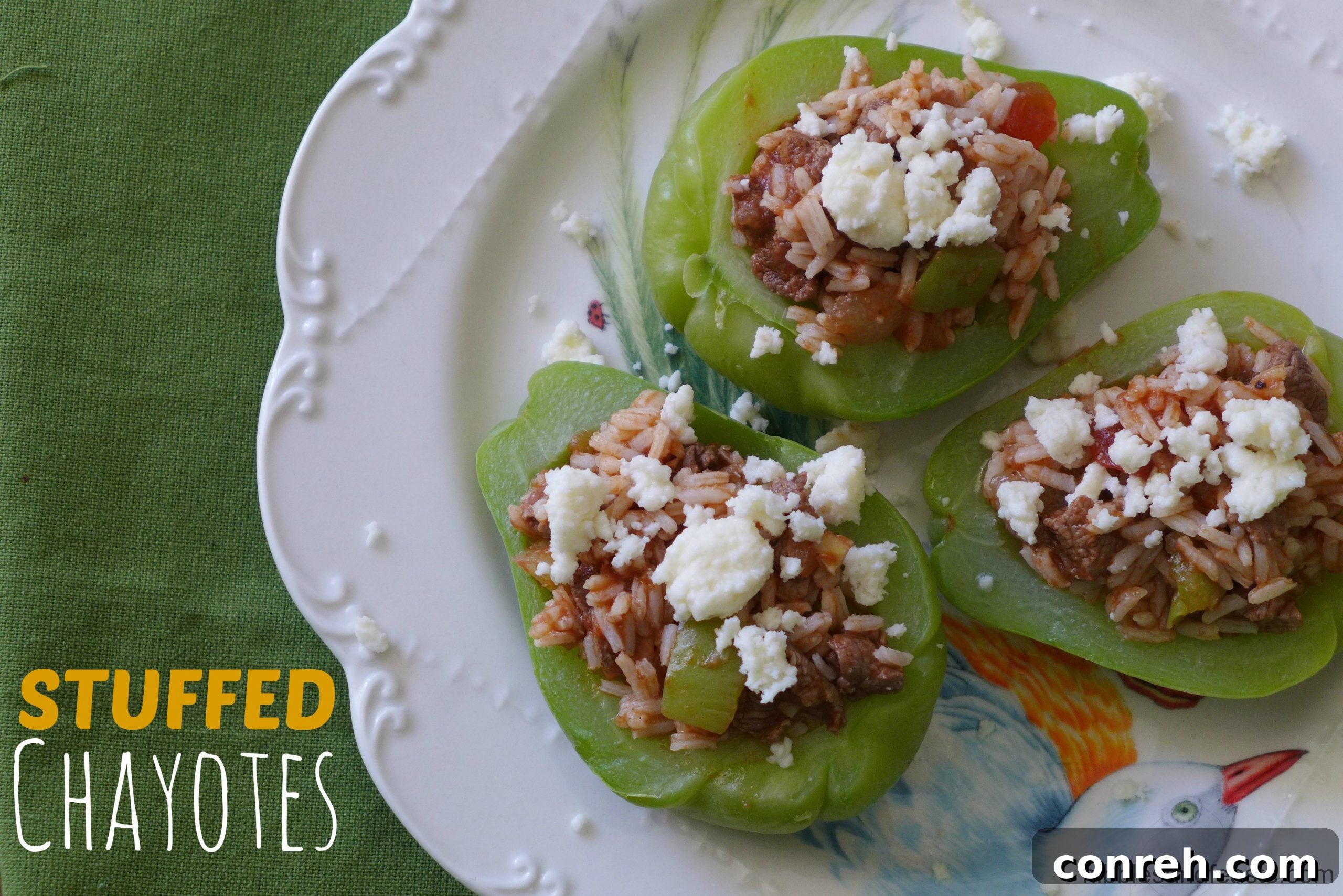
This past weekend, inspired by the desire for a hearty and flavorful meal, I embarked on creating a spicy stuffed chayote dish. The concept was simple yet satisfying: tender chayote halves filled with a rich mixture of stewed meat, an assortment of finely chopped vegetables, and fluffy rice. The goal was to create a dish that was both comforting and exciting, embodying the warmth of a home-cooked meal with a kick of vibrant flavor. The preparation involved carefully scooping out the chayote flesh, dicing it, and incorporating it into the savory filling, ensuring every bite offered a taste of the star vegetable.
The Star Ingredient: Tabasco Garlic Pepper Sauce
The crucial element that elevated this dish from good to unforgettable was my choice of spicy sauce: Tabasco’s Garlic Pepper Sauce. I’ve always been a fan of Tabasco for its pure, unadulterated flavor, and this particular variant is a true gem. Made with just five simple ingredients—red pepper, distilled vinegar, water, salt, and garlic—it delivers a clear, potent heat coupled with a wonderfully pungent garlic aroma. Unlike some hot sauces that rely on complex spice blends, Tabasco Garlic Pepper Sauce offers a straightforward yet profound flavor that perfectly complements savory dishes without overshadowing their natural essence. I generously incorporated it into my beef stew filling, allowing its garlicky heat to permeate every morsel of meat and vegetable. It provided not just warmth, but a depth of flavor that transformed the entire dish, creating a robust and deeply satisfying profile that truly hit the spot.
The Art of Balancing Flavors: Heat and Creaminess
While I adore a good spicy kick, I also appreciate the art of balance in cooking. To temper the fiery zest from the Tabasco Garlic Pepper Sauce and introduce a delightful creamy contrast, I opted for a generous sprinkling of queso fresco over the top of each stuffed chayote half just before serving. The mild, crumbly texture of queso fresco gently melted and softened from the heat of the filling, lending a cooling creaminess that beautifully harmonized with the spicy meat and vegetables. This layering of flavors—the intense heat, the savory depth of the stew, and the soothing dairy—created a multi-dimensional taste experience that kept us coming back for more. It’s this thoughtful interplay of contrasting elements that turns a simple meal into a memorable culinary journey, satisfying every part of the palate.
The ultimate testament to the dish’s success came from my husband. He absolutely adored it, declaring it one of his new favorites. So much so, in fact, that he has already put in a special request for it to be featured prominently on our Father’s Day menu this year. Knowing that a dish created with care and passion can bring such joy and become a cherished family request is, for any cook, the most rewarding experience.
Your Guide to Finding and Selecting the Best Chayote
One of the many convenient aspects of chayote is its widespread availability. Unlike some seasonal produce, chayotes can typically be found year-round in most well-stocked local grocery stores, especially those with a robust international or specialty produce section. Their consistent presence makes it easy to incorporate them into your meal planning at any time. For those who prefer the convenience of online shopping or seek out specific varieties, reputable online retailers like Melissa’s Produce offer fresh chayotes that can be delivered directly to your doorstep, ensuring you have access to this wonderful vegetable no matter where you are.
When selecting chayotes, whether from a physical store or upon delivery, there are a few key indicators of freshness and quality to look for. Always choose chayotes that feel firm and heavy for their size, as this suggests good hydration and crispness. The skin should be a vibrant pale green color, free from significant blemishes, soft spots, or deep cuts. While some minor scratches are acceptable, avoid any chayotes that show signs of significant bruising or yellowing, which could indicate overripeness or spoilage. Pay attention to the stem end; it should appear fresh and not dried out. Once you bring your chayotes home, proper storage is simple: keep them in the crisper drawer of your refrigerator, where they can stay fresh for up to two to three weeks. Do not wash them until you are ready to use them, as excess moisture can accelerate spoilage.
Recipe: Spicy Stuffed Chayote with Beef and Tabasco Garlic Pepper Sauce
Here’s how you can recreate this delicious, hearty, and flavorful dish that’s sure to become a family favorite:
Ingredients:
- 4 medium chayotes (approx. 1.5 – 2 lbs total)
- 1 tablespoon olive oil
- 1 lb lean ground beef or stew meat, finely diced
- 1 small onion, finely chopped
- 2 cloves garlic, minced
- 1 red bell pepper, finely diced
- 1 carrot, peeled and finely diced
- 1/2 cup cooked rice (white or brown)
- 1/4 cup fresh cilantro, chopped, plus more for garnish
- 2-3 tablespoons Tabasco Garlic Pepper Sauce (adjust to your spice preference)
- 1 teaspoon ground cumin
- 1/2 teaspoon smoked paprika
- Salt and freshly ground black pepper to taste
- 1/2 cup beef broth or water
- 1/2 cup crumbled queso fresco or shredded Monterey Jack cheese for topping
Instructions:
- Prepare the Chayotes: Wash the chayotes thoroughly. Carefully cut each chayote in half lengthwise. Using a spoon, scoop out the firm center seed and discard. Then, carefully scoop out most of the chayote flesh, leaving about a 1/4 to 1/2-inch border on the skin. Dice the scooped-out chayote flesh into small cubes and set aside.
- Pre-cook Chayote Shells: Bring a large pot of salted water to a boil. Add the chayote halves (shells) to the boiling water and cook for 10-15 minutes, or until slightly tender but still firm enough to hold their shape. Drain well and set aside, cut-side up, to cool slightly.
- Prepare the Filling: In a large skillet or Dutch oven, heat the olive oil over medium heat. Add the chopped onion and cook until softened, about 3-5 minutes. Add the minced garlic and cook for another minute until fragrant.
- Cook the Beef and Vegetables: Add the ground beef or diced stew meat to the skillet. Break it up with a spoon and cook until browned, draining any excess fat. Stir in the diced red bell pepper, diced carrot, and the reserved diced chayote flesh. Cook for 5-7 minutes, until vegetables begin to soften.
- Season the Filling: Stir in the cooked rice, fresh cilantro, Tabasco Garlic Pepper Sauce, ground cumin, smoked paprika, salt, and pepper. Pour in the beef broth or water and bring to a simmer. Cook for another 5-10 minutes, allowing the flavors to meld and the liquid to reduce slightly, creating a rich stew-like consistency. Taste and adjust seasonings as needed.
- Stuff the Chayotes: Preheat your oven to 375°F (190°C). Arrange the pre-cooked chayote halves in a baking dish. Spoon the warm beef and vegetable filling generously into each chayote half, mounding it slightly.
- Bake to Perfection: Sprinkle the crumbled queso fresco or shredded cheese evenly over the top of each stuffed chayote. Bake for 20-25 minutes, or until the cheese is melted and bubbly and the chayotes are heated through.
- Serve: Carefully remove the stuffed chayotes from the oven. Garnish with additional fresh cilantro if desired. Serve immediately as a comforting and satisfying main course.
Conclusion
From its humble origins to its versatile applications and impressive nutritional profile, the chayote is truly a vegetable deserving of more attention. Whether it brings back memories of home-cooked meals or inspires new culinary adventures, its ability to transform and absorb flavors makes it a delightful ingredient for any kitchen. This spicy stuffed chayote, enriched with the bold kick of Tabasco Garlic Pepper Sauce and balanced with creamy queso fresco, is more than just a meal; it’s an experience—a testament to how simple ingredients, thoughtfully combined, can create something truly extraordinary. I encourage you to seek out this remarkable vegetable and let its versatility inspire your next delicious creation. Your palate, and perhaps even your family, will thank you!
Otra vez… en español!