Camotes en Almíbar: A Deep Dive into Syrup-Glazed Sweet Potatoes and Latin American Traditions
Every bite of Camotes en Almíbar, or syrup-glazed sweet potatoes, transports me back to the tender moments of my childhood. This humble yet profoundly flavorful dessert wasn’t just a treat; it was a cornerstone of family traditions, particularly around Dia de los Muertos. It symbolized thoughtful preparation, a warm welcome for guests, and a sweet conclusion to a day of remembrance and honoring loved ones who had passed on. Before our annual journey to the cemetery, our home would bustle with activity, filled with the aroma of simmering spices and the promise of a comforting dessert awaiting our return.
The essence of this dish lies in its beautiful simplicity and the depth of flavor it achieves with just a few core ingredients. It’s a testament to the culinary wisdom passed down through generations, where resourcefulness meets deliciousness. In Latin American homes, Camotes en Almíbar is more than just a sweet potato dish; it’s a piece of cultural heritage, a shared memory, and a taste of home that transcends borders and time.
A Childhood Steeped in Sweetness and Tradition
My earliest memories of Dia de los Muertos are intertwined with the preparation of Camotes en Almíbar. As a child, I was given two important tasks, each contributing to the day’s sacred rhythm. My first assignment was to carefully stir the piloncillo (raw, unrefined cane sugar) with water. This wasn’t a chore; it was a patient meditation. I’d watch, mesmerized, as the solid piloncillo slowly dissolved, transforming the clear water into a deep, dark amber syrup. The warmth from the stove, the gentle bubbling, and the intoxicating sweet aroma that filled the kitchen were nothing short of divine. This rich, molasses-like syrup, infused with traditional spices, would become the luscious coating for our sweet potatoes.
My second task involved a trip to the local flower vendor. I was responsible for selecting fresh white gladiolas and vibrant cempazúchitl (marigold) flowers. These brilliant blooms, with their distinctive scent and cheerful colors, were essential for adorning the grave sites of our ancestors. Each flower chosen was a gesture of love, a visual representation of our enduring connection to those we remembered.
The preparations for the cemetery visit were always a community effort. My grandfather’s truck bed would be loaded with an assortment of items: the fresh flowers, brooms for sweeping gravestones clean, and small baskets filled with treats like pepitoria (pumpkin seed brittle), chocolates, and amaranth candy. These were not just snacks; they were strategic provisions to keep the younger children content and engaged during the solemn rosary prayers at the cemetery. The day was long, filled with reflection, prayer, and shared stories among family members gathered at the gravesides. By the time the festivities concluded and we returned home, weary but fulfilled, the reward of a warm bowl of Camotes en Almíbar was profoundly satisfying, a sweet embrace after a day of remembrance.
The Epitome of Latin American Holiday Desserts
Syrup-glazed sweet potatoes truly represent the essence of a holiday dessert in a Latin American household. Its widespread popularity stems from several key factors. Firstly, the ingredients are incredibly simple and inexpensive, making it accessible to families across all economic backgrounds. This democratic nature of the dish ensures that delicious, homemade comfort food is never out of reach. Secondly, despite its straightforward preparation, the resulting flavor is robust, deeply sweet, and incredibly satisfying. The slow simmering allows the sweet potatoes to absorb all the complex notes of the piloncillo and spices, creating a symphony of taste and texture.
A small portion of this hearty, sweet treat goes a long way. It’s the perfect conclusion to a large, savory holiday meal, offering a comforting sweetness without being overly heavy. Its richness and depth of flavor mean that even a modest serving leaves diners feeling fully content. Whether served for a small family gathering or a large communal feast, Camotes en Almíbar reliably delivers that perfect amount of sweet indulgence.
With the holiday season often just around the corner, many seek recipes that are both delicious and perhaps a bit lighter than traditional fare. If you’re searching for a tasty recipe that is naturally lower in fat yet just as satisfying and comforting as a sweet potato pie, then Camotes en Almíbar is an ideal choice. It offers all the warmth and sweetness of a classic holiday dessert with a delightful cultural twist.
Understanding the Core Ingredients
The magic of Camotes en Almíbar lies in its unpretentious yet powerful ingredients, each playing a crucial role in creating its distinctive flavor profile.
The Versatile Sweet Potato (Camote)
Sweet potatoes, known as “camotes” in many Spanish-speaking countries, are the star of this dish. These vibrant root vegetables are celebrated not only for their natural sweetness and creamy texture when cooked but also for their impressive nutritional benefits. They are an excellent source of beta-carotene (which converts to Vitamin A), Vitamin C, manganese, and dietary fiber. When selecting sweet potatoes for this recipe, look for firm, unblemished tubers. While orange-fleshed varieties are common, purple or white sweet potatoes can also be used, each offering a slightly different flavor and color to the final dish. The key is to cut them into substantial 1 ½-inch pieces, allowing them to gently soften and fully absorb the luscious syrup without becoming mushy.
Piloncillo: The Soul of the Syrup
Traditionally, Camotes en Almíbar is made with piloncillo, a raw, unrefined whole cane sugar popular in Latin America. Piloncillo comes in various shapes, often cones or blocks, and boasts a rich, complex flavor akin to dark brown sugar or molasses, but with even deeper caramel notes. It’s what gives the syrup its characteristic dark color and unparalleled depth of sweetness. If piloncillo is unavailable, dark brown sugar is an excellent substitute, providing a similar molasses-rich flavor. The slow melting of piloncillo, as I remember from my childhood task, is essential; it creates a thick, glossy syrup that perfectly coats each piece of sweet potato.
Aromatic Spices: The Flavor Enhancers
The distinct aromatic profile of Camotes en Almíbar comes from a thoughtful blend of traditional spices:
- Anise Stars: These beautiful, star-shaped pods impart a unique licorice-like flavor that is warm and slightly sweet, adding an exotic complexity to the syrup.
- Cloves: Known for their intensely aromatic and pungent flavor, cloves add a spicy, warm note that perfectly complements the sweetness of the piloncillo and sweet potatoes.
- Cinnamon Sticks: A quintessential spice in Latin American desserts, cinnamon sticks infuse the syrup with a comforting, woody sweetness, creating a familiar and inviting aroma.
Together, these spices transform a simple sugar syrup into a fragrant, multi-layered glaze that defines this classic dessert. The slow infusion of these spices is crucial; they release their essential oils and flavors into the simmering liquid, creating a truly unforgettable experience.
Crafting the Authentic Camotes en Almíbar
The process of making Camotes en Almíbar is straightforward, yet it yields profoundly delicious results. It’s a method that values patience and gentle simmering, allowing the flavors to meld beautifully. The simplicity ensures that even novice cooks can achieve a dessert that tastes like it came straight from a Mexican abuela’s kitchen.
Tips for Perfect Syrup-Glazed Sweet Potatoes:
- Sweet Potato Selection: Choose firm, medium-sized sweet potatoes. Avoid those with soft spots or sprouts. Cutting them into uniform pieces ensures even cooking.
- Syrup Consistency: The initial whisking of sugar and water is important to fully dissolve the sugar and achieve a light syrup before adding the sweet potatoes. This helps in even absorption of flavor.
- Gentle Simmering: Once the sweet potatoes are added, keeping the heat low and allowing them to gently simmer is key. High heat can cause the syrup to reduce too quickly or the sweet potatoes to cook unevenly.
- Don’t Rush It: The 30-minute simmering time is crucial for the sweet potatoes to become fork-tender and for the flavors to fully infuse.
- Spice Removal: While the spices are essential for flavor, removing the whole anise stars, cloves, and cinnamon sticks before serving ensures a smooth eating experience.
Serving Suggestions and Delicious Variations
Camotes en Almíbar is incredibly versatile and can be enjoyed in various ways. It is traditionally served warm, allowing the sweet, spicy aroma to fully envelop your senses. A generous drizzle of the accompanying syrup over each serving is a must. For an extra touch of indulgence, consider pairing it with a dollop of vanilla ice cream, a spoonful of crème fraîche, or a sprinkle of toasted pecans or shredded coconut.
While the traditional recipe is perfect as is, you can also explore delightful variations:
- Citrus Zest: A strip of orange or lime zest added to the syrup while it simmers can brighten the flavors with a fresh, aromatic lift.
- Ginger: A few slices of fresh ginger can introduce a subtle spicy warmth.
- Different Sweeteners: While piloncillo is preferred, you could experiment with maple syrup or honey for different flavor profiles, though the authentic depth of piloncillo is unique.
- Nutmeg: A pinch of ground nutmeg can enhance the overall warmth of the spice blend.
This dessert is not just for Dia de los Muertos; it’s wonderful for Thanksgiving, Christmas, or any occasion where you crave a comforting, home-style sweet treat.
A Timeless Sweet Potato Dessert Recipe
Here’s how you can bring this cherished Latin American dessert to your own table.
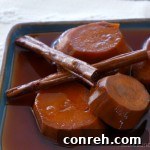
Camotes en Almíbar | Syrup Glazed Sweet Potatoes
No reviews yet. Be the first to rate!
Ingredients
- 2 large sweet potatoes, scrubbed, rinsed, peeled and sliced in large 1 ½ ” pieces
- 6 cups water
- ¾ cup brown sugar (or piloncillo, crushed)
- 2 anise stars
- 3 cloves
- 2 cinnamon sticks
Instructions
- Heat a 3-quart stock pot over medium heat, combine water, sugar (or piloncillo) and spices. Whisk until sugar dissolves and mixture thickens to a light syrup consistency.
- Add sweet potatoes, cover and lower heat to a light simmer; about 30 minutes or until sweet potatoes are fork tender.
- Discard spices and serve warm. Drizzle generously with the sweet syrup.
Conclusion: A Sweet Legacy
Camotes en Almíbar is far more than just a recipe for syrup-glazed sweet potatoes; it’s a living tradition, a culinary echo of cherished memories, and a symbol of familial love and cultural pride. Its ability to evoke nostalgia and comfort with every sweet, spiced bite is unparalleled. This dessert reminds us that the simplest ingredients, when prepared with care and intention, can yield the most profound flavors and sustain the deepest connections. As you prepare and share this delicious dish, you’re not just serving a dessert; you’re sharing a piece of history, a warm embrace, and a sweet legacy that continues to bring joy to countless tables. We encourage you to try this recipe and perhaps start your own sweet traditions with Camotes en Almíbar.