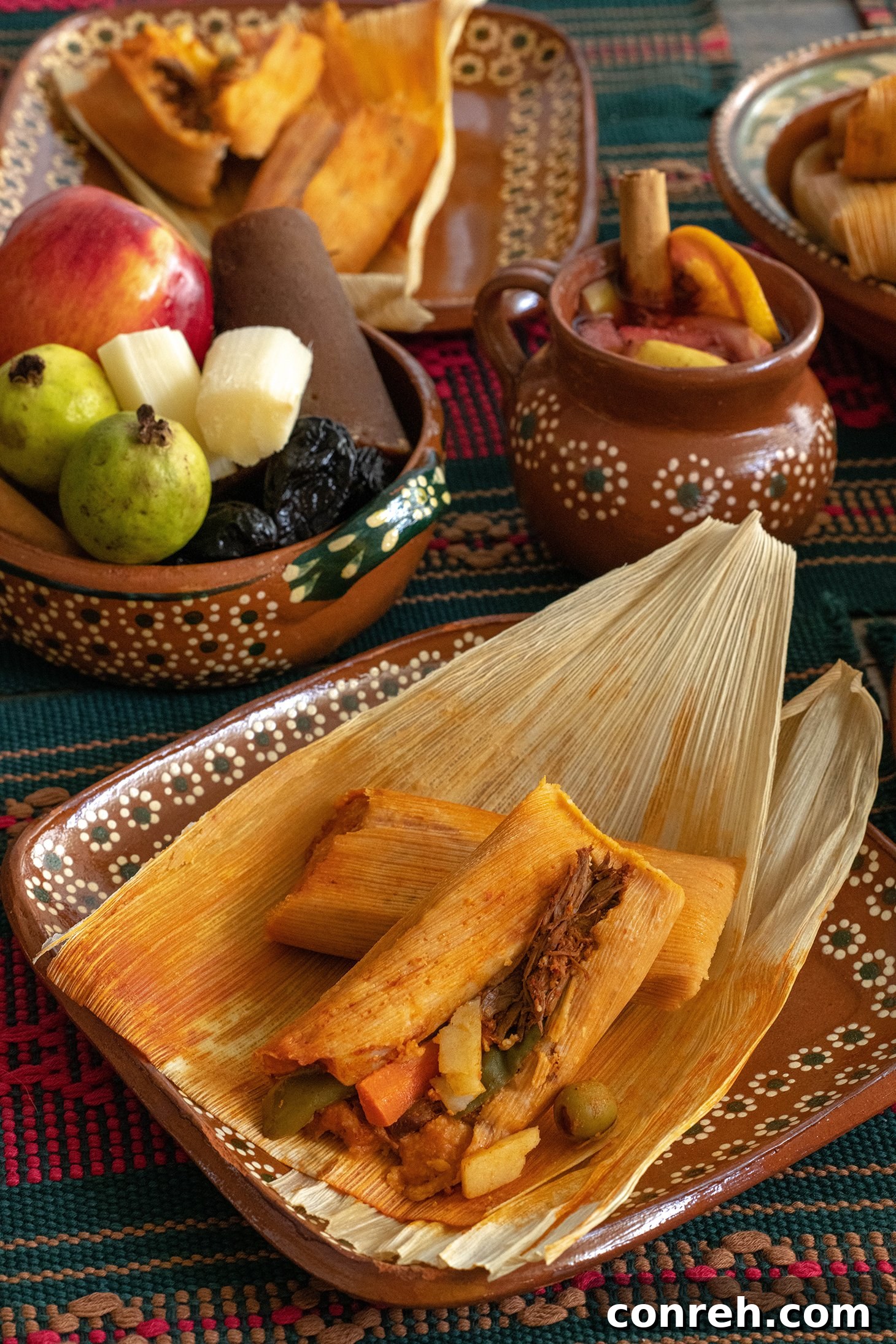
Experience the Heart of Mexican Tradition: Authentic Red Chile Beef Tamales for Las Posadas
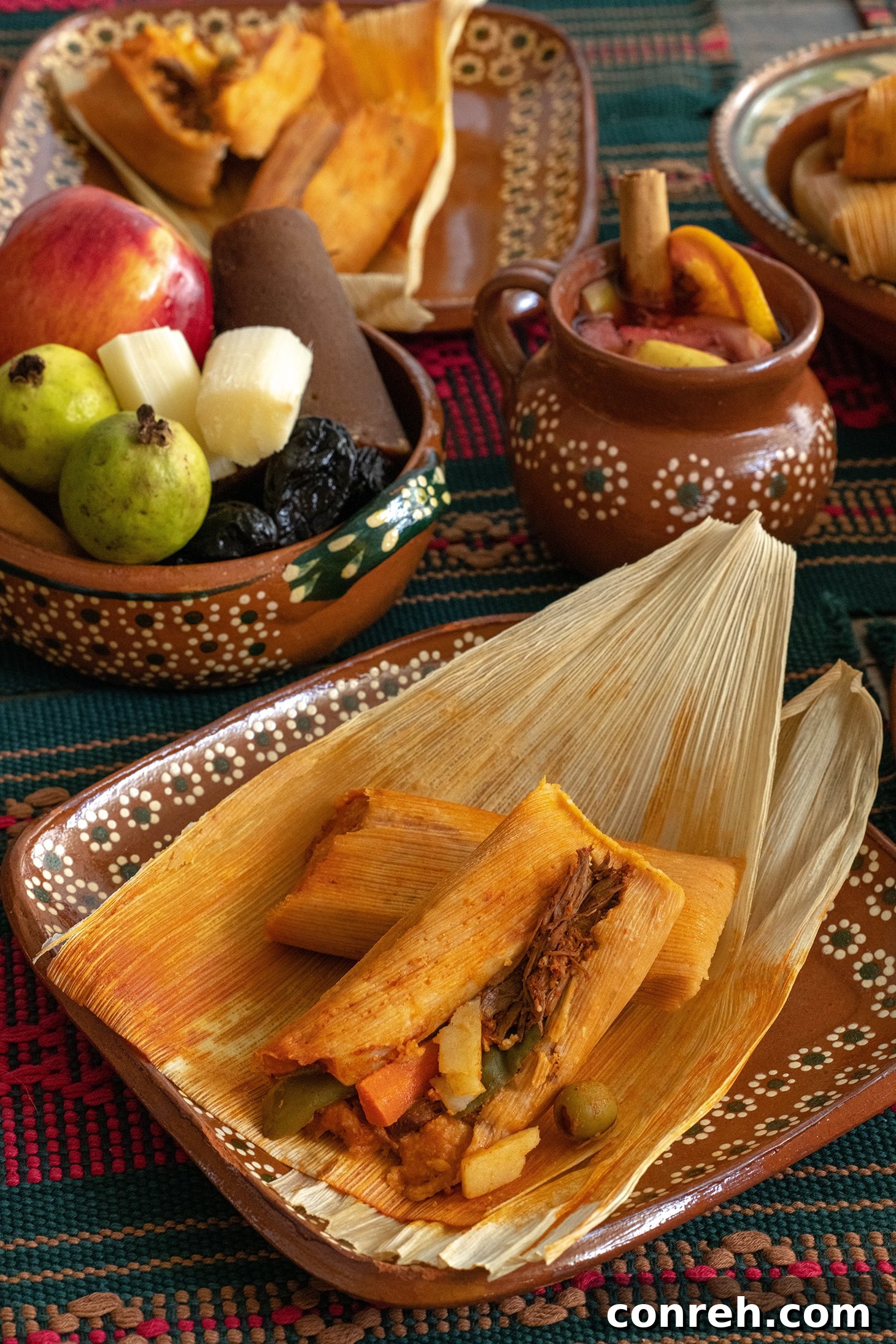
Embark on a culinary journey into the heart of Mexico with a dish that embodies warmth, community, and centuries of tradition: Red Chile Beef Tamales. These delightful parcels of flavor are more than just food; they are a cherished staple of Las Posadas, the nine-night religious festival celebrated throughout Mexico and Latin America leading up to Christmas Eve. During this festive season, families, friends, and neighbors unite, not just to commemorate the Nativity, but to partake in a joyful communal experience, with tamales often at its very core.
Imagine sinking your teeth into a perfectly steamed tamale – a soft, pillowy corn masa exterior yielding to a rich, savory filling. Our Red Chile Beef Tamales recipe offers an exquisite rendition of this classic. It features succulent, slow-cooked shredded beef, lovingly infused with a robust, complex sauce made from a vibrant array of dried red chiles. Complementing the tender meat is a delightful medley of diced potatoes, carrots, tangy pickled jalapeños, and briny green olives, creating a symphony of textures and tastes that dance on your palate. This isn’t just a meal; it’s a celebration of heritage, a labor of love, and a taste of true Mexican hospitality.
Looking for another festive flavor? Try our Pork Chile Verde Tamales.
A Symphony of Flavors: Exploring the Richness of Red Chile Beef Tamales
Prepare your senses for an unparalleled culinary experience. Our Red Chile Beef Tamales are truly a masterpiece of balanced flavors and inviting textures. The moment you unwrap a tamale, the delicate aroma of spiced corn masa and savory beef fills the air, hinting at the deliciousness within. The masa itself is a triumph: incredibly light, remarkably fluffy, and infused with the subtle, earthy, and smoky undertones of the rich red chile sauce. It’s not merely a wrapper, but an integral part of the flavor profile, perfectly complementing the robust filling.
Each mouthful is a revelation, designed to offer a dynamic interplay of tastes. The heart of these tamales lies in the melt-in-your-mouth shredded beef, which has slowly absorbed the intricate depths of our signature chile sauce. This sauce is a complex blend featuring five distinct varieties of dried chiles – guajillo, New Mexico, mulato, pasilla, and puya. Guajillos provide a sweet, fruity, and slightly tangy note; New Mexico chiles contribute an earthy, mild heat; mulatos offer a deep, smoky, almost chocolatey richness; pasillas bring a fruitier, licorice-like essence; and puyas add a touch of sharp, fruity heat. This carefully curated combination creates a deeply savory, umami-rich base that elevates the beef to extraordinary levels.
Adding to this complexity are the textural contrasts. Soft, starchy potatoes and tender carrots provide a comforting counterpoint to the beef, absorbing the chile flavors while offering a pleasing bite. Then come the bright, unexpected bursts of flavor: the briny, saline notes from the green olives cut through the richness, while slices of pickled jalapeños introduce a welcome pop of acidity and a gentle, lingering heat. This thoughtful combination transforms a simple tamale into a sophisticated dish, satisfying on every level and deeply rooted in the culinary traditions that celebrate life and community.
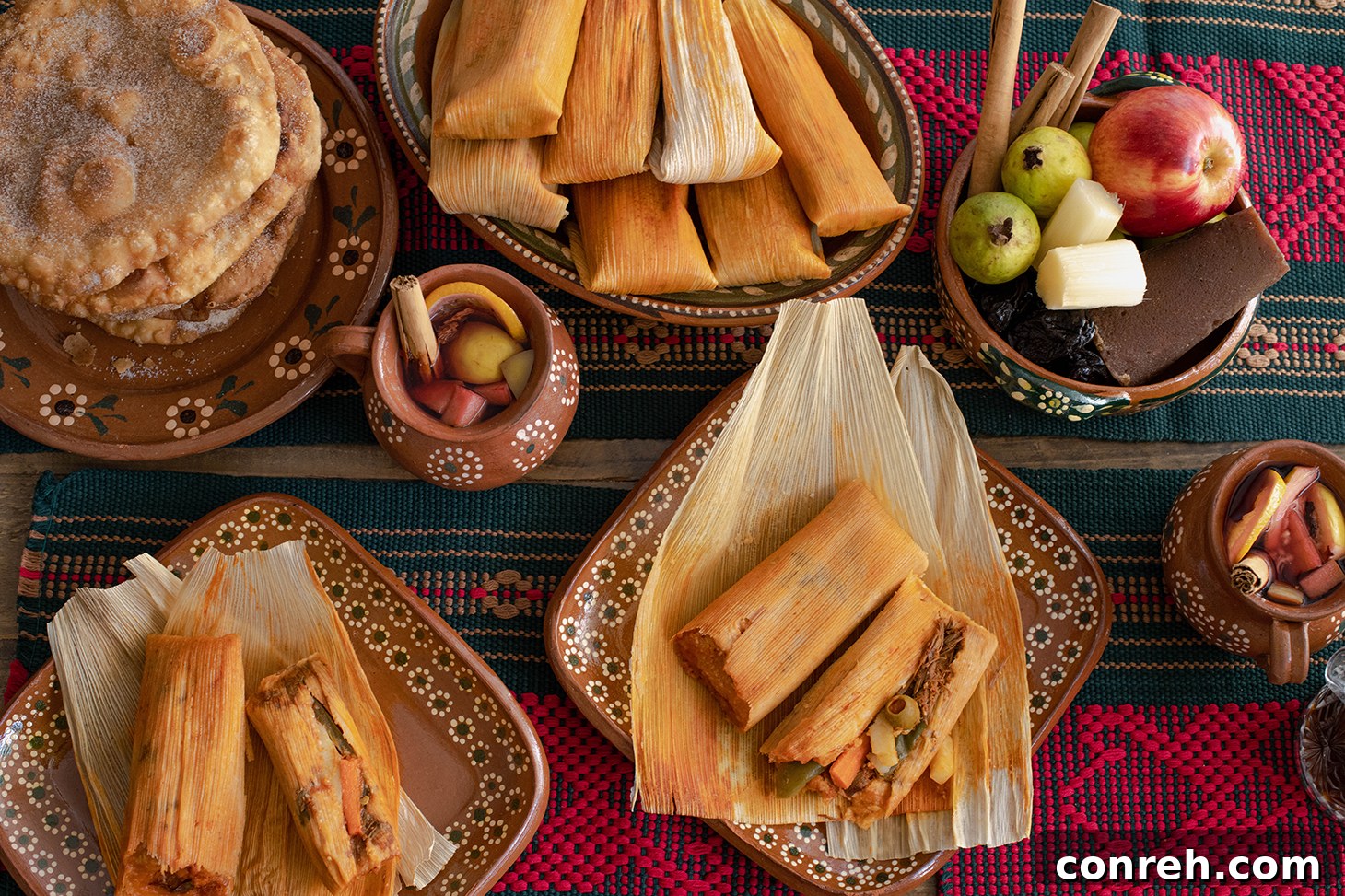
Tamales: An Emblem of Mexican Culture and the Soul of Las Posadas
In Mexico and across Latin America, tamales transcend their role as mere sustenance; they are a profound symbol of love, meticulous labor, enduring unity, and deep-seated cultural identity. This is especially true during Las Posadas, a sacred and joyful nine-night celebration spanning December 16th to 24th, leading up to Christmas Eve. Families and communities reenact Mary and Joseph’s search for lodging, culminating each evening in prayer, song, and, most importantly, the sharing of food.
The tradition of making tamales, often referred to as a “tamalada,” is an event unto itself, often extending over several days and involving multiple generations. Grandmothers, mothers, aunts, and children gather, each playing a vital role in the intricate process—from cleaning corn husks and grinding masa to preparing the savory fillings and spreading the dough. This shared effort is not just about producing a delicious meal; it’s a powerful act of communal bonding, a living classroom where recipes and stories are exchanged, and a vital mechanism for passing down culinary heritage and family traditions from one generation to the next. The collective anticipation of biting into those warm, fragrant bundles after hours of shared work is a memory forged in joy and connection.
The very ingredients within these Red Chile Beef Tamales echo the festive and generous spirit of Las Posadas. Beef, historically a more premium ingredient, signifies the importance of the occasion. The vibrant array of vegetables and, particularly, the complex blend of chiles in the sauce reflect the rich diversity and boldness of Mexican cuisine. These tamales are not simply about feeding the body; they are about nourishing the soul, honoring ancestors, celebrating loved ones, and marking the significance of the holiday season with a dish prepared with unparalleled care and devotion.
The enduring popularity of tamales is a testament to the profound love and care Mexican people pour into their food, transforming everyday ingredients into extraordinary expressions of hospitality and resilience. The smoky richness of the chile sauce, combined with the vibrant medley of fillings, perfectly encapsulates the colorful traditions and robust flavors that define Mexican culinary arts. Indeed, no significant celebration in Mexican culture feels complete without the comforting presence of tamales, making them an indispensable part of holiday festivities and a heartwarming gift, lovingly prepared and joyfully shared.
Serving Suggestions: Elevating Your Tamale Feast
While Red Chile Beef Tamales are undeniably exquisite on their own, pairing them with traditional accompaniments can transform your meal into a magnificent Posada feast. Consider these suggestions to enhance your tamale experience and truly capture the spirit of Mexican hospitality:
- Salsa and Crema: Offer a variety of fresh salsas. A vibrant, tangy green salsa (salsa verde) provides a refreshing contrast, while a smoky, earthy red salsa (salsa roja) deepens the flavors. A dollop of cool sour cream or authentic Mexican crema adds a luxurious richness and balances any heat, making each bite even more satisfying.
- Hearty Side Dishes: For a complete and satisfying meal, serve your tamales alongside classic Mexican rice. Its fluffy texture and mild flavor perfectly complement the tamales. Additionally, a side of creamy refried beans adds another layer of comfort and tradition, rounding out the meal beautifully.
- Traditional Holiday Drinks: Nothing pairs better with warm tamales than a comforting hot beverage. Embrace the festive spirit with a mug of frothy atole or rich champurrado (a chocolate-based atole). For a true taste of the holidays, sip on warm poncho navideño, a spiced fruit punch, or enjoy the aromatic comfort of café de olla, traditional Mexican coffee brewed with cinnamon and piloncillo.
- Garnishes: A simple garnish can add a burst of freshness and extra flavor. Crumble some salty, tangy queso fresco or cotija cheese over your tamales just before serving. A sprinkle of fresh cilantro or finely diced white onion can also brighten the dish, adding both color and a delicate bite.
Storage and Reheating Tips: Enjoying Your Tamales for Days to Come
One of the many wonderful aspects of tamales is how beautifully they store, allowing you to savor their deliciousness long after the initial feast. Proper storage ensures they retain their flavor and texture:
- Refrigeration: For short-term storage, allow cooked tamales to cool completely before placing them in an airtight container. They will keep fresh in the refrigerator for up to one week. Be sure to keep them wrapped in their corn husks to maintain moisture and flavor.
- Freezing: Tamales are excellent for freezing, making them perfect for meal prep or enjoying later. Once cooled, individually wrap each tamale (still in its husk) tightly in parchment or wax paper, then place them in a freezer-safe zip-top bag or airtight container. They can be stored in the freezer for up to six months without losing quality.
- Reheating: To reheat refrigerated tamales, the best method is steaming. Place them in a steamer basket over simmering water for 10-15 minutes, or until thoroughly heated through and soft. Alternatively, you can microwave them individually, wrapped in a damp paper towel, for 1-2 minutes. For frozen tamales, steaming is also preferred, requiring about 25-30 minutes, or until piping hot. They also crisp up wonderfully on a comal or skillet after steaming.
Don’t let any leftover tamales go to waste! They are incredibly versatile and can be repurposed into new, exciting dishes. Slice and pan-fry cold tamales until golden and crispy for delectable “tamale cakes,” perfect as a side or light meal. Or, crumble the masa and filling into a hot skillet with some eggs and salsa for a hearty, flavorful breakfast hash. The possibilities are endless!
Ingredient Substitutions: Adapting Your Tamales to Your Taste and Pantry
While this recipe for Red Chile Beef Tamales offers an authentic and incredibly delicious experience, don’t hesitate to make thoughtful substitutions based on availability, dietary preferences, or personal taste. Here are some suggestions to guide you:
- Lard/Vegetable Shortening Alternatives: The traditional richness and fluffy texture of tamales often come from lard. For a lighter or vegetarian option, you can substitute butter or a neutral vegetable oil (like canola or sunflower oil). Be aware that these alternatives may slightly alter the final flavor profile and the characteristic melt-in-your-mouth texture of the masa, making it potentially a bit denser.
- Chile Varieties: The blend of five chiles creates a unique depth, but if you can’t find all varieties, don’t worry. The most crucial chiles for the base are guajillo and ancho (which can substitute for mulato or pasilla if needed). You can increase the quantities of guajillo and ancho to compensate, or use a combination of other dried red chiles like California or New Mexico chiles for a similar flavor profile and heat level.
- Vegetable Fillings: The combination of potatoes and carrots offers a classic textural and flavor balance. For a seasonal twist or to experiment with different tastes, consider swapping them for diced sweet potatoes, butternut squash, or even roasted poblano peppers for a smoky kick. Make sure any substitute vegetables are cut into small, manageable pieces.
- Meat Alternatives: Shredded beef chuck provides a robust and tender filling. However, you can easily adapt this recipe to other proteins. Pork shoulder, slow-cooked and shredded, makes an excellent and equally traditional substitute. Boneless, skinless chicken thighs can also be cooked and shredded for a lighter poultry option. For a delicious vegetarian version, consider a hearty blend of black beans, roasted corn, sautéed mushrooms, or a mix of your favorite roasted vegetables. Ensure vegetarian fillings are well-seasoned to match the rich chile sauce.
Authentic Red Chile Beef Tamales Recipe
Author: Ericka Sanchez
Yields: Approximately 40 tamales
Print Recipe
Recipe Overview
Celebrate the joy of Las Posadas with these exquisite Red Chile Beef Tamales. This recipe guides you through creating tender, juicy beef filling infused with a rich, multi-layered red chile sauce, all encased in a fluffy, chile-seasoned corn masa. Perfect for sharing with family and friends, this generous batch of 40 tamales brings the authentic taste of Mexican tradition to your holiday table.
Ingredients
- 4 lb. boneless beef chuck (or a little more, if meat has quite a bit of fat)
- 2 small white onions (peeled, divided)
- 10 garlic cloves (whole, peeled; divided)
- 12 allspice berries (divided)
- 2 bay leaves
- 1 tsp. dried oregano (preferably Mexican oregano)
- 7 tsp. salt (divided, plus more to taste)
- 1 lb. dried corn husks
- 7 oz. dried guajillo chiles
- 1 dried New Mexico chile (or California chile)
- 1 dried mulato chile
- 1 dried pasilla chile
- 1 dried puya chile (or use an ancho chile)
- 1/2 tsp. coriander seeds
- 1 large fresh jalapeño pepper
- 2 Tbsp. vegetable oil
- 3 cups lard (or vegetable shortening, at room temperature)
- 8 cups masa harina (also called instant masa)
- 2 tsp. baking powder
- 3 large carrots
- 3/4 lb. potatoes (Yukon gold, russet, or regular white potatoes)
- 45 pimento-stuffed green olives
- 12 oz. sliced pickled jalapeños (1 can, drained; about 45 slices)
Instructions
- Prepare the Beef Filling: Bring 3 quarts of water to a boil in a 6- to 8-quart pot over high heat. While the water heats, cut the beef into 2-inch chunks, trimming any excessively large pieces of fat. Add the beef to the boiling water along with 1 whole onion, 6 garlic cloves, 3 allspice berries, the bay leaves, and oregano. Reduce the heat to medium and bring it back to a gentle boil. Boil the meat uncovered for 15 minutes, carefully skimming off any foam that rises to the surface with a wide metal spoon.
- Add 1 tablespoon of salt to the beef. Cover the pot, reduce the heat to low, and let the beef simmer until it is exceptionally tender when pierced with a fork, which will take approximately 2 hours.
- Prepare Corn Husks: If you plan to assemble the tamales on the same day, separate the dried corn husks and rinse them thoroughly to remove any debris or silks. Place the husks in a large bowl and cover them with hot water, weighting them down with a couple of plates to keep them submerged. Allow them to soak for at least 1 hour, or until they are soft and pliable. If preparing the filling ahead, you can soak the husks on the day of assembly.
- Prepare the Chile Sauce: While the beef cooks, rinse the dried chiles. Using kitchen shears, snip off the stems (there’s no need to remove seeds, as they will be strained out later). Place all the chiles in a large saucepan. Add enough water to cover them and bring to a boil. Reduce the heat and simmer the chiles uncovered until they are softened but not falling apart, typically around 15 minutes. Using a slotted spoon, transfer the softened chiles to a bowl and set aside. Discard the cooking liquid.
- Process Beef and Broth: With a slotted spoon, carefully transfer the cooked beef from the pot to a large bowl. Allow it to cool until it’s comfortable enough to handle, then shred the beef into fine pieces. Pour the beef broth through a fine-mesh strainer into a separate bowl. Measure the strained broth; if needed, add water to achieve a total of 10 1/2 cups. Season the broth with additional salt to taste. Cover the broth to keep it warm. Discard the solids from the strainer.
- Blend Chile Sauce: Working in batches if necessary, transfer the soaked chiles to a blender. Add 3 cups of the reserved beef broth, 2 garlic cloves, the coriander, the remaining 9 allspice berries, and 1 teaspoon of salt. Blend the mixture until it is completely smooth. Pour the sauce through a fine-mesh strainer into a clean bowl, using the back of a spoon to push through as much liquid as possible. Discard any remaining solids in the strainer. You should have approximately 3 1/2 cups of rich chile sauce; set this aside.
- Sauté Aromatics for Filling: Slice the remaining onion lengthwise into thin strips and the fresh jalapeño lengthwise into thin strips. Heat the vegetable oil in a 4- to 5-quart saucepan over medium-low heat. Add the remaining 2 garlic cloves, the onion strips, and fresh jalapeño strips. Cook, stirring frequently, until the onion begins to soften but does not brown, typically 4-5 minutes.
- Combine Beef Filling: Add the shredded beef to the saucepan with the sautéed aromatics and continue to stir. Reserve 1 cup of the prepared red chile sauce for the masa (step 10) and add the remaining sauce (about 2 1/2 cups) to the beef mixture. Stir until the beef is evenly coated and the sauce is well distributed. Cover the saucepan and simmer for 15 minutes to allow the flavors to meld, reducing heat if the mixture starts to stick. Remove the cooked garlic cloves. Season the beef filling with additional salt to taste if desired. (Note: At this stage, you can cool, cover, and refrigerate the beef filling for up to 1 day; use it cold. Also, cool and chill any remaining beef broth and the reserved 1 cup of chile sauce; reheat the broth to warm and the sauce to room temperature before proceeding with masa preparation.)
- Prepare the Masa: If you prepared the filling ahead, soak the corn husks now as described in step 3. Place the lard (or vegetable shortening) into the bowl of a large stand mixer (preferably 5-quart or larger), fitted with the paddle attachment. Beat on high speed for about 15 minutes, scraping down the sides of the bowl occasionally, until the lard becomes light, silky, and resembles whipped marshmallows.
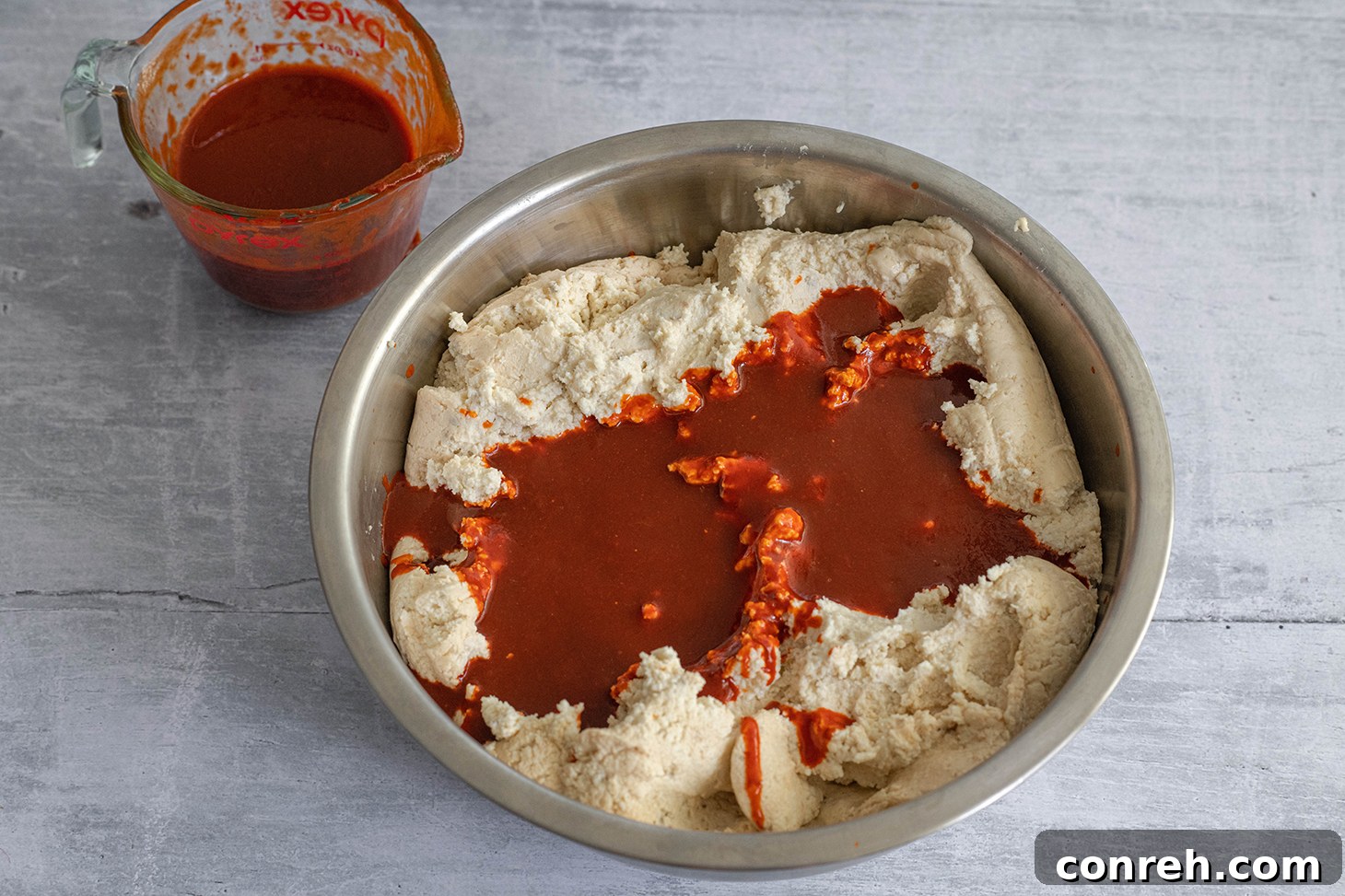
- Add the masa harina, the remaining 1 tablespoon of salt, and the baking powder to the whipped lard. Blend on low speed until the mixture resembles wet sand. Gradually add 7 1/2 cups of the warm beef broth and the reserved 1 cup of red chile sauce, continuously scraping the sides of the bowl to ensure thorough mixing. Continue mixing on low speed until the masa is fluffy, smooth, and easily spreadable, typically 15-20 minutes. To confirm the masa is ready, drop a small piece into a glass of cold water; if it floats, it’s perfect. If it sinks, continue mixing and retest every 5 minutes. Save any leftover beef broth for other uses.
- Prepare Vegetables for Assembly: While the masa is mixing, peel the carrots and potatoes. Cut them into uniform sticks, approximately 2 inches long and 1/4 inch wide, ensuring they are small enough to fit neatly within the tamales.
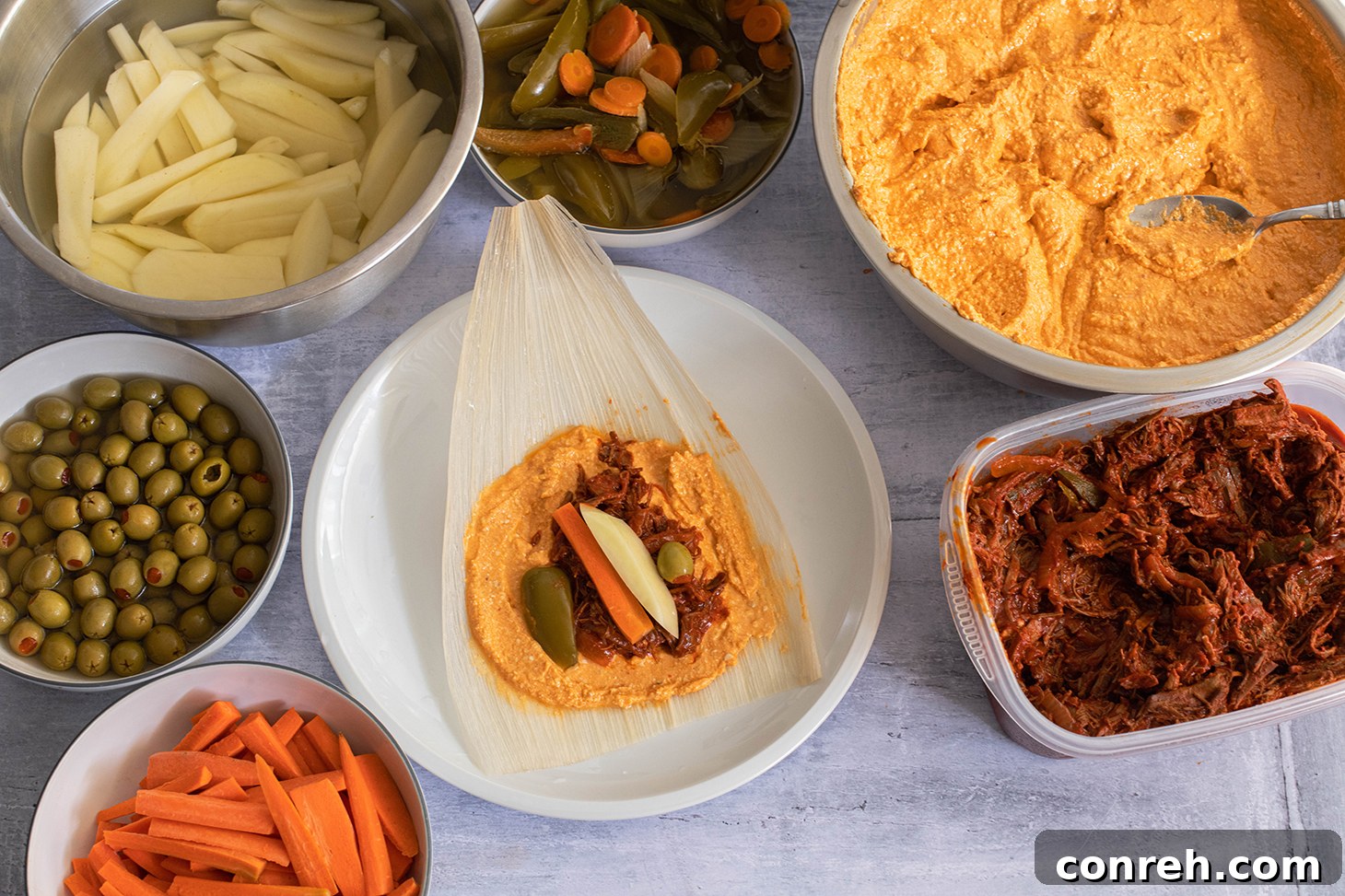
- Assemble the Tamales: This step is ideal for a communal effort! Drain the soaked corn husks completely. Select the largest and most intact husks. Lay a corn husk flat on a clean work surface with the pointy, tapered end facing you. Spoon approximately 1/3 cup of the prepared masa onto the wider, flatter part of the husk. Using the back of a soup spoon, spread the masa into a rectangle, extending about two-thirds of the way from the flat end towards the pointy end. Leave a 1/2-inch border clear along the straight top edge to prevent masa from spilling during steaming, and about 1 inch clear on the sides for easy wrapping.
- In the center of the spread masa, place a loosely packed 1/4 cup of the beef filling in a band. On top of the meat, arrange one carrot strip, one potato strip, one pimento-stuffed olive, and one slice of pickled jalapeño.
- Carefully fold one long side of the corn husk snugly towards the center, covering the filling (but not too tightly, as the masa will expand during cooking). Then, fold the other long side of the husk over, ensuring the sides overlap well to create a secure parcel. Finally, fold the pointy, tapered end of the husk up towards the straight, open end. Make sure the sides do not spread open to prevent steam from penetrating the tamale. The straight edge will remain open. If any husks prove difficult to fold or seem too fragile, you can double-wrap the assembled tamale with an additional husk for extra security. Repeat this process with the remaining masa and filling until all tamales are assembled. (Note: At this point, you can wrap each tamale in parchment paper and freeze them in zip-top bags for up to 6 months. Any leftover masa can also be frozen in an airtight container for up to 3 months.)
- Cook the Tamales: Fill a 32-quart tamale steamer with water up to the designated fill line (this is typically about 1/2 inch below where the steaming rack sits). Place the steaming rack inside. Arrange the assembled tamales vertically on the rack, with the straight (unsealed) edges pointing upwards. Arrange them snugly, but not overly packed, allowing enough space for steam to circulate freely around each tamale. (If you do not have a specialized tamale steamer, use a large pot, at least 10-quart capacity. Add about 1 inch of water, then place a steamer basket or a flat metal colander at least 1 1/2 inches above the bottom of the pan. You may need to cook tamales in batches.) Cover the tamales with any remaining corn husks and 2-3 clean kitchen towels; this helps to trap and contain the steam more efficiently.
- Place the steamer over medium-high heat, cover it tightly with its lid, and bring the water to a rolling boil. Once boiling, reduce the heat to medium or medium-low, maintaining a continuous, gentle boil to ensure consistent steam circulation. Set a timer for 1 1/2 hours (or 2 1/2 hours if you are steaming frozen tamales). Keep a kettle of hot water nearby. Periodically check the water level in the steamer by gently pushing aside the towels and corn husks with a long wooden spoon. If the water level is low, slowly pour in hot water along the side of the pan, being careful not to spill directly onto the tamales.
- Check for Doneness and Rest: After the cooking time, turn off the heat. To test if the tamales are done, carefully remove one partway from the steamer and unwrap a portion of it. The masa should no longer stick to the corn husk; it should peel away cleanly. If it still clings, the tamales need more time. Let the tamales rest, covered, in the steamer for an additional 20 minutes. This resting period is crucial as it allows the masa to firm up and set properly.
- Once rested, carefully remove a tamale with tongs and place it on a plate. Unwrap it completely and perform a final check for doneness; the husk should come off easily. If it doesn’t, return the tamales to the steamer, bring the water back to a boil, steam them for another 30 minutes, and then let them rest again. Cooked tamales can also be frozen in zip-top bags for up to 6 months.
A Timeless Legacy: Embracing the Tamale Tradition
The journey of making tamales is indeed a profound labor of love—a culinary ritual that transcends the kitchen and truly brings people together. This detailed recipe for authentic Red Chile Beef Tamales is designed to guide you through that journey, allowing you to capture and share the very essence of Las Posadas: the unparalleled warmth of togetherness, the strength of community, and the vibrant spirit of celebration.
As you prepare these exquisite tamales, you’re not just cooking; you’re participating in a living legacy, connecting with generations of cooks who have shared this cherished dish. Savor each flavorful bite, appreciating the complex layers of chile, the tender beef, and the comforting masa. More importantly, take pride in passing on this beautiful tradition to your friends, family, and future generations. Because, at their heart, tamales are far more than just delicious food; they are a timeless legacy, a symbol of heritage, and a delicious way to keep cultural stories alive.
We encourage you to embark on this rewarding culinary adventure. Gather your loved ones, roll up your sleeves, and create memories that will last a lifetime, one delicious tamale at a time. Feliz Navidad and Happy Posadas!
Frequently Asked Questions About Making Tamales
Yes, you can use high-quality store-bought masa harina. For the best, fluffiest results, always rehydrate it thoroughly by mixing it with warm broth and additional lard or vegetable shortening before spreading it onto the husks.
Don’t let a missing chile deter you! Guajillo and ancho chiles form the essential base of the red chile sauce. If you’re missing others like mulato, pasilla, or puya, simply increase the quantity of guajillo and ancho, or substitute with other readily available mild red chiles like California or New Mexico chiles to maintain a balanced flavor.
Absolutely! Tamales are excellent for freezing. You can freeze them either cooked or uncooked. Wrap each tamale individually in parchment paper and then place them in freezer-safe zip-top bags or airtight containers. They will keep well for up to six months.
The best way to reheat frozen tamales is by steaming them for about 25-30 minutes, or until they are thoroughly heated through. You can also microwave them wrapped in a damp paper towel for 2-3 minutes per tamale. For a crispy exterior, reheat them on a hot comal or skillet after initial steaming.
To ensure your masa is light and fluffy, perform the “float test.” Drop a small piece of prepared masa into a glass of cold water. If it floats to the top, it’s perfectly aerated and ready for spreading. If it sinks, continue beating the masa for a few more minutes and retest.
Yes, the beef filling is versatile. You can easily substitute it with shredded pork shoulder, chicken thighs, or even a flavorful vegetarian option like seasoned jackfruit, black beans, or a medley of roasted vegetables.
No specialized tamale steamer? No problem! You can use a large, deep pot (at least 10-quart capacity) with a regular steamer basket placed inside. If you don’t have a basket, create a makeshift rack using crumpled aluminum foil or an upside-down heatproof bowl to elevate the tamales above the simmering water.
Resting the tamales after steaming is a crucial step. It allows the masa to firm up and set properly, preventing it from sticking to the corn husk when you unwrap it. This ensures a clean, easy peel and a perfect tamale every time.
This recipe yields approximately 40 delicious tamales, though the exact number can vary slightly depending on the size of your corn husks and the amount of filling you use per tamale. It’s a generous batch, perfect for sharing!
Absolutely! Tamales are an ideal make-ahead dish. You can assemble them a day or two in advance and store them, uncooked, in the refrigerator. Then, steam them fresh when you are ready to serve. This is a great strategy for holiday entertaining.