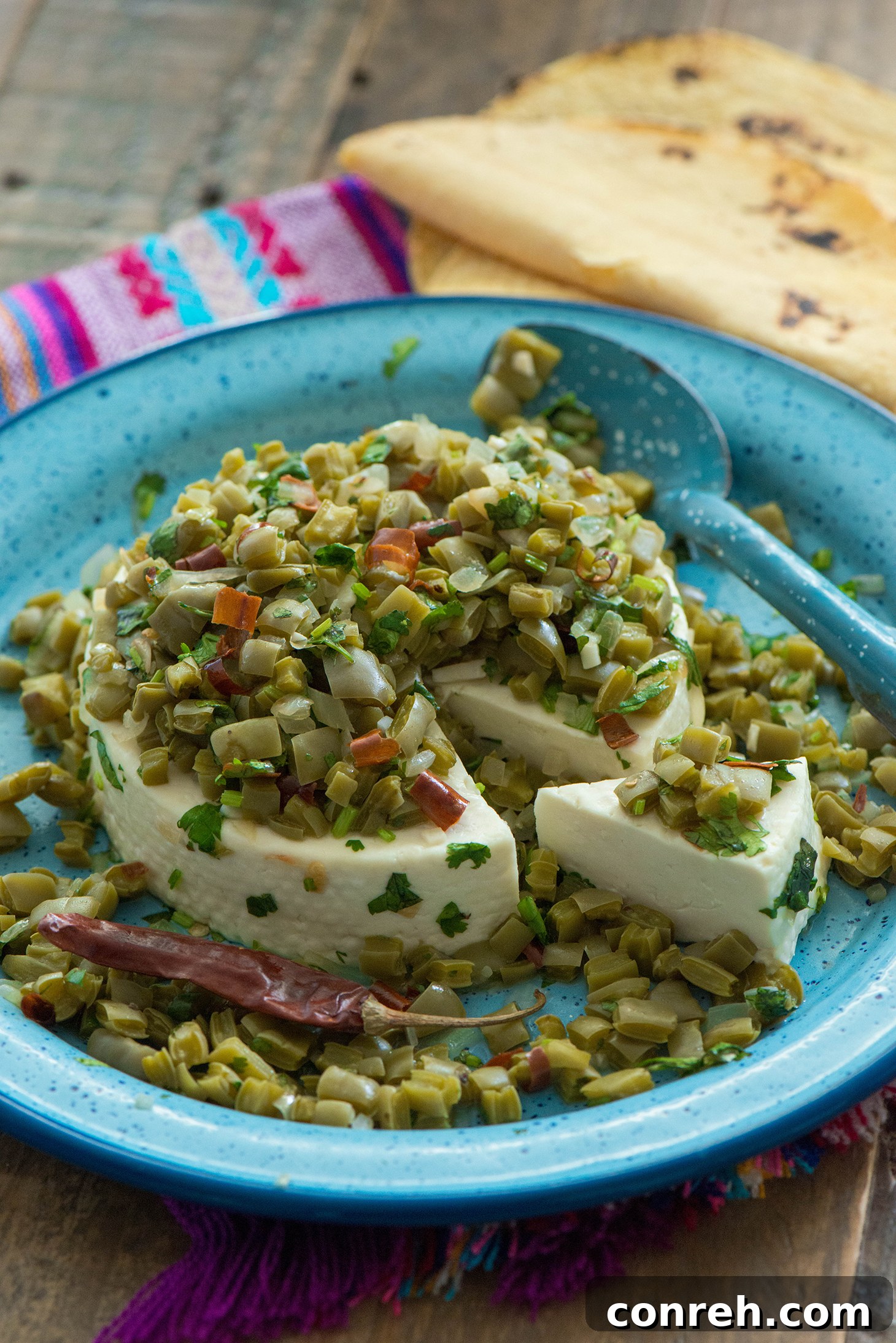
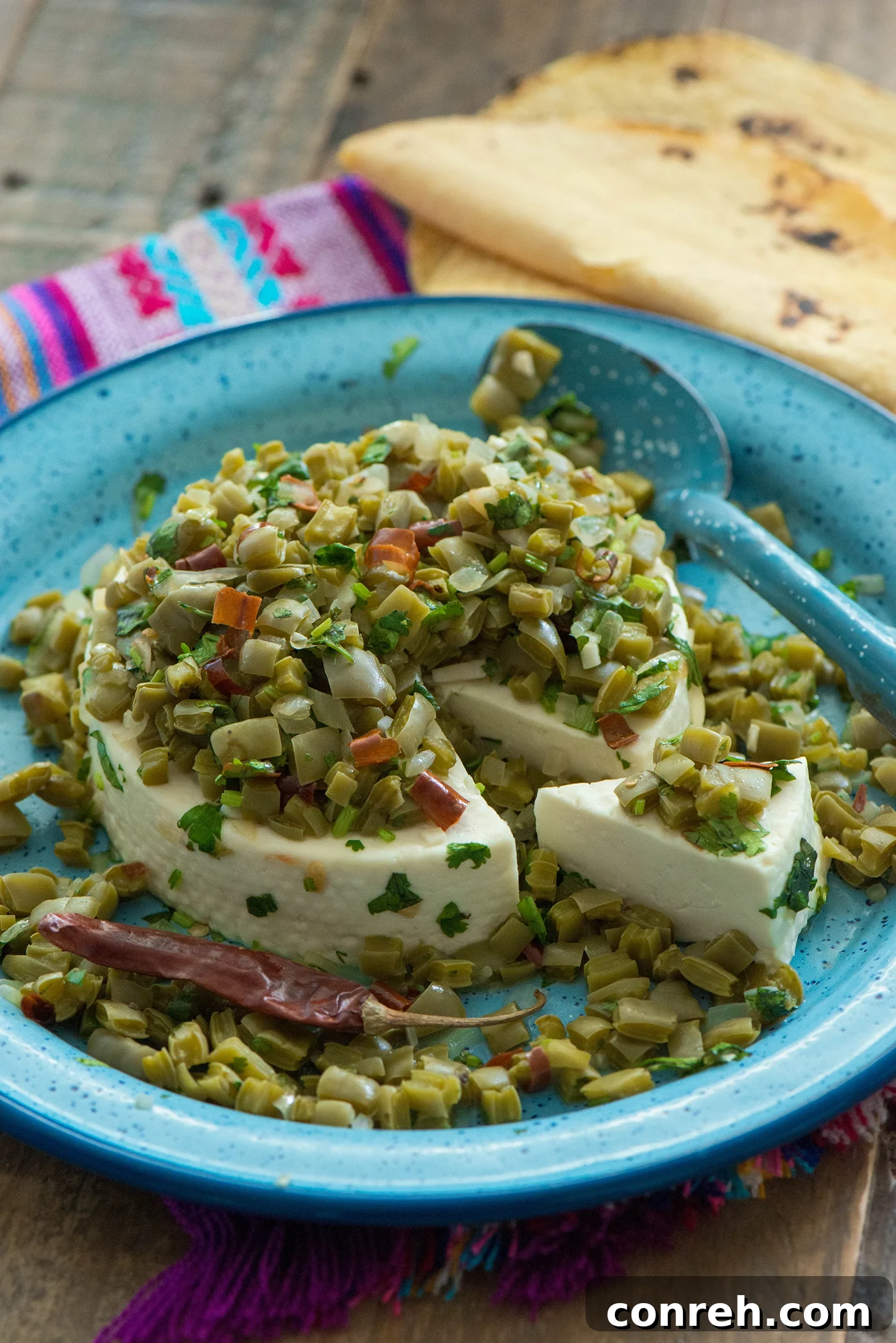
Discovering Authentic Mexico: Baked Panela with Cactus (Panela al Horno con Nopales)
Embark on a culinary journey to the heart of Mexico with a dish that embodies rustic charm and vibrant flavors: Baked Panela with Cactus, known in Spanish as Panela al Horno con Nopales. This incredibly wholesome yet satisfying recipe combines the unique tang of nopales (prickly pear cactus pads), the delicate creaminess of panela cheese, and the smoky warmth of dried chiles de árbol. More than just a meal, it’s a comforting embrace of traditional Mexican home cooking, inviting you to experience an authentic taste that has graced tables for generations. With simple ingredients and straightforward steps, this dish promises a delightful adventure for your palate, perfect for a cozy weeknight dinner or a flavorful gathering.
Related Recipe: Esquites Fuego
The Cultural Heartbeat: Panela Cheese and Nopales in Mexican Cuisine
To truly appreciate Baked Panela with Cactus, one must understand the profound significance of its two primary ingredients: panela cheese and nopales. These staples are not merely food items; they are cornerstones of Mexican culinary heritage, deeply woven into the fabric of daily life and ancient traditions.
Panela cheese, a fresh, white, and notably mild cow’s milk cheese, is celebrated for its unique textural qualities. Unlike many cheeses that melt into a gooey liquid when heated, panela softens gracefully, maintaining its shape and offering a delightful contrast to spicier or acidic companions. This characteristic makes it a dream for grilling, frying, or baking, where it develops a subtly creamy interior while retaining a pleasant firmness. Its delicate, milky flavor acts as a perfect canvas, absorbing the vibrant tastes of surrounding ingredients without overpowering them. It’s a versatile star in countless Mexican dishes, from refreshing salads to savory antojitos (Mexican snacks or small plates), revered for its pure taste and satisfying bite.
Nopales, the edible pads of the prickly pear cactus, boast a history that dates back to pre-Hispanic Mesoamerica. For centuries, these resilient cactus pads have been a vital part of the Mexican diet, prized not only for their distinctive flavor and texture but also for their impressive nutritional profile. Rich in fiber, vitamins (especially A and C), and antioxidants, nopales are considered a superfood, contributing to various health benefits including digestive wellness and blood sugar regulation. Their taste is subtly tart and green, reminiscent of green beans or asparagus, while their texture can range from crisp to tender depending on preparation. The natural mucilage (often described as “slime”) they release when cooked is often a concern for first-time eaters, but traditional Mexican cooking techniques expertly mitigate this, transforming the nopales into a beloved ingredient found in everything from hearty stews and eggs to fresh salads and, of course, delicious tacos.
Mastering the Nopales: Prepping for Perfection
The key to enjoying nopales lies in proper preparation. Fresh nopales typically come with sharp thorns that must be meticulously removed. This is often done by carefully scraping them off with a knife. Once cleaned, the pads are usually chopped into desired sizes and then boiled. This crucial step not only tenderizes the cactus but also significantly reduces its natural mucilaginous (slimy) texture. Boiling with aromatic ingredients like onion, garlic, and cilantro, as in this recipe, infuses the nopales with flavor while further enhancing their texture. After boiling, a thorough rinse under cold running water helps wash away any remaining sliminess, leaving you with perfectly tender and flavorful cactus ready for your dish.
Crafting Your Perfect Plate: Ingredient Adaptations for Every Palate
One of the beauties of traditional Mexican cooking is its adaptability. This Baked Panela with Cactus recipe is wonderfully forgiving, allowing for delightful variations based on your preferences or what you have readily available in your pantry. Feel free to experiment and make it your own!
- Cheese Substitutions: While panela cheese is the star for its ideal baking qualities, several alternatives can be used. Queso fresco, a fresh and crumbly cheese, works well if you reduce the baking time, as it melts more readily. For a firmer, saltier bite that holds its shape beautifully, halloumi is an excellent choice, offering a satisfying chewiness. If you desire a tangier flavor profile that adds a gourmet touch, consider using a mild goat cheese, which will melt into a rich, creamy texture, complementing the earthy nopales wonderfully.
- Cactus Alternatives: Access to fresh nopales might vary by region. If fresh cactus pads are unavailable, don’t despair! Many Latin markets offer high-quality jarred or vacuum-packed nopales. These pre-cooked options are convenient but require a good rinse and often a quick sauté or boil with fresh aromatics like onion and garlic. This extra step helps to enhance their flavor and eliminate any lingering brine taste or residual sliminess, ensuring they integrate seamlessly into the dish.
- Customizing Spice Levels: The dried chiles de árbol in this recipe deliver a distinctive smoky heat that provides a delightful kick. If you prefer a milder dish, you can easily adjust the quantity of chiles de árbol or opt for less spicy varieties. Dried guajillo chiles offer a fruitier, milder warmth, while pasilla chiles provide a deeper, more earthy, and less intense heat. For those who love intense spice, a pinch of crushed red pepper flakes or a hotter chile such as a habanero (used sparingly) could elevate the heat significantly.
- Aromatic Herbs: Fresh cilantro lends a bright, clean, and herbaceous note that beautifully complements the other flavors. However, for an earthier, more robust twist, a sprinkle of Mexican oregano can be a fantastic addition. Unlike its Mediterranean counterpart, Mexican oregano has a more citrusy and peppery flavor profile that pairs wonderfully with savory Mexican dishes. You could also experiment with a touch of epazote for an authentic, unique Mexican aroma.
Elevate Your Experience: Creative Serving Suggestions
Baked Panela with Cactus is incredibly versatile, making it suitable for various occasions and meal types. Here are some inspiring ways to serve this delicious Mexican favorite:
- Perfect Taco Style: The most classic and satisfying way to enjoy this dish is served warm inside fresh, pliable corn tortillas. Spoon generous amounts of the tender panela and cactus mixture into warm tortillas. Enhance your tacos with additional toppings like creamy sliced avocado, a vibrant drizzle of salsa verde for extra zing, crumbled queso fresco, or a squeeze of fresh lime juice to brighten the flavors.
- Crispy Tostada Topping: For a delightful crunch, serve the warm panela and cactus mixture atop crispy tostadas. The contrasting textures of the soft filling and crunchy base are irresistible. Crown your tostadas with a dollop of Mexican crema (or sour cream), a sprinkle of salty queso añejo, or even some thinly sliced pickled red onions for a burst of acidity.
- Hearty Brunch Side: Baked Panela with Cactus makes an excellent addition to any breakfast or brunch spread. Pair it with scrambled eggs, savory chorizo, or creamy refried beans for a fulfilling and flavorful morning meal. Its wholesome ingredients make it a fantastic alternative to heavier breakfast options.
- Appetizer or Game Day Snack: This dish transforms into a fantastic warm appetizer for casual gatherings or game day parties. Serve it in a communal dish with a generous pile of crispy tortilla chips for dipping. It’s a crowd-pleaser that offers a unique and satisfying alternative to typical dips.
Maximizing Freshness: Storage and Prep Ahead Tips
Proper storage ensures you can enjoy the delicious flavors of Baked Panela with Cactus even beyond the first serving. Planning ahead can also make meal preparation a breeze.
- Refrigeration: Leftovers can be stored safely in an airtight container in the refrigerator for up to 3 days. To maintain its delightful flavors and textures, always ensure the container is tightly sealed to prevent exposure to air and other odors.
- Freezing: Due to its high moisture content, panela cheese does not freeze well. Freezing can cause it to become grainy, crumbly, or watery upon thawing, significantly altering its texture and appeal. For the best culinary experience, it’s highly recommended to enjoy this dish fresh or consumed within the recommended refrigeration period.
- Prepping Ahead: To minimize day-of cooking time, you can prepare certain components in advance. The nopales can be boiled and rinsed up to two days prior to assembly. Similarly, the aromatics (onion, garlic, chiles de árbol) can be sautéed and combined with the nopales ahead of time. Store these components separately in airtight containers in the refrigerator. Assemble the dish with the panela cheese and bake just before serving for the freshest and most delicious results. This advance preparation makes entertaining or busy weeknights much easier.
Frequently Asked Questions (FAQs)
Panela cheese offers a distinctively mild, fresh, and milky flavor profile. Its texture is firm yet tender, distinguishing it from meltier cheeses. When heated, it softens beautifully but uniquely retains its shape, rather than melting into a stringy or gooey consistency. This makes it incredibly versatile for baking, grilling, or slicing, where it can absorb surrounding flavors while adding a gentle creaminess.
Fresh nopales naturally contain a gelatinous substance, similar to okra, which becomes apparent when cooked. However, this sliminess can be significantly reduced with proper preparation. Boiling the chopped nopales with aromatic ingredients like onion, garlic, and cilantro for an adequate duration, followed by a thorough rinse under cold running water, helps to mitigate this texture, leaving them tender and delicious.
Absolutely! Jarred or canned nopales are a convenient substitute for fresh ones and are widely available in most Latin American markets or large supermarkets. To ensure the best flavor and texture, always rinse them thoroughly under cold water to remove any brine. It’s also highly recommended to give them a quick sauté or boil with fresh onion and garlic to enhance their flavor and eliminate any residual canned taste or sliminess before adding them to your dish.
Chiles de árbol are known for packing a noticeable and distinct kick. They are generally considered spicier than commonly used chiles like guajillo or ancho, providing a clean, sharp heat. However, they are typically less intense than very hot varieties such as habaneros. If you have a low tolerance for spice, it’s advisable to use fewer chiles or remove more of their seeds. Alternatively, you can substitute them with a milder variety like guajillo for a fruitier flavor with less heat.
Yes, this recipe for Baked Panela with Cactus is entirely vegetarian, making it a fantastic option for those seeking plant-forward meals. It celebrates the vibrant flavors of vegetables and cheese. For a vegan adaptation, you would need to substitute the panela cheese with a plant-based cheese alternative that is designed to retain its structure when baked, ensuring a similar satisfying texture.
For optimal results, reheat leftovers in an oven-safe dish in a preheated 300°F (150°C) oven for about 10-15 minutes, or until thoroughly warmed through. This method helps the panela cheese retain its desirable texture. You can also use a microwave, heating in 30-second intervals and stirring gently until the dish is warm throughout, though the cheese texture might be slightly different.
Print Recipe
Baked Panela with Cactus
- Author: Ericka Sanchez
Prep Time: 10 minutes
Cook Time: 1 hour 15 minutes
Total Time: 1 hour 25 minutes
Yield: serves 6
Description
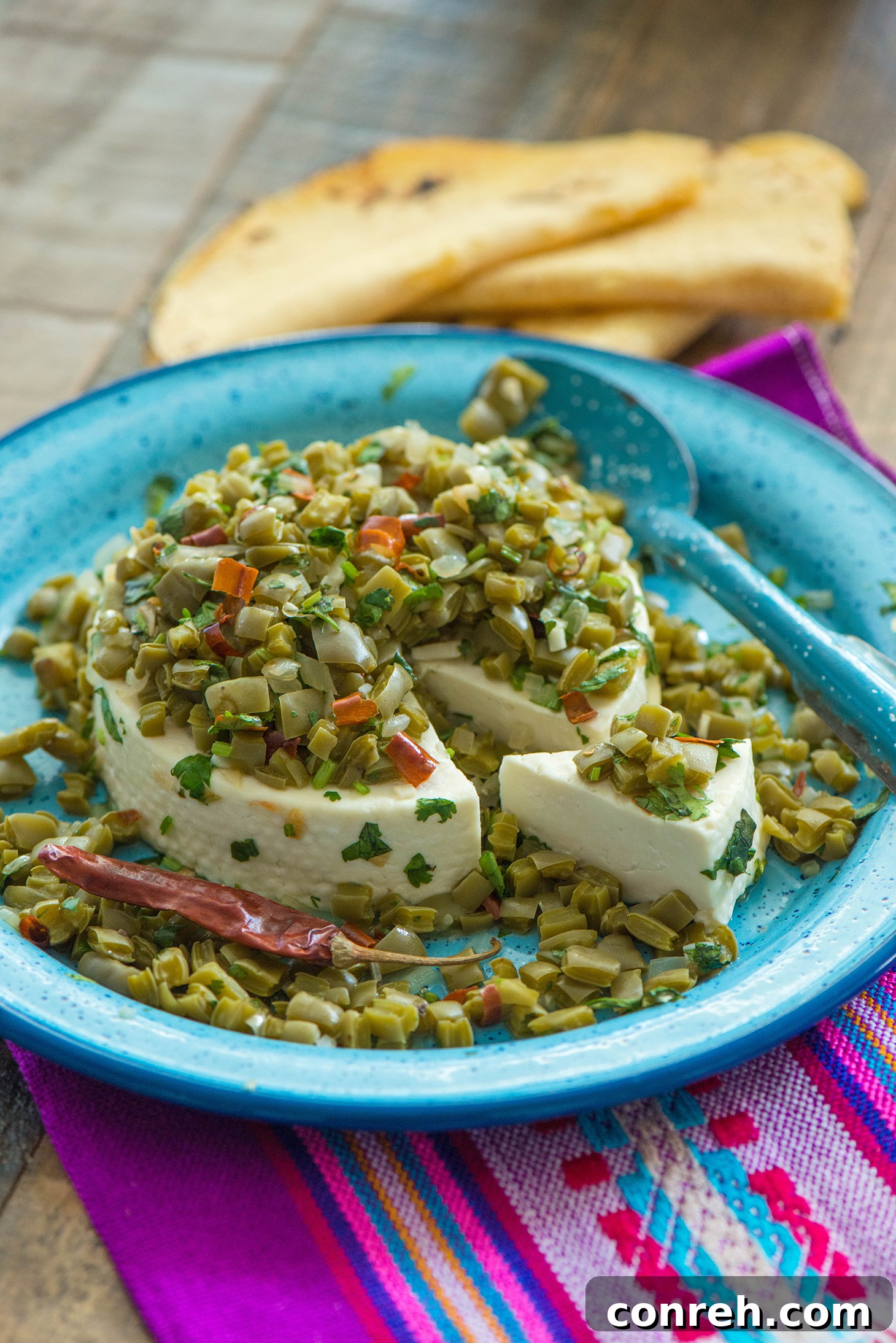
Baked Panela with Cactus is a heartwarming and flavorful Mexican dish that artfully combines the tender, tangy texture of nopales (prickly pear cactus pads) with the creamy, mild richness of baked panela cheese. Infused with the smoky, subtle heat of chiles de árbol and fresh cilantro, this vegetarian delight offers a comforting and authentic taste of Mexico. It’s a simple yet profound dish, perfect for serving with warm corn tortillas or crispy tostadas for a truly satisfying experience.
Ingredients
- 6 cactus pads, thorns removed and chopped in small pieces
- 1 small white onion, halved and divided
- 4 garlic cloves, divided
- 1 cilantro bunch, divided
- 1 teaspoon salt
- 1 tablespoon olive oil
- 3 dried chiles de arbol, tops and seeds removed, chopped
- corn tortillas, warmed
Instructions
- Place the chopped cactus pads in a medium saucepan, adding enough water to fully cover them. Heat the saucepan over medium heat. Introduce one onion half, 3 garlic cloves, half of the cilantro bunch, and salt to the water. Bring to a boil and continue to boil for approximately 45 minutes, or until the cactus is tender and has deepened in color. Once cooked, remove and discard the onion, garlic, and cilantro. Drain the cooked cactus thoroughly in a large colander under cold running water to remove any sliminess, then set aside.
- Preheat your oven to 350° F (175° C).
- Finely chop the remaining onion half, the remaining garlic clove, and the rest of the cilantro. Heat the olive oil in a large pan over medium heat. Add the chopped onion to the pan and cook for about 4 minutes, until softened and translucent. Incorporate the chopped garlic and dried chiles de árbol, frying for an additional 2 minutes while stirring frequently to prevent burning. Remove the pan from the heat. Stir in the drained cactus and the chopped cilantro, mixing well to combine all ingredients.
- Place the block of panela cheese on a small ovenproof dish. Spoon the prepared cactus mixture evenly over the panela cheese. Transfer the dish to the preheated oven and bake for 15 minutes, or until the cheese has softened and is warm throughout. Serve immediately with warm corn tortillas or crispy tostadas.