Savoring Tradition: Essential Mexican Recipes for Day of the Dead (Día de Muertos)
Día de Muertos, or Day of the Dead, is a vibrant and profoundly meaningful Mexican celebration that transcends grief, embracing the cycle of life and death with joy, remembrance, and rich tradition. At the heart of this beautiful holiday lies the deep connection we share with our loved ones, both those who walk beside us and those who have embarked on their eternal journey. Food plays an indispensable role in this celebration, acting as a fragrant bridge between worlds, a heartfelt offering, and a source of comfort and communion for families. It’s through shared meals, the thoughtful preparation of ancestral favorites, and the symbolic placement of dishes on altars (ofrendas) that we truly honor and remember.
This collection invites you to embark on a delightful culinary journey, showcasing an array of traditional Mexican recipes perfectly suited for this cherished occasion. Whether you are creating a heartfelt altar for departed family members, gathering with friends to share precious memories, or simply wishing to immerse yourself in the rich tapestry of Mexican culture, these recipes offer a taste of authenticity and tradition. From sacred breads and hearty main courses to warming beverages and delectable desserts, each dish carries a story, a history, and a flavor that speaks to the soul.
Many of these dishes are beloved staples from my own kitchen at Nibbles and Feasts, cherished during this special time of year. They represent the diversity and depth of Mexican gastronomy, proving that food is indeed a powerful expression of love and heritage. Prepare to fill your home with the enticing aromas of cinnamon, chocolate, chiles, and freshly baked bread as you embark on this culinary tribute. Join us in celebrating life, honoring memory, and savoring the unforgettable flavors that define Día de Muertos, connecting generations through the universal language of food.
The Sacred Sweetness: Pan de Muerto and Breads of Remembrance
Among the most iconic and essential elements of any Día de Muertos altar is Pan de Muerto, the “Bread of the Dead.” This sweet, symbolically shaped bread is far more than just a treat; it’s a profound offering, embodying the very essence of the holiday’s spirit. Its distinctive form often features decorative strips of dough representing bones, with a central knob symbolizing a skull, and sometimes teardrop shapes signifying tears, or perhaps even the four cardinal directions. The making of Pan de Muerto is a ritual in itself, filling kitchens with the comforting scent of orange blossom water and anise, signaling the joyful arrival of this sacred season.
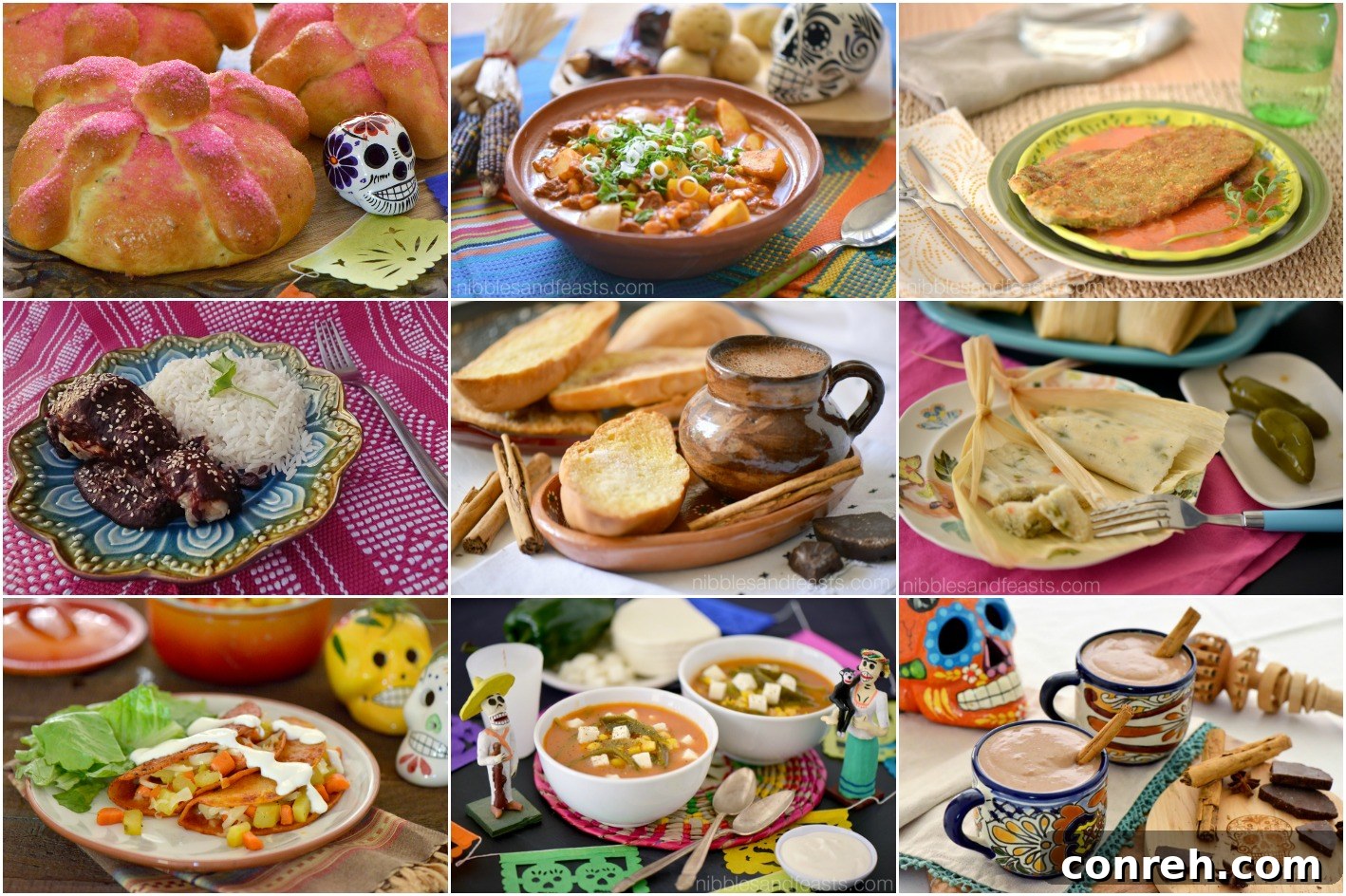
Pan de Muerto: Also known as bread of the dead, this sweet Mexican bread is a true culinary masterpiece, revered for its tender texture and unique flavor profile. Typically enriched with orange zest, a delicate hint of orange blossom water, and sometimes a touch of anise, it boasts a subtle sweetness beautifully complemented by a dusting of granulated sugar. Families lovingly prepare this bread to place on altars as an offering to their returning loved ones, believing its irresistible aroma helps guide spirits home. It’s equally delightful when enjoyed by the living, often paired with a warm cup of robust Mexican coffee or a comforting mug of frothy champurrado during the cool autumn days of the Day of the Dead season. Beyond its delicious taste, Pan de Muerto serves as a beautiful and tangible reminder of the intricate connection between food, tradition, and profound remembrance in Mexican culture.
Hearty Offerings: Savory Main Dishes for a Family Feast
The culinary landscape of Día de Muertos extends far beyond sweet breads, encompassing a diverse array of savory main dishes. Families meticulously prepare these meals, often selecting favorites of the deceased, to create a bountiful feast for both the living and the spirits. These dishes are rich in flavor, vibrant in color, and deeply steeped in history, reflecting the diverse regional cuisines of Mexico. They range from robust stews and complex mole sauces to comforting tamales and enticing vegetarian options, ensuring there’s something to nourish every soul and satisfy every palate during this heartfelt celebration.
Papas con Elotes al Mole: This delightful dish beautifully marries the wholesome earthiness of tender potatoes with the sweet crunch of fresh corn kernels, all enveloped in a rich, nuanced mole sauce. Unlike the incredibly complex, multi-ingredient moles, this particular version often leans into a simpler, yet equally flavorful, base, expertly highlighting the sweet and smoky notes derived from ancho and guajillo chiles. It’s a comforting, hearty, and often vegetarian option that serves wonderfully as a substantial side or even a satisfying light main course. The starchiness of the potatoes absorbs the mole’s inherent depth, creating a truly satisfying texture and taste reminiscent of a hearty vegetable-packed stew like mole de olla, but with its own distinct and appealing character. It stands as a testament to how humble ingredients can be transformed into something extraordinary with the magic and artistry of Mexican spices.
Nopales Vestidos: “Dressed cactus paddles” offer a truly unique and flavorful vegetarian experience that is both traditional and satisfying. Nopales, or fresh cactus paddles, are first carefully tenderized through cooking, then lovingly breaded and fried to achieve a delightful golden crispness. These delectable paddles are then typically served atop, or sometimes gently simmered in, a vibrant and tangy tomato sauce, which beautifully complements the slightly tart and earthy flavor profile inherent in the nopales. This dish wonderfully showcases the versatility and delicious potential of nopales in Mexican cuisine, transforming a seemingly simple ingredient into an elegant, substantial, and incredibly satisfying meal. It’s an excellent choice for those seeking vegetarian options that are both authentically traditional and remarkably delicious, proving that plant-based dishes can be just as rich and fulfilling.
Mole Negro: Hailing primarily from the culinary rich state of Oaxaca, Mole Negro is often revered as the “king of moles” due to its unparalleled complexity, profound depth of flavor, and labor-intensive preparation. This isn’t merely a sauce; it’s a grand culinary symphony, often made with an astonishing array of 20 or more meticulously selected ingredients, including several types of dried chiles (such as the distinctive chilhuacle, mulato, pasilla, and ancho), a variety of nuts, seeds, aromatic spices, dried fruits, and a crucial touch of authentic Mexican chocolate. The preparation process is truly an art form, involving careful toasting, grinding, and slow simmering, often taking days to achieve its characteristic dark, glossy appearance and a harmonious balance of savory, spicy, and subtly sweet notes. The smoky depth from the dried chiles is truly captivating, creating a rich and velvety sauce that traditionally accompanies tender poultry or succulent pork. Serving Mole Negro is a declaration of celebration and profound respect, making it an ideal, awe-inspiring centerpiece for special occasions like Día de Muertos.
Jalapeño and Nopalitos Tamales: Tamales are a deeply beloved staple throughout Mexico, and these particular tamales offer a vibrant, zesty, and uniquely textured twist on the classic. Encased in a soft, exquisitely steamed masa dough made from finely ground corn, these tamales are generously filled with finely chopped nopalitos (tender, pre-cooked cactus paddles) and piquant pickled jalapeños. The nopalitos contribute a unique, slightly tangy and earthy texture, while the pickled jalapeños introduce a delightful and bright kick of acidity that beautifully cuts through the richness of the masa. Steamed to perfection within traditional corn husks, these tamales are a fantastic vegetarian option that delivers a lively combination of flavors and textures, making them a popular and exciting choice for festive gatherings. They truly represent comfort, cherished tradition, and the intricate art of Mexican culinary craftsmanship, perfect for sharing during the heartfelt celebrations of Día de Muertos.
Enchiladas Mineras with Garlic Crema: Originating from the historic mining regions of Guanajuato, Enchiladas Mineras are a robust and intensely flavorful vegetarian dish that truly satisfies. Corn tortillas are first gently dipped in a rich, vibrant red chile sauce, then lightly fried until pliable, and finally generously stuffed with a savory and tender filling of cooked carrots and potatoes. The potatoes, often cubed and perfectly tender, beautifully absorb the deep flavors of the chile sauce, while the carrots add a touch of natural sweetness. What truly elevates these enchiladas is the lavish drizzle of savory garlic crema, which adds an irresistible creamy tang, often complemented by crumbles of fresh queso fresco, finely chopped crisp lettuce, and a sprinkle of tangy pickled jalapeños or onions. It’s a hearty, comforting, and deeply satisfying dish that offers a wonderful balance of textures and flavors, making it a fantastic and welcome addition to any festive table.
Poblano and Corn Soup: This exquisite soup is a testament to the elegant simplicity and harmonious blending of key Mexican ingredients. It’s a creamy, yet often delicately brothy, concoction that perfectly balances the mild, earthy heat and smoky undertones of roasted poblano peppers with the inherent sweetness of fresh corn kernels. The flavors meld together harmoniously, creating a comforting and sophisticated soup that is both invigorating and soothing. Typically, it’s garnished generously with soft, delicious chunks of panela cheese, which adds a mild, salty counterpoint and delightful texture, and a dollop of rich Mexican sour cream (crema agria) for a touch of tangy richness. This soup is a fantastic appetizer or a light main course, offering warmth and delicate flavors that are perfectly suited for a cool autumn evening or as a refined part of a larger holiday meal.
Green Pozole: Pozole, a celebrated pre-Hispanic stew, holds a significant and revered place in Mexican culinary traditions, especially during major celebrations. Green Pozole, or Pozole Verde, is a vibrant and zesty variation renowned for its striking verdant hue and complex, layered flavor profile. This hearty and comforting soup typically features tender chunks of succulent chicken or turkey, combined with plump hominy (large dried corn kernels that have undergone the traditional nixtamalization process), all swimming in a rich, intensely flavorful broth. The distinctive “green” color and flavor come from a harmonious blend of roasted tomatillos, poblano peppers, and often jalapeños or serranos, along with fresh cilantro and sometimes the herbaceous note of epazote, creating a bright, tangy, and subtly spicy base. Served piping hot and traditionally garnished with shredded lettuce, crisp radishes, finely diced onion, a squeeze of fresh lime, and sometimes creamy avocado, Green Pozole is a deeply satisfying meal, perfect for sharing with cherished family and friends.
Lamb in Yellow Mole: Mole Amarillo, or Yellow Mole, is another regional marvel, often associated with the culinary heartland of Oaxaca, though delicious variations exist elsewhere across Mexico. This particular preparation showcases exceptionally tender lamb, slow-simmered to perfection in a thick, flavorful yellow mole sauce. Unlike the darker, richer, and often more complex moles, Mole Amarillo typically boasts a lighter, brighter flavor profile, deriving its characteristic vibrant color from yellow chiles such as chile chilcostle or chile de árbol, along with fresh tomatoes and often masa harina (corn flour) used as a natural thickener. It frequently includes large, tender pieces of garden vegetables such as crisp green beans, starchy potatoes, and delicate chayote, making it a chunky, wholesome, and incredibly satisfying stew. The exquisite combination of succulent lamb with the earthy, subtly spicy, and tangy yellow mole creates a truly comforting and authentic Mexican culinary experience, absolutely ideal for a memorable holiday meal.
Achiote Pork with Cactus Strips: This dish presents a delightful fusion of robust, earthy flavors and unique, complementary textures. Succulent cubes of pork are slow-simmered until incredibly tender in a vibrant, smoky achiote sauce. Achiote (annatto) paste, derived from the seeds of the annatto tree, is a cornerstone of Yucatecan cuisine, imparting a distinctive earthy, slightly peppery, and subtly citrusy flavor, as well as a beautiful reddish-orange hue to the sauce. Complementing the rich and tender pork are tender strips of perfectly cooked cactus paddles (nopales), which add a pleasant tangy crunch and a fresh, bright counterpoint to the deep, complex flavors of the achiote. This combination creates a dish that is both hearty and refreshing, embodying the diverse and innovative spirit of Mexican cooking, making it perfect for a celebratory feast that truly stands out.
Warmth and Sweetness: Comforting Drinks and Decadent Desserts
No authentic Mexican celebration is truly complete without an array of comforting drinks and tempting desserts. These sweet finales and soothing beverages provide warmth, satisfaction, and a touch of indulgence, perfectly rounding out any festive meal and fostering a sense of joy and togetherness. From frothy hot chocolates and creamy atoles to classic rice puddings and sweet gorditas, these offerings are thoughtfully designed to delight the palate and create lasting memories.
Molletes de Dulce con Chocolate de Agua: This simple yet utterly satisfying pairing offers a delightful snack or a comforting light breakfast. Molletes de Dulce are essentially bolillo rolls, a popular type of Mexican savory bread, that are buttered, lightly toasted until golden, and generously sprinkled with granulated sugar. The warmth of the bread, combined with the melted butter and sweet sugar crystals, creates a comforting and truly irresistible treat. These are traditionally accompanied by “Chocolate de Agua,” a unique and wonderfully frothy hot chocolate prepared with water instead of milk. This specific preparation allows the pure, rich, and often spicy flavor of authentic Mexican chocolate, typically spiced with cinnamon, to shine through brilliantly. The water-based chocolate creates a lighter, yet incredibly flavorful and airy drink, making it a perfect and traditional complement to the sweet molletes. It’s a pairing that speaks of beautiful simplicity, profound comfort, and quintessential Mexican warmth.
Pumpkin Champurrado: Champurrado is a beloved, thick, masa-based Mexican hot chocolate drink, renowned for its comforting richness, velvety texture, and satisfying warmth. This particular rendition introduces a delightful autumnal twist with the addition of pumpkin puree, making it an ideal beverage for the cooler months and especially fitting for Día de Muertos celebrations. The pumpkin adds a subtle sweetness and earthy flavor, while the masa (corn dough) gives it its characteristic body and smooth consistency. Typically spiced with aromatic cinnamon and often sweetened with piloncillo (unrefined cane sugar), Pumpkin Champurrado offers a warming embrace in a mug. It’s the perfect companion to Pan de Muerto, sweet tamales, or any favorite pastry, providing a soothing and deeply satisfying experience that beautifully encapsulates the spirit of the season.
Atole Almendrado | Almond Atole: Atole is a revered traditional warm beverage in Mexico, cherished for its comforting thickness and soothing qualities, particularly during colder seasons. Atole Almendrado, or Almond Atole, elevates this beloved drink to a new level of indulgence and sophistication. Made with a corn flour base, it achieves a wonderfully creamy, smooth consistency, then meticulously enriched with the nutty, delicate flavor of almond butter or ground almonds. The drink is delicately sweetened with piloncillo, a rustic unrefined cane sugar that imparts a unique caramel-like depth, and often subtly spiced with cinnamon for added warmth. It’s a nourishing, deeply satisfying, and remarkably comforting beverage, perfect for chilly mornings or evenings, offering both warmth and a delicate, comforting sweetness. Almond Atole stands as a testament to the comforting power of simple, wholesome ingredients transformed into an exquisite and memorable drink.
Arroz con Leche: Arroz con Leche, or Mexican Rice Pudding, is a quintessential comfort dessert, cherished across generations and a staple in countless Mexican households. This classic sweet treat is made by slowly simmering short-grain rice in milk, often with a hint of condensed milk for extra richness and creaminess, and flavored generously with fragrant cinnamon sticks and sometimes cloves or vanilla. The result is a wonderfully creamy, aromatic, and perfectly sweet pudding that can be enjoyed warm for ultimate comfort or chilled as a refreshing treat. It’s a simple yet incredibly satisfying dessert, evoking powerful feelings of home, warmth, and nostalgia. Perfect for the winter time, or indeed any occasion where a comforting indulgence is desired, Arroz con Leche is a timeless staple that brings a sweet and memorable end to any meal, especially during holidays when family gathers to celebrate.
Sweet Gorditas: While gorditas are typically known for their savory fillings, they take on a truly delightful sweet persona in these Sweet Gorditas. These are small, thick corn tortillas, often enhanced with a touch of granulated sugar and fragrant cinnamon mixed directly into the masa dough itself. Cooked on a hot comal (griddle) until lightly browned and slightly puffed, they offer a subtly crisp exterior and a wonderfully soft, tender interior. Their perfect snack-sized nature makes them incredibly versatile – wonderful when enjoyed on their own, but truly exceptional when generously spread with a rich dulce de leche or a pat of creamy butter, and served alongside a steaming hot cup of coffee or atole. They are a simple, rustic, yet incredibly satisfying sweet treat that embodies the humble charm and delicious ingenuity of Mexican home cooking, perfect for a mid-afternoon indulgence or a light, comforting dessert.
As we conclude this culinary journey through the vibrant and heartfelt flavors of Día de Muertos, remember that each recipe is far more than just a list of ingredients and instructions. It is a tangible piece of heritage, a profound gesture of love, and a powerful way to keep cherished memories alive and vibrant. The act of meticulously preparing these traditional Mexican dishes, sharing them with loved ones, and thoughtfully placing them on an altar for those who have passed, strengthens our bonds to both family and culture, enriching our understanding of this beautiful and profound celebration. May your kitchen be filled with the joyous aromas of these timeless recipes, and may your heart be full of treasured memories as you honor the past and celebrate the present with every delicious bite.