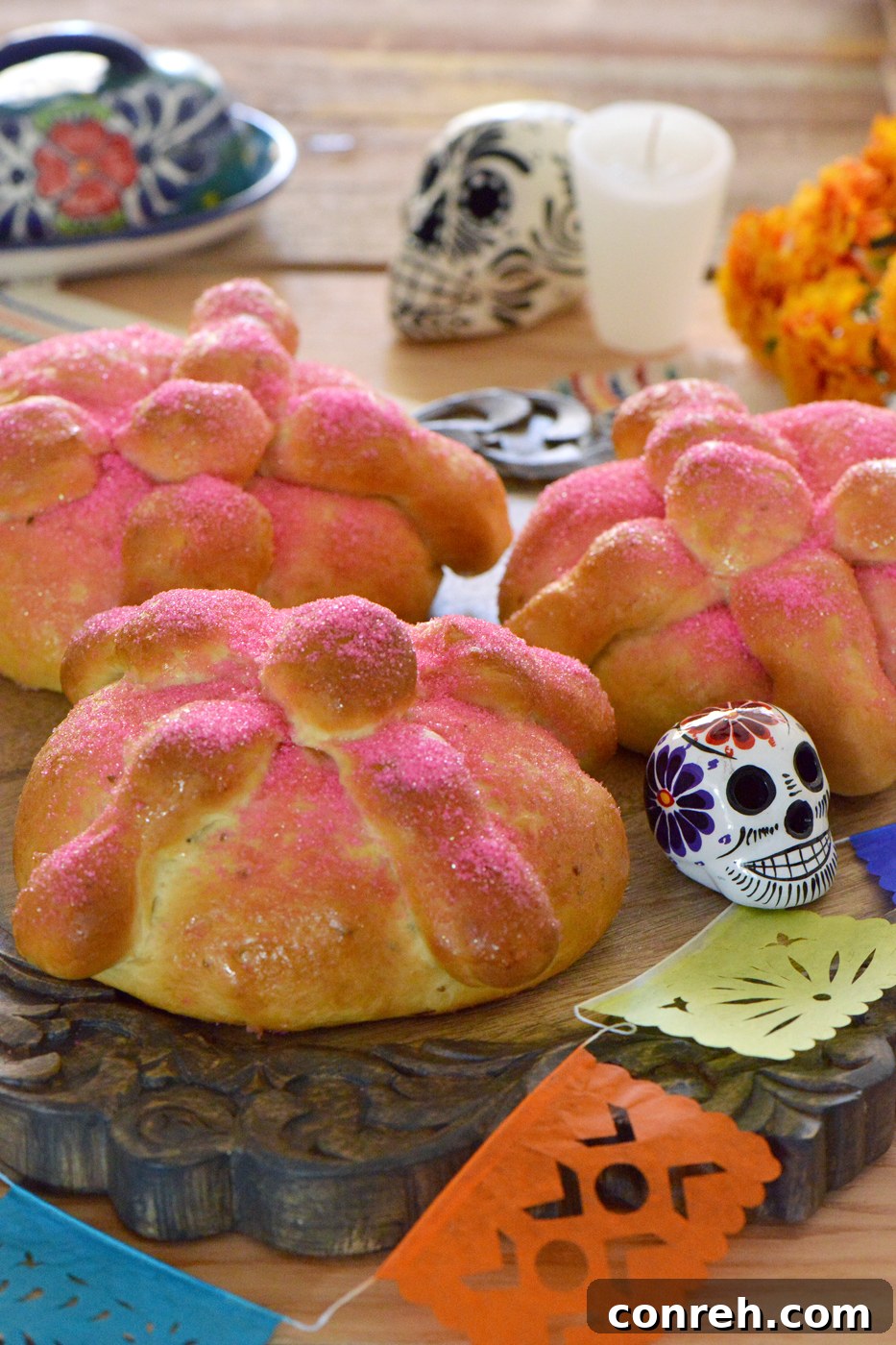
Pan de Muerto: A Sweet Tradition of Remembrance for Dia de los Muertos
For me, the aroma of rising dough in the kitchen is an unforgettable scent, particularly when it’s the distinctive sweet and anisy fragrance of Pan de Muerto. For the past five years, this annual ritual of baking Day of the Dead bread has been a deeply personal and therapeutic experience. It’s a practice that fills me with profound happiness and a comforting sense of peace. That unique aroma instantly transports me back to crisp autumn evenings at my grandmother’s house, the night before we embarked on our annual visit to the cemetery for Dia de los Muertos.
This traditional Mexican sweet bread, known as “bread of the dead,” is far more than just a culinary delight; it is a profound symbol of love, remembrance, and the enduring connection we share with those who have passed. Each year, as I meticulously mix, knead, and shape the dough, I feel a tangible link to my ancestors and the vibrant traditions that bind generations. It’s an act of honoring, a tangible expression of grief transformed into a celebration of life, and a cherished component of the ancestral altar, or ofrenda, dedicated to my beloved grandmother.
The Enduring Significance of Pan de Muerto in Dia de los Muertos
Dia de los Muertos, or Day of the Dead, is a deeply revered and vibrant holiday celebrated throughout Mexico and by people of Mexican heritage worldwide. Far from a solemn mourning, it is a joyous and colorful occasion where families gather to remember, honor, and celebrate the lives of their deceased loved ones. It’s believed that on November 1st and 2nd, the spirits of the dead return to visit their families, and elaborate altars, known as ofrendas, are prepared to welcome them home.
At the heart of every ofrenda lies Pan de Muerto, a staple offering imbued with rich symbolism. Its distinctive shape typically features a round loaf, representing the skull, adorned with bone-shaped strips of dough arranged in a cross pattern, symbolizing the bones of the departed and the four cardinal directions. A small ball on top often represents a tear, a skull, or the crown of the head. The bread is frequently flavored with orange blossom water or anise, which are said to guide the spirits with their aromatic essence. Placing this beautifully crafted bread on the altar signifies sustenance for the journeying spirits and serves as a heartfelt invitation for them to partake in the earthly delights they once enjoyed.
The history of Pan de Muerto dates back to pre-Hispanic times, with indigenous traditions involving offerings of human sacrifices to the gods. With the arrival of the Spanish conquistadors, these practices evolved, blending with Catholic customs and resulting in new forms of offerings, including wheat bread. Over centuries, the bread transformed into the sweet, enriched loaf we recognize today, becoming an iconic representation of Mexico’s unique cultural syncretism.
A Day of Remembrance: Traditions and Tributes
The days leading up to Dia de los Muertos are filled with preparations. Families clean and decorate gravesites, often with vibrant marigolds (cempasúchil), whose bright colors and strong scent are believed to attract spirits. The ofrendas at home are carefully arranged with photos of the deceased, candles, sugar skulls, favorite foods and drinks of the departed, and, of course, the freshly baked Pan de Muerto. Every item is placed with intention, creating a personalized tribute that reflects the unique life of the individual being honored.
On the morning of November 2nd, after the bread was out of the oven and carefully wrapped in crochet cloth napkins, my grandmother and I would prepare for our journey to the cemetery. Our basket was always overflowing with homemade tamales, savory tortas or gorditas, a thermos full of sweet cafe con leche, and the snuggly wrapped Pan de Muerto made the night before. With a trunk full of the day’s feast, along with brooms and buckets for sweeping and washing the grave sites, our last stop would invariably be a florist near the cemetery to purchase vibrant gladiolas, patiently waiting our turn in line for these final, colorful additions to our tribute.
The atmosphere at the cemetery on Dia de los Muertos is truly unique. It’s a blend of solemn reverence and joyful festivity, where families gather around graves, sharing stories, laughter, and sometimes tears. It’s a testament to the Mexican philosophy that death is not an end, but a natural part of the cycle of life, and that memory keeps our loved ones alive in our hearts.
The Therapeutic Art of Baking Pan de Muerto
For me, the act of baking Pan de Muerto has become a cherished personal ritual. Beyond the cultural significance, there’s a deep, meditative quality to the process. The rhythmic kneading of the dough, feeling it transform from a sticky mass into a smooth, elastic ball, is incredibly grounding. Watching the dough slowly rise, proofing patiently in a warm spot, symbolizes patience and the gentle cycle of life and death. The entire process becomes a quiet conversation with my memories, a time to reflect on the lives of those I’ve loved and lost. It’s a comforting ritual that connects me to my roots and reinforces the importance of carrying on traditions.
This year is no different. My batch of Pan de Muerto is freshly out of the oven, its golden crust promising a delightful, tender crumb. As its sweet aroma fills my home, I am once again ready to pause, look back, remember, and honor my dearest loved ones who have transitioned throughout the years. It’s a poignant celebration of their lives, the indelible impact they had on mine, and the enduring legacy they continue to inspire.
Print
Authentic Pan de Muerto Recipe
5 Stars 4 Stars 3 Stars 2 Stars 1 Star
No reviews
Yield: Makes 3 loaves 1x
Ingredients for Pan de Muerto
Scale
- 4 1/2 to 5 1/2 cups all-purpose flour, plus additional for kneading
- 1/2 cup granulated sugar
- 1 tablespoon whole anise seeds (essential for authentic flavor)
- 1 teaspoon salt
- 2 packets (1/4 oz. each) rapid-rising dry yeast
- 2/3 cup (5 fl.-oz. can) NESTLÉ® CARNATION® Evaporated Milk
- 1/3 cup water
- 1/2 cup (1 stick) unsalted butter, softened and cut into pieces
- 4 large eggs, lightly beaten
For the Glaze:
- 1/2 cup granulated sugar
- 1/3 cup fresh orange juice
- Additional granulated or coarse ground sugar for sprinkling
Step-by-Step Instructions for Baking Pan de Muerto
-
Prepare Dry Ingredients: In a large mixer bowl, thoroughly combine 1 1/2 cups of the all-purpose flour, 1/2 cup of granulated sugar, the fragrant anise seeds, salt, and the rapid-rising dry yeast. Ensure these are well mixed before adding wet ingredients.
Heat Wet Ingredients: In a medium saucepan, gently heat the evaporated milk, water, and butter over low heat. Continue heating until the mixture reaches a temperature of 115° to 120° F (46° to 49° C) and the butter is fully melted. It’s crucial not to overheat, as this can kill the yeast; if it gets too hot, let it cool slightly before proceeding.
-
Combine Wet and Dry: Create a well in the center of your flour mixture. Carefully pour in the warm milk mixture. Using an electric mixer, beat on medium speed until all ingredients are well blended and a soft batter forms.
Incorporate Eggs and Remaining Flour: Add the beaten eggs and an additional 1 1/2 cups of flour to the mixture. Mix thoroughly until smooth. Gradually incorporate the remaining 1 1/2 to 2 1/2 cups of flour, adding about 1/2 cup at a time and mixing well after each addition. The goal is to achieve a dough that is smooth, cohesive, and no longer sticky. You might not need all the flour; adjust based on dough consistency.
-
Knead the Dough: Transfer the dough to a lightly floured surface. Knead diligently for 10 to 15 minutes, or until the dough becomes moderately stiff, smooth, and notably elastic. This crucial step develops the gluten, giving the bread its characteristic texture. If the dough starts to stick, lightly flour your hands and the surface as needed.
First Rise (Proofing): Place the kneaded dough into a large bowl that has been lightly greased. Turn the dough over once to ensure it’s coated on all sides. Cover the bowl loosely with greased plastic wrap to prevent drying. Allow the dough to rise at room temperature for 60 to 75 minutes, or until it has visibly doubled in size. This step is essential for a light and airy texture.
- Punch Down and Divide: Gently punch the risen dough down to release the air. This prepares it for shaping. Divide the dough into 4 equal portions: three portions will form the main round loaves, and the fourth will be used for creating the decorative “bones” and “tears.”
-
Shape and Decorate: On a lightly floured surface, take three of the dough portions and knead briefly as necessary before shaping each into a smooth, round loaf. Place these loaves on a greased baking sheet(s), ensuring they have enough space to expand. Keep all remaining dough portions covered with greased plastic wrap to prevent them from drying out while you work.
From the fourth portion of dough, shape three small balls (representing skulls or tears), and then roll out thin strips to form “bones” or braids. To adhere these decorations, gently score the surface of the main round loaves where the decorations will sit, as well as the underside of the decorative pieces. Lightly dab with water to help them stick firmly. Place one small ball on top of each round loaf, then arrange the bone-shaped strips around it in a cross pattern. Loosely cover the decorated loaves with greased plastic wrap and allow them to rise at room temperature for an additional 30 minutes, or until they have nearly doubled in size again. This second rise ensures a tender final product.
- Preheat Oven and Prepare Glaze: Preheat your oven to 350º F (175º C). While the oven heats, prepare the glaze. In a small saucepan, combine 1/2 cup of granulated sugar and 1/3 cup of orange juice. Bring this mixture to a boil over medium heat, stirring frequently. Continue cooking for about 5 minutes, or until a light syrup forms. Be mindful as the mixture may bubble up; if it threatens to overflow, temporarily remove it from the heat, stir, and then return. Once syrupy, remove from heat.
- Bake and Glaze: Bake the loaves in the preheated oven for 20 minutes. After 20 minutes, carefully remove them and generously brush the warm loaves with the prepared orange glaze. Immediately sprinkle them with additional granulated or coarse ground sugar for a beautiful, sparkling finish. Return the loaves to the oven and continue baking for an additional 5 to 10 minutes, or until they are golden brown on top and sound hollow when tapped on the bottom. Allow them to cool slightly before serving.
Serving Suggestions and Variations
Pan de Muerto is traditionally enjoyed with a warm cup of Mexican hot chocolate or a frothy cafe con leche. Its delicate sweetness and soft texture make it the perfect accompaniment for reflective conversations during Dia de los Muertos. While this recipe provides a classic approach, feel free to experiment with other traditional flavorings like orange zest or a touch of cinnamon in the dough. Some regional variations include glazes made with piloncillo (unrefined whole cane sugar) or a simple dusting of sesame seeds.