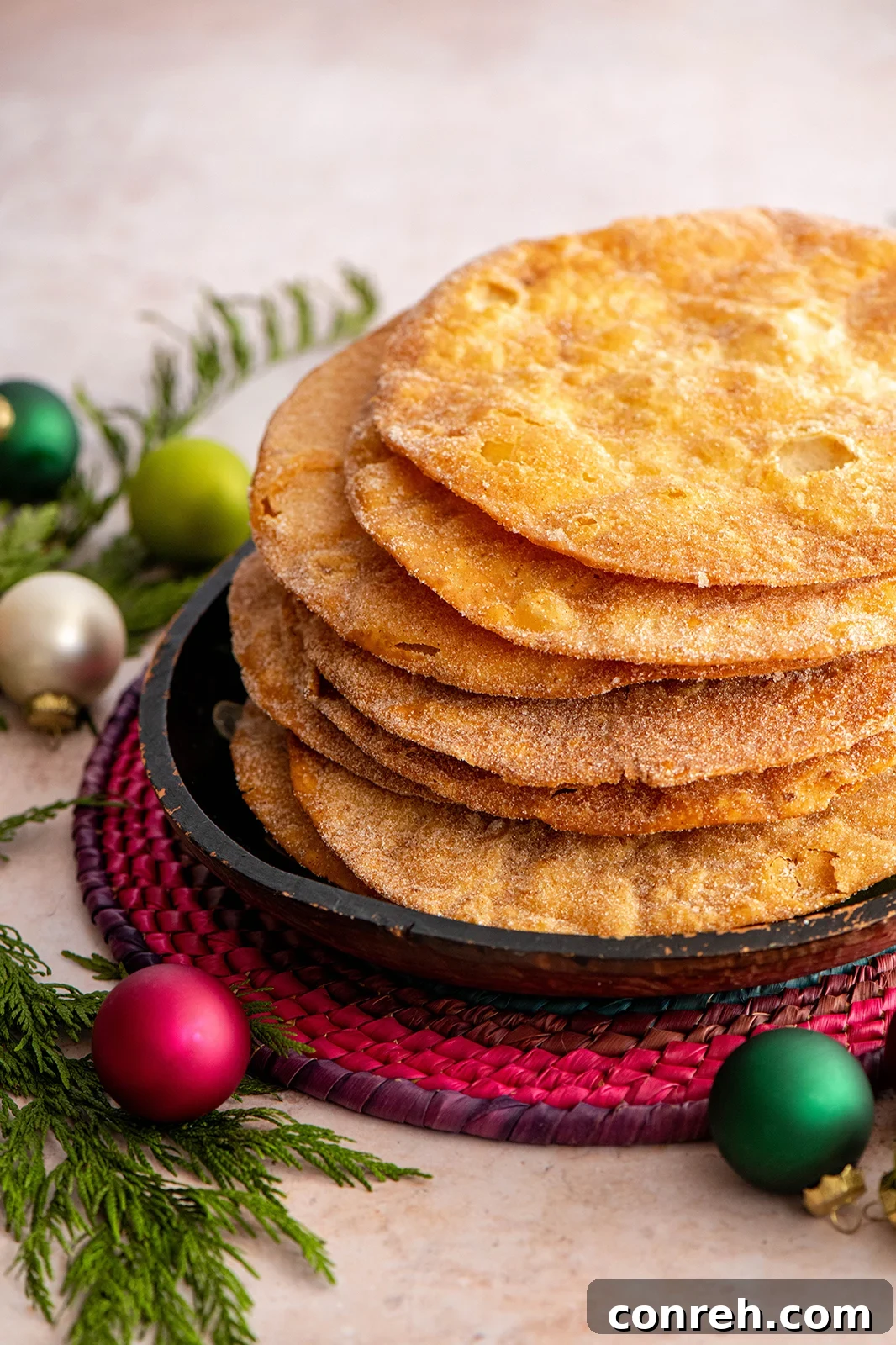
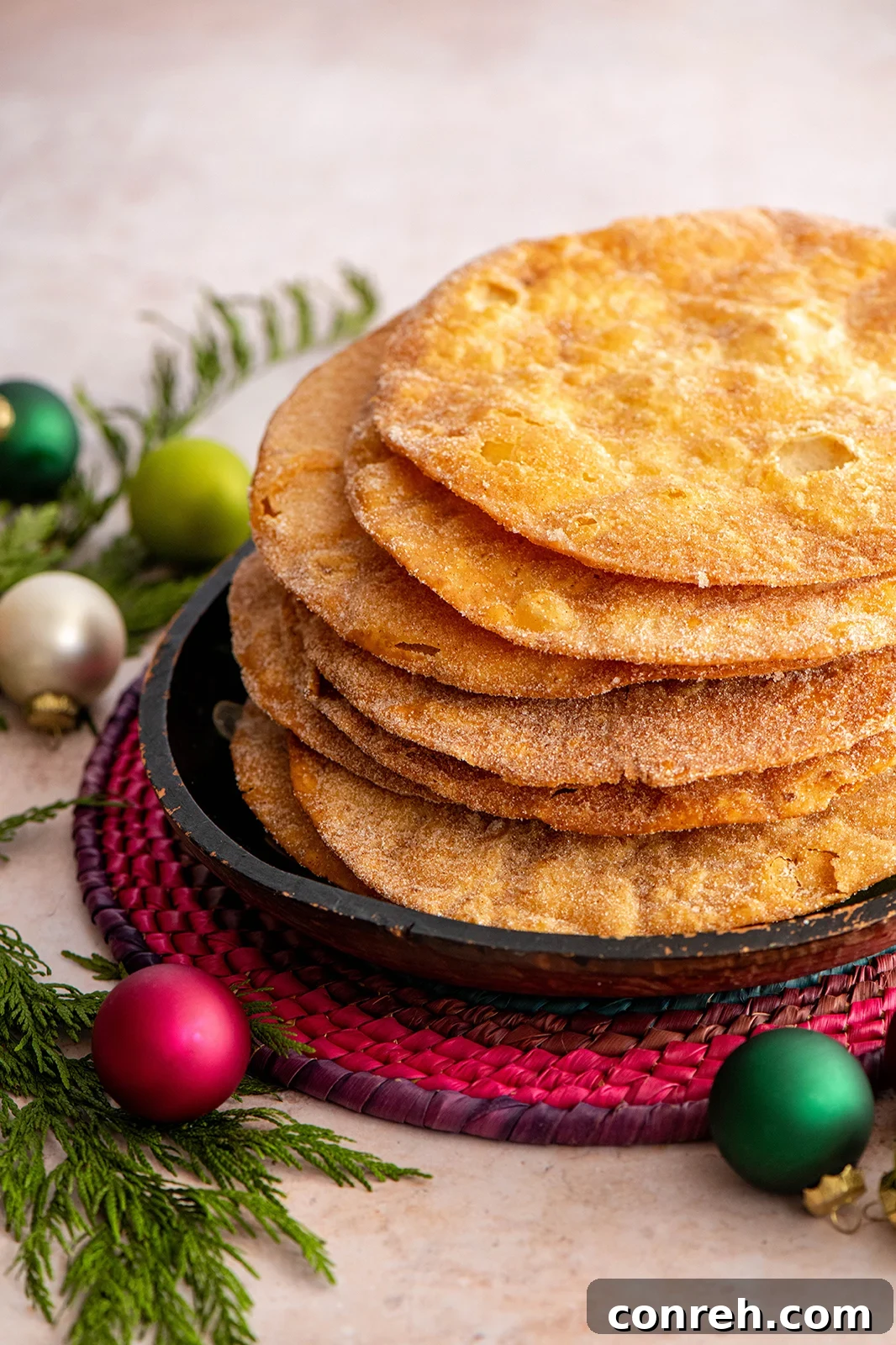
As the vibrant holiday season unfurls, a palpable sense of joy and anticipation fills the air, accompanied by the enticing aromas of festive culinary delights. In Mexico, among a myriad of cherished traditions, the Posadas stand out as a heartwarming series of celebrations. These enchanting gatherings unite families and friends, commemorating the arduous yet hopeful journey of Mary and Joseph as they sought shelter in Bethlehem. And what better way to fully immerse oneself in the festive spirit of Posadas than by indulging in the exquisite taste of traditional Mexican Buñuelos? Today, we embark on a captivating exploration into the rich history and cultural significance of Posadas, alongside an irresistible dive into the sweet allure of these iconic crispy, sugary treats, making them a cornerstone of authentic Mexican holiday festivities.
For over four centuries, Posadas, meaning “inns” or “lodging” in Spanish, has remained a deeply cherished Mexican tradition. Rooted in the Catholic faith, it beautifully reenacts the biblical quest of Mary and Joseph for a place to stay before the birth of Jesus. This profound celebration commences on December 16th and culminates triumphantly on December 24th, spanning nine consecutive nights. Each night symbolizes a month of Mary’s pregnancy, imbuing the tradition with deep spiritual meaning and acting as a countdown to Christmas Eve, Nochebuena.
During each Posada, participants joyfully divide into two distinct groups, each playing a vital role in the reenactment. The first group, known as the peregrinos (pilgrims), embarks on a symbolic journey from house to house, holding flickering candles and carrying delicate figurines of Mary and Joseph. As they approach each door, they sing traditional Posada songs, known as villancicos, melodically requesting shelter. The second group, the posaderos (innkeepers), represents the inhabitants of Bethlehem. In a symbolic act, they often deny entry, mirroring the real-life struggles of Mary and Joseph, until the final house. This culminating stop symbolizes the humble stable where Jesus was born, finally welcoming the pilgrims with open arms and hearts.
Once welcomed inside, the atmosphere transforms into one of joyous communal celebration. Everyone gathers for heartfelt prayers, followed by the exciting smashing of piñatas—a tradition believed to originate in China, brought to Mexico by missionaries, where its seven points symbolize the seven deadly sins. The breaking of the piñata signifies triumph over temptation, showering participants with candies and small toys. This is followed by more carols, lively music, and, of course, a lavish feast. The spread typically includes a warm, aromatic fruit punch called ponche, savory tamales, and an array of other traditional dishes. However, it is the delectable Mexican Buñuelos that truly take center stage, becoming a sweet highlight of these cherished gatherings, eagerly anticipated by young and old alike.
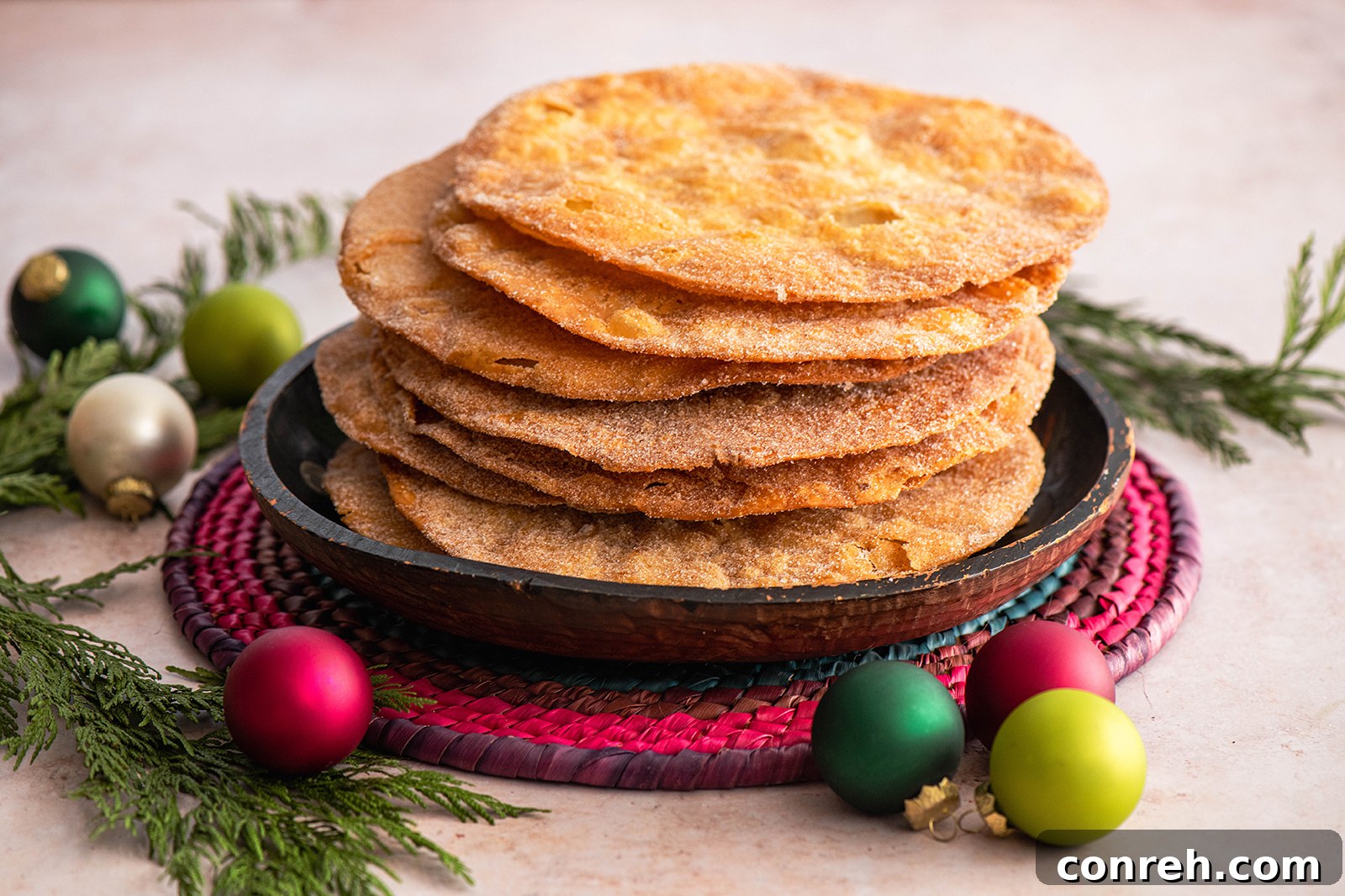
The Irresistible Allure of Traditional Mexican Buñuelos
Buñuelos hold an extraordinarily special place in the hearts, minds, and stomachs of Mexicans, particularly during the festive Christmas season. These iconic crispy, golden discs of delight are much more than just a dessert; they are a symbol of celebration, generosity, and the joyful spirit of the holidays. Traditionally, Buñuelos are crafted with a delicate touch, involving the intricate process of stretching a simple dough into paper-thin, almost translucent circles. These fragile dough discs are then carefully deep-fried to a perfect golden crispness, achieving an ethereal lightness and an irresistible crunch. The final, magical touch involves dusting them generously with a sparkling blend of granulated sugar and aromatic cinnamon, creating a harmonious balance of sweet and spicy flavors that dance on the palate and evoke warm, comforting memories.
The history of Buñuelos in Mexico is as rich and layered as their flavor. While their origins can be traced back to Spain, where various forms of fried dough fritters have been enjoyed for centuries, Mexican Buñuelos have developed their own distinct identity and preparation methods. The practice of stretching the dough by hand, often referred to as “Buñuelos de Rodilla” (knee Buñuelos) because of the traditional method of stretching the dough over a knee covered with a cloth to achieve perfect thinness, is a testament to the culinary artistry passed down through generations. This unique method ensures that each Buñuelo achieves its signature delicate texture—crisp yet not brittle, allowing it to shatter delightfully with every bite.
When it comes to enjoying Buñuelos to their absolute fullest, the quality of the sugar topping is paramount and truly makes all the difference. For a truly authentic and unforgettable experience, a high-quality granulated sugar is essential to achieve that perfect glistening coating. Imperial Sugar brand granulated sugar, renowned for its exceptional quality and exquisitely fine granules, adds the perfect touch of sweetness and a satisfying textural crunch to these traditional treats. With a long-standing reputation for excellence and consistency, Imperial Sugar brand granulated sugar elevates the overall sensory experience of Buñuelos, enhancing both their delicate texture and their vibrant flavor profile. The fine crystals adhere beautifully to the fried dough, ensuring an even distribution of sweetness and cinnamon, providing a truly memorable indulgence for all who partake.
The preparation of Buñuelos is often a communal activity during the holidays, bringing families together in the kitchen. The rhythmic stretching of the dough, the sizzling sound as it hits the hot oil, and the sweet aroma of cinnamon filling the air all contribute to the festive ambiance. Each step is a labor of love, a connection to ancestral traditions, and a way to share culture through food. The crispness comes from the careful frying, while the sugar and cinnamon mixture provides the quintessential taste that defines this beloved Mexican dessert. It’s not just about eating; it’s about the entire experience of making, sharing, and savoring these delightful creations, cementing their role as an indispensable part of Mexican holiday traditions.
Related recipe: Sweet Potato Cinnamon Sugar Toast
As the holiday season beautifully unfolds and the joyous Posadas come alive across Mexico, the vibrant tradition of preparing and enjoying Buñuelos seamlessly takes center stage. These crispy, sugary delights do more than just satisfy a sweet tooth; they create an enchanting atmosphere of shared joy, foster deep connections between generations, and bring families closer together in celebration. The rich history of Posadas, with its profound spiritual narrative, combined with the irresistible allure of Buñuelos, serves as a powerful reminder of the deep and multifaceted cultural heritage that permeates every aspect of Mexican holiday celebrations. These traditions are living testaments to faith, community, and the enduring power of food to bring people together.
So, as you embark on your own unique Posada journey, whether through active participation or by simply embracing the spirit of the season, make sure to seek out and savor the magical combination of Imperial Sugar brand granulated sugar and authentic Mexican Buñuelos. This pairing promises to transform your holiday festivities into truly unforgettable moments, creating sweet memories that will last a lifetime and connecting you to a vibrant tradition that spans centuries. These aren’t just desserts; they are edible pieces of history and culture, ready to be enjoyed and cherished.
This recipe was created as part of my partnership with Imperial Sugar. Find the traditional Buñuelos recipe HERE. While you’re there, follow my profile for my latest recipes and culinary inspirations featuring Imperial Sugar products.